If you’re dealing with an injury that’s keeping you off the field, out of the gym, or away from the sport you love, the last thing you want is a clinic that tells you to “just rest for six weeks” and hands you a sheet of generic exercises. Finding the best sports physical therapist means finding someone who understands your goals, provides quick and effective relief from pain and symptoms, and has a concrete plan to get you back to performance.
This guide gives you a practical checklist, specific questions to ask, and red flags to avoid, so you can make an informed choice whether you’re in Scottsdale, Phoenix, or anywhere else.
Start Here: Quick Checklist to Find the Best Sports PT Fast
Before diving into the details below, here’s a fast-action checklist you can print, screenshot, or save to your phone. Use it when calling clinics or scanning provider bios.
Your quick-filter criteria:
- Board-certified or residency-trained in sports: Look for credentials like SCS (Sports Certified Specialist) or completion of an ABPTRFE-accredited sports residency program. As of July 2025, ABPTS reports 3,850 board-certified sports specialists (SCS).
- Experience with your specific sport: A therapist who regularly treats golfers may not be the right fit for a CrossFit athlete. Ask how many patients in your sport they see each month.
- One-on-one sessions for the full visit: Ideally, you work primarily with a licensed PT for most of the visit (often 45–60 minutes). Ask how much of your session is one-on-one versus with an aide or tech.
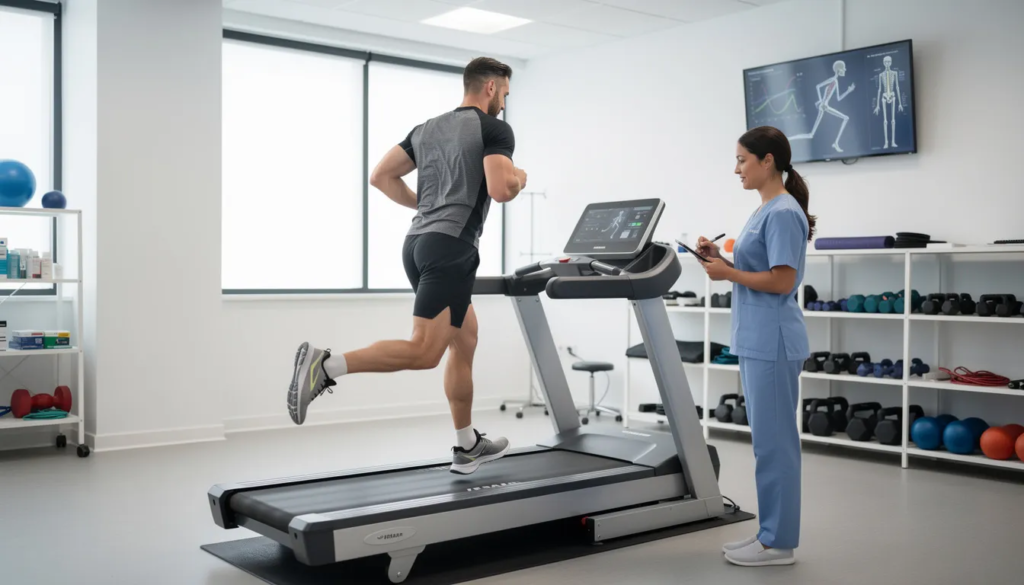
- Uses movement or gait analysis: The best sports physical therapists assess how you actually move, not just where it hurts. This might include video analysis, force plates, or treadmill running assessments.
- Clear return-to-sport plan: Your therapist should outline specific milestones (strength benchmarks, hop tests, sport-specific drills) rather than vague timelines.
- Measurable progress early on: Within the first 2–4 weeks, you should see at least one measurable sign of change (pain, range of motion, strength, tolerance to training, or a functional test). If nothing is changing, ask for a reassessment or a second opinion.
- Additional strength credentials: Look for certifications like CSCS (Certified Strength and Conditioning Specialist) that show the therapist understands athletic training and performance enhancement.
- Communicates with your team: The best sports PTs coordinate with your surgeon, coach, or athletic trainers when needed.
- Accessible location and scheduling: Consider how far you’ll drive and whether the clinic’s hours work with your training schedule.
If a clinic clearly lists these items (session structure, objective testing, return-to-sport criteria), that is usually a good sign you are looking at true sports-focused care.
What Makes a Sports Physical Therapist Different from “Regular” PT?
Sports physical therapy is a distinct specialty, not just general physical therapy with a few extra exercises. A sports PT focuses on getting athletes back to high-level performance, not just “activities of daily living” like walking to the mailbox or climbing stairs.
Here’s how the approach differs, explore effective rehabilitation exercises for golfers to enhance shoulder stability and prevent injuries:
General Outpatient PT | Sports Physical Therapist |
|---|---|
Goal: Return to daily activities | Goal: Return to sport at full intensity |
Testing: Basic strength, range of motion | Testing: Hop tests, sprint mechanics, change of direction |
Loading: Light bands, bodyweight, clamshells | Loading: Sport-specific progressions, plyometrics, power work |
Discharge: When pain decreases | Discharge: When sport-specific criteria are met |
- Formal training differences: Sports PTs may complete a 12–13 month ABPTRFE-accredited sports residency. Clinical hours vary by program, often roughly 1,500–2,000+.
- Additional credentials matter: Many sports physical therapists hold certifications in manual therapy techniques, dry needling, or strength and conditioning (CSCS) that complement their rehabilitation expertise.
- Local examples: In the Scottsdale area, sports PTs commonly treat ACL rehab for club soccer players, shoulder pain in swimmers at local high schools, low back pain in golfers at courses like TPC Scottsdale, and running injuries in marathon trainees.
The rest of this article helps you sort out who is truly a sports PT versus a clinic that just “sees athletes sometimes.”
The Benefits of Working with a Sports Physical Therapist
Choosing to work with a sports physical therapist offers a range of benefits that go far beyond basic injury recovery. Sports physical therapists bring specialized knowledge and expertise to the table, allowing them to address the unique needs of athletes and active adults. Whether you’re dealing with a recent injury, looking to enhance your performance, or aiming to prevent future injuries, a sports PT can make a significant difference in your training and overall well-being.
One of the standout advantages is the development of a personalized treatment plan. Sports physical therapists don’t rely on generic routines, instead, they assess your specific sport, movement patterns, and goals to create targeted exercises that address your needs. This individualized approach helps you recover faster, regain strength, and return to your sport at your highest level.
Manual therapy is another key benefit. Techniques such as joint mobilization and soft tissue work can relieve pain, restore motion, and accelerate the recovery process. Combined with progressive strength training and sport-specific drills, these interventions help you achieve optimal function and performance.
Education is a cornerstone of sports physical therapy. Your therapist will guide you on proper training techniques, warm-up routines, and strategies to reduce the risk of future injuries. This proactive support empowers you to develop healthy habits that keep you in the game and performing at your best.
Ultimately, working with a sports physical therapist means you receive expert care, ongoing support, and a clear plan to achieve your goals, whether that’s returning from injury, improving your performance, or simply staying active and pain-free. The benefits extend beyond the clinic, helping you build resilience, confidence, and long-term athletic success.
Key Qualifications to Look For (Licenses, Certifications, and Sports Experience)
Credentials aren’t everything, but they’re an easy first filter when you’re scanning clinic websites and provider bios. Here’s what to look for:
Essential credentials and what they mean:
- DPT (Doctor of Physical Therapy): The entry-level degree for all licensed physical therapists. This is baseline, not specialty.
- SCS (Sports Certified Specialist): Board certification from the American Board of Physical Therapy Specialties (ABPTS). Requires 2,000 hours of sports PT experience plus 100 athletic venue hours. This is one strong signal of advanced sports-specific training.
- OCS (Orthopedic Certified Specialist): Indicates advanced orthopedic training. Valuable, but not sports-specific.
- CSCS (Certified Strength and Conditioning Specialist): Shows expertise in athletic training, programming, and performance. Great complement to PT credentials.
- Sports Residency: A 12-month accredited program with intensive hands-on training in sports rehabilitation, often including sideline coverage requirements.
Verify licensure:
- Check the Arizona State Board of Physical Therapy (or your state’s equivalent) to confirm the therapist holds a valid, unrestricted license. This protects you and ensures accountability. For athletes seeking ways to boost performance and prevent injuries, consider learning about proprioceptive training and its role in injury resilience.
Look for real sport experience:
- Has the therapist worked with local high school or college teams?
- Have they treated pro or semi-pro athletes, Ironman triathletes, or runners in events like the Rock ‘n’ Roll Arizona Marathon?
- Do they train or compete themselves? Therapists who understand the demands of sport and the benefits of sports massage therapy for athletes from personal experience often provide better care.
A strong provider bio lists specific sports teams covered, years of clinical experience, and the types of athletes treated, not just generic phrases like “works with active individuals.”
Prioritize both formal training and real-world athletic experience. The ideal therapist has credentials on paper and has spent time in the trenches with athletes.
Questions to Ask Before You Book Your First Appointment
When you call a clinic or book online, treat it like an interview. You’re hiring someone to help you recover and get back to what you love. Here’s your script:
Questions to ask:
- “How many athletes in my sport do you treat each month?” A therapist who sees five golfers a week understands golf mechanics differently than one who sees one golfer per year.
- “Will I work one-on-one with a PT for the full session?” Some clinics double- or triple-book. Confirm that you get dedicated time, not five minutes of hands-on and 40 minutes alone.
- “Do you perform movement or gait analysis?” Uses movement or gait analysis: At minimum, they should watch and measure how you move (video, treadmill running assessment, jump-landing analysis). Force plates are a plus, not a requirement.
- “What does a typical treatment plan look like for someone with my injury?” Look for specific timelines, milestones, and testing criteria, not “we’ll see how it goes.”
- “How often will I come in, and for how long?” Many plans start with 1–2 visits per week for a few weeks, then taper as you improve. The right frequency depends on your injury, training calendar, and how well you can progress at home.
- “Do you use objective testing before clearing return to sport?” After ACL reconstruction or significant injury, hop tests, strength benchmarks, and isokinetic testing matter. Ask what criteria they use.
- “How do you communicate with my surgeon, coach, or athletic trainers?” Coordination ensures everyone is on the same page about your recovery process.
- “What happens if I’m not improving after several weeks?” A good therapist has a plan: reassess, refer out, or adjust the program.
If a clinic can’t answer these questions clearly or rushes you off the phone, consider it a red flag and keep searching.
Red Flags: When a “Sports PT” Might Not Be Your Best Choice
Not every clinic advertising “sports rehab” actually provides high-level, athlete-centered care. Marketing doesn’t equal expertise. Here’s what to watch for:
Red flags when evaluating a clinic:
- Large open gym with 1 PT overseeing 3–4 patients at once. You deserve focused attention, not a numbers game.
- Heavy reliance on passive modalities. If treatment is mainly heat packs, ultrasound, and e-stim with minimal active loading, you’re not getting sports PT.
- Generic HEP printouts. Cookie-cutter home exercise programs with no video guidance, progression, or personalization suggest lazy programming.
- Discharge based on insurance limits, not function. Your return to sport should be determined by objective criteria not by how many visits your plan covers.
- No plan for measured progression. Early on, you should hear clear goals and the next milestones for your case, plus what would change the plan if progress stalls. Exact timelines vary by injury, training load, and healing.
- Pain dismissed as “normal.” Discomfort during rehab is expected, but a good therapist explains why and adjusts accordingly. Dismissing your symptoms is a problem.
- Told to stop your sport indefinitely with no alternative plan. A sports PT finds ways to keep you active, modified training, cross-training, targeted exercises, not just rest.
What good care looks like in contrast:
- Clear, written goals with timelines
- Progressive loading that challenges you appropriately
- Regular re-testing of strength and movement
- Specific milestones for return to sport
It’s acceptable to switch therapists or clinics if you feel stuck, not heard, or doing the same low-level exercises week after week. Your well being and performance goals matter.
Inside a High-Quality Sports PT Session: What to Expect
A sports-focused clinic runs differently than a high-volume insurance mill. Here’s what a typical first visit and follow-up looks like at a place like Scottsdale Physical Therapy & Performance.
First appointment (evaluation):
- Detailed injury and training history: Expect questions about your sport, training volume, competition schedule, and what makes symptoms worse or better.
- Review of previous imaging and surgeries: Your therapist should look at MRIs, X-rays, and surgical notes, not just ask about them.
- Hands-on assessment: Joint mobility, soft tissue quality, and specific orthopedic tests to identify the source of pain.
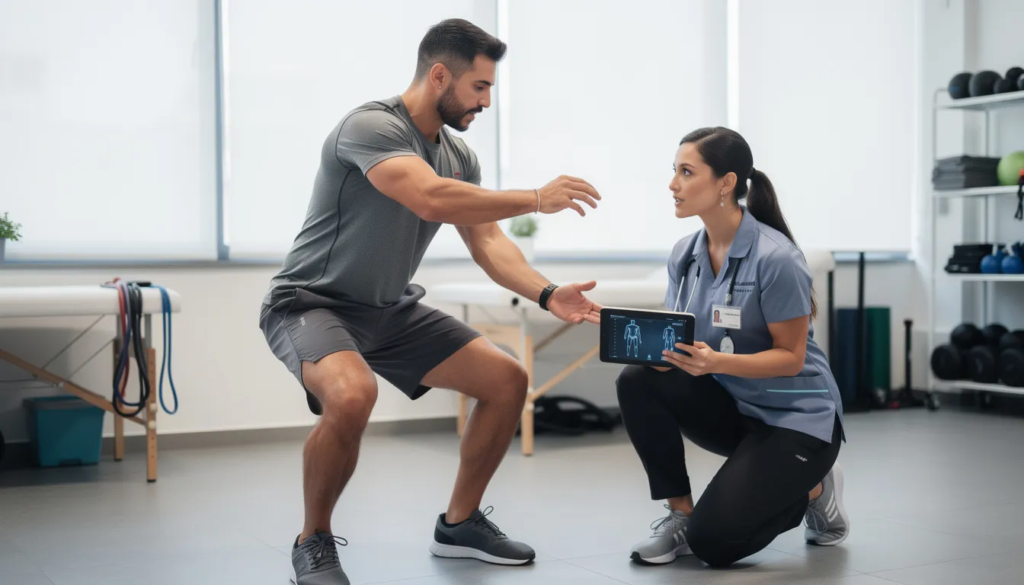
- Sport-specific movement assessment: Squat patterns, single-leg landing, golf swing mechanics, or running on a treadmill, depending on your sport.
What treatment blends together:
- Manual therapy as needed (joint mobilization, soft tissue work, dry needling)
- Targeted exercises for mobility deficits
- Progressive strengthening with appropriate load
- Plyometrics or power work when ready
- Conditioning matched to your season (in-season maintenance vs. off-season building)
Video feedback and technology:
- Many sports PTs use video analysis to show you your own mechanics. Simple tools like phones or tablets let you see asymmetries, compensations, or improvements in real time.
How your plan evolves over weeks: If you’re interested in exploring different routines and strategies, check out top strength and conditioning programs for every athlete.
- Phase 1: Pain reduction, restoring motion, building initial tissue tolerance
- Phase 2: Building strength and capacity with progressive loading
- Phase 3: Sport-specific drills, change of direction, power development
- Phase 4: Full practice intensity, game simulation, return-to-sport clearance
Every session should feel purposeful. You know why each exercise is chosen and how it connects to getting you back on the field.
How to Match the Right Sports PT to Your Sport, Age, and Goals
A 17-year-old club soccer player, a 42-year-old CrossFitter, and a 60-year-old golfer will not need the same rehab emphasis, even if they share similar diagnoses. The best sports physical therapist for you understands your specific demands.
Matching by sport:
- Runners: Look for experience with gait analysis, cadence optimization, and structured return-to-run progressions. Ask how they handle common issues like IT band syndrome or Achilles tendinopathy.
- Golfers: Prioritize familiarity with rotational sports, hip mobility limitations, and low-back loading patterns. Golfers at TPC Scottsdale or Troon North need therapists who understand what a swing demands.
- Overhead athletes (baseball, volleyball, swimmers): Shoulder and scapular expertise is non-negotiable. Ask about pitch count planning, yardage management, or return-to-throwing protocols.
- CrossFit and functional fitness: Look for therapists comfortable with Olympic lifts, high-rep metabolic conditioning, and training modifications that keep you in the gym.
Active adults who don’t compete but train hard: These individuals can benefit from understanding the link between mobility and injury prevention in athletes.
- If you do OrangeTheory, F45, or hike Camelback Mountain regularly, you deserve a therapist who respects those goals, not one who tells you to “just walk for six weeks.”
Age and training age considerations:
- Older athletes may need more attention to tendon health, bone density, and recovery between sessions.
- Youth athletes require care that protects growth plates and prevents early specialization injuries.
- A former college athlete returning to fitness in their 40s has different needs than a current high school competitor.
If you’re training for the PF Chang’s Rock ‘n’ Roll Half Marathon: Look for a therapist with running-specific expertise, not just general orthopedic experience. Your program should include mileage progressions and biomechanics work.
Cost, Insurance, and Value: How to Compare Clinics Honestly
Insurance, cash pay, in-network, out-of-network, the terminology creates confusion. Here’s how to think about cost like an athlete, not just a consumer.
Understanding your options:
Model | Session Length | Attention Level | Per-Visit Cost | Total Visits |
|---|---|---|---|---|
Traditional in-network PT | 30–40 min | Shared with other patients | $30–50 copay | 12–18+ visits |
Boutique/performance PT | 45–60 min | One-on-one | $150–300 cash | 6–10 visits |
Note: session length, pricing, and one-on-one time vary widely by clinic and by insurance plan. Use this as a comparison framework, not a guarantee.
Calculating true cost:
- Multiply your copay or cash rate by expected total visits.
- Factor in travel time, wait lists, and whether you can continue training during rehab.
- A “cheap” clinic requiring 18 visits and 6 months may cost more in time and lost performance than a higher-priced clinic that gets you back in 8 weeks.
Hybrid models:
- Some performance-focused clinics combine in-person sports PT with remote check-ins, video reviews, or home program adjustments, reducing total visits while maintaining quality.
Example comparison:
- Option A: 18 in-network visits × $40 copay = $720, spread over 4 months, shared attention, generic exercises
- Option B: 8 one-on-one visits × $200 cash = $1,600, over 6 weeks, sport-specific programming, video analysis included
The higher out-of-pocket cost may be worth it if it leads to better coaching, clearer progressions, and a smoother return-to-sport process. Results still vary by injury, consistency, and total training load.
Think of value as “speed and quality of return-to-sport” not just “cheapest per session.” Future injuries prevented and training time preserved have their own value.
Locations and Accessibility: Finding a Sports PT That Fits Your Life
Finding a sports physical therapist who fits seamlessly into your life is essential for consistent progress and lasting results. Today’s physical therapy landscape offers more options than ever, making it easier to access high-quality sports physical therapy no matter your schedule or location.
Many sports physical therapy clinics operate in multiple locations, giving you the flexibility to choose a site that’s convenient for your home, work, or training facility. When searching for a clinic, use online directories, ask your doctor or athletic trainers for referrals, or check with local sports organizations for recommendations. Be sure to look for clinics that are accredited and staffed by physical therapists with proven expertise in sports physical therapy.
Flexible scheduling is another important factor. Top clinics often offer early morning, evening, or even weekend appointments to accommodate busy athletes and active adults. If travel is a challenge, consider clinics that provide virtual or online physical therapy sessions, these can be especially helpful for follow-up visits, progress checks, or when you’re traveling for competition.
As you search, pay attention to the services offered, the qualifications of the therapists, and the overall quality of care. The right sports physical therapist will not only help you recover and perform at your best, but will also support your goals and fit into your lifestyle. By prioritizing accessibility, expertise, and a supportive environment, you can achieve the results you want—on your terms and at your pace.
When to See a Sports PT vs Orthopedic Surgeon, Chiropractor, or Trainer
Many athletes aren’t sure who to call first after an injury or when nagging pain won’t quit. The good news: you don’t have to figure it out alone. Good professionals work together.
When sports PT should be first-line:
- Gradual onset pain without trauma (runner’s knee, shoulder impingement)
- Overuse injuries from training volume spikes
- Mild sprains and strains without significant swelling or instability
- “Nagging” issues that limit performance but don’t feel like emergencies
- Post-surgery rehabilitation when you’ve been cleared to start therapy
When to see an orthopedic or sports medicine physician first:
- Acute trauma with obvious deformity or severe swelling
- Inability to bear weight after 24–48 hours
- Suspected fractures, dislocations, or full-thickness tendon tears
- Need for imaging (MRI, X-ray) to determine diagnosis
- Symptoms that aren’t responding to initial treatment
How PTs collaborate with others:
- Chiropractors: May address spinal mobility, but PT handles progressive loading and sport-specific training
- Strength coaches: Execute training programs within guidelines set by the PT
- Athletic trainers: Provide on-field support and maintenance work during the season
- Doctors: Handle prescription, surgical decisions, and medical clearance
In Arizona, you can typically start PT without a physician referral, but insurance plans may still require one for coverage. Direct access rules vary by state.

How Scottsdale Physical Therapy & Performance Can Help You Find the Right Sports PT
At Scottsdale Physical Therapy & Performance, we focus on one thing: helping athletes and active adults across Scottsdale, Phoenix, and the surrounding area get back to high-level performance. We built our clinic around the principles in this checklist, because we know you deserve better than generic care.
What we offer:
- One-on-one 60-minute sessions: You work directly with a sports-specialized PT for your entire visit. No handoffs.
- Sports-specialized therapists: Our team holds advanced certifications and real-world experience with athletes from high school to professional levels.
- Video analysis and movement assessment: We use technology to show you what’s happening—not just tell you.
- Strength and performance testing: Objective measures guide your return-to-sport decisions, not guesswork.
- Individualized return-to-sport programs: Your personalized treatment plan is built around your sport, your goals, and your timeline.
Who we commonly treat:
- Golfers dealing with hip, back, or shoulder pain
- Runners recovering from IT band, Achilles, or knee injuries
- High school and club athletes rehabbing ACL, ankle, or shoulder injuries
- Recreational lifters and CrossFitters with training-related pain
- Former athletes in their 30s–50s getting back into fitness
Not local? We can still help:
- Virtual consults for second opinions
- Remote movement reviews and video analysis
- Progression planning for athletes working with local providers
Ready to take action?
- Schedule an evaluation to discover if we’re the right fit
- Request a phone consult to ask questions before committing
- Print the checklist at the top of this article and bring it to your first appointment, wherever you end up
Finding the best sports physical therapist doesn’t have to be guesswork. Use the criteria above, ask the right questions, and trust your instincts. Your body, your sport, and your life deserve committed, expert care.