An upper back muscle strain can sneak up on you after a hard workout, a long day at a desk, a rough night of sleep, or one awkward lift that did not feel that heavy at the time. Then the next morning, you feel a sharp pain, a dull ache, or tight muscle tension between the shoulder blades that makes turning, reaching, or sitting upright feel harder than it should.
For active adults and athletes, this kind of back pain is more than annoying. Pain affects training, work, sleep, and even simple arm movement. If the upper back feels stiff, weak, or guarded, it can start changing how you move everywhere else.
At Scottsdale Physical Therapy & Performance, we see this pattern often. People come in thinking they just pulled a muscle, but they are not sure whether it is a simple muscle strain, a trapezius strain, or something that needs medical attention. That is where a clear plan matters.
What Is An Upper Back Muscle Strain?
An upper back muscle strain happens when back muscle fibers are overstretched or irritated. In some cases, the affected muscle has tiny tears. In more significant cases, injured muscles can become much more painful and reactive.
This usually involves the thoracic spine region, the area below the cervical spine and between the shoulder blades. Upper back pain from this region can be frustrating because the muscles surrounding the spine and upper back are crucial for support and flexibility, so even a mild back strain can make daily movement feel restricted.
A pulled back muscle in this area may involve the rhomboids, smaller stabilizers, or the trapezius muscle. The trapezius is a large, triangular-shaped muscle that extends from the back of the neck and upper spine to the shoulders.
The trapezius muscle is divided into upper, middle, and lower fibers. Those sections help move and stabilize the shoulder blades, support neck movement, and assist with lifting the arms, which is why strains or tears here can lead to pain, stiffness, and decreased mobility.
Why The Upper Back Gets Irritated So Easily
The upper back is built more for support, control, and endurance than brute force. It works with the shoulders, rib cage, cervical spine, and stomach muscles to keep posture and movement organized.
When one area gets overloaded, tight muscles and sore muscles around the shoulder blades often start compensating. That can create localized pain, muscle stiffness, and muscle weakness that builds over days instead of all at once.
Common Causes Of Upper Back Muscle Strain
Poor posture is one of the biggest drivers. Maintaining proper posture is important for supporting the trapezius muscle and preventing injury, especially if you spend prolonged periods at a laptop, in a car, or looking down at a phone.
Heavy lifting is another common issue. Using poor body mechanics or skipping proper lifting techniques can overload the upper back, especially if your shoulders are rounded and your trunk is not helping share the load.
Sudden movements can do it too. A hard pull during training, a quick twist while grabbing something from the back seat, or catching a falling object can irritate injured muscles very quickly.
Repetitive movements also matter. Throwing, swimming, overhead lifting, long cycling positions, and repeated reaching can all stress the large muscle group around the upper back when recovery and posture control are lacking.
What An Upper Back Muscle Strain Feels Like
Symptoms of an upper back muscle strain often include pain between the shoulder blades, stiffness, tenderness, and a limited range of motion. Some people describe a burning feeling. Others describe a pulling sensation or tight knot that will not let go.
Localized pain in the upper back can show up as a sharp pain, aching, or a dull ache. Muscle spasms may feel like sharp cramps or intense tightness, especially after activity or after sitting still too long.
You may also notice other symptoms like pain with deep breathing, discomfort when turning your head, or pain that increases when reaching overhead. Common symptoms of a muscle strain of the upper back can include swelling, guarding, and muscle tension around the shoulder blades.
Is It Usually The Trapezius?
A lot of upper back pain is tied to the trapezius strain pattern. That does not mean the trapezius is always the only structure involved, but it is commonly part of the problem.
If the pain sits from the neck into the upper back and toward the top of the shoulder blades, the trapezius muscle is often contributing. That is especially true when symptoms increase with prolonged periods of sitting, shrugging, overhead lifting, or stress.
When It Is More Than A Simple Pulled Muscle
Most upper back strains resolve within a few weeks with appropriate home care and lifestyle adjustments. Many active adults benefit from a guided health and wellness recovery plan to stay moving while symptoms settle. Most people recover fully from a pulled muscle in the back with proper care, especially when they address the reason it happened in the first place.
Still, not every case of upper back pain is just a pulled muscle. Persistent pain that does not improve with home care may point to a more serious issue or a pain pattern that needs a proper physical examination.
Pain that worsens with movement after trauma may suggest a rib injury or broken vertebra. Pain radiating from the chest to the back can indicate costochondritis and may require medical evaluation.
Upper back pain with shortness of breath can signal a punctured lung or pulmonary embolism. Chest pain may raise concern for a heart attack, and unexplained weight loss with back pain can be a sign of serious conditions, including lung cancer.
Red Flags That Need Prompt Medical Evaluation

If upper back pain comes with shortness of breath, chest pain, fever, unexplained weight loss, numbness, or weakness, it requires prompt medical evaluation. These symptoms can indicate conditions more serious than a simple muscle strain.
Seek immediate medical attention if you have severe pain with fever, numbness, tingling, weakness in the arms or legs, or loss of bladder or bowel control. These signs may point to spinal infection, neurological injury, or significant nerve compression.
You should also seek medical evaluation after a car accident, major fall, or any trauma followed by upper back pain. Whiplash and other injuries can refer symptoms into the upper back even when the main issue is elsewhere.
If symptoms worsen instead of improving, do not guess. A healthcare provider, spine specialist, or other healthcare professional can rule out serious conditions and guide proper treatment.
What To Do In The First 48 Hours
Use Ice Early
In the early stage, keep things simple. The R.I.C.E method (rest, ice, compression, and elevation) is commonly used for muscle injuries and is recommended for immediate treatment of upper back muscle strains, even though compression and elevation can be harder to apply in this region than in an ankle or knee.
Cold therapy is usually the best first step. Ice packs can be applied for 15 to 20 minutes during the first 48 hours to reduce pain and calm irritation.
Avoid Full Shutdown
Try not to completely stop all movement unless the pain is severe. Relative rest is better than doing nothing at all. Too much inactivity can leave the upper back even stiffer.
When Heat Therapy Makes Sense
After the first 48 hours, heat therapy can help relax tight muscles and increase blood flow in the area. That increase in circulation may reduce pain and make the area feel less guarded.
Heat therapy is most useful when the area feels stiff, cramped, or locked up. It is less helpful if the region still feels hot, swollen, or freshly aggravated.
What Helps With Fast Relief At Home
For many people, fast pain relief strategies include brief rest, cold therapy early on, then heat therapy later, plus gentle stretching and gradual return to movement. Over-the-counter medicines and nonsteroidal anti inflammatory drugs can also help manage pain, but they should not be the only plan.
Pain relief can help, but if you only chase symptoms and never address the cause of the strain, recovery usually takes longer.
Gentle Movement Matters More Than People Expect
Rehabilitation exercises are essential for gently moving and stretching the area to start getting the muscles working again. For athletes, sports performance–focused physical therapy can blend rehab and training so you do not lose all your fitness while healing. Once pain subsides enough to tolerate motion, light movement often helps promote healing better than total rest.
That does not mean jumping back into heavy rows, pull-ups, or overhead work right away. It means reintroducing safe motion so the affected muscle can tolerate load again without flaring.
Early Exercises That Often Help
Gentle stretching and yoga can help improve flexibility and ease tension in upper back muscle strains. Simple thoracic rotation, doorway mobility, and light shoulder blade movement can help relax tight muscles without pushing too far.
Shoulder blade squeezes are often useful because they restore control around the shoulder blades without a lot of strain. Bent-over rows and prone cobras can also be effective later as symptoms settle, especially when weakness and posture collapse are part of the picture.
Strengthening exercises should match your irritability level. If the movement creates sharp pain, that is usually a sign to scale back.
How Poor Posture Keeps The Problem Going
Poor posture is a common cause of pain in the upper back because it can lead to muscle spasms between the shoulder blades. Sitting slumped for long periods stiffens the upper back while the neck and shoulders do extra work.
Practicing good posture throughout the day can significantly reduce the risk of muscle strain. Maintaining an upright posture with physical therapy posture exercises and using ergonomic workstations can help prevent upper back muscle strain before it starts.
Posture correction is a key component of physical therapy for upper back muscle strains. Understanding the availability and cost of these services can make it easier to commit to a consistent plan. It is not about sitting perfectly rigid all day but improving positioning, endurance, and variety so one area is not overloaded for hours.
Recovery Is Not Just About The Upper Back
Core conditioning supports your spine and reduces injury risk. If the trunk is weak or poorly coordinated, the upper back often takes on more work than it should.
Weight control also affects back health by changing the daily stress the body must manage. This is one of several risk factors influencing chronic pain and slower recovery.
Stress matters too. Stress reduction techniques lower muscle tension and help people stop bracing through the neck and shoulders all day.
How Physical Therapy Helps
What We Assess
Physical therapy is a cornerstone of effective rehabilitation for trapezius strain and upper back pain. A skilled physical therapist looks beyond the pain to understand why the area got overloaded and how to keep you doing the activities you love within a broader health and wellness journey.
This usually includes examining posture, arm movement, thoracic spine mobility, cervical spine influence, shoulder mechanics, strength, breathing pattern, and training habits.
What Treatment Usually Includes
Treatment becomes much more specific from there. Gentle stretching and targeted strengthening exercises are often included in a personalized treatment plan for upper back rehabilitation. Care from an experienced provider may also include manual therapy, posture correction, exercise progressions, and pain management strategies combined based on the individual.
Regular physical therapy sessions can help decrease the likelihood of chronic pain in the upper back. Most trapezius strains respond well to nonsurgical care and rehabilitation when the plan is consistent and addresses the true cause.
How Scottsdale Physical Therapy & Performance Approaches It
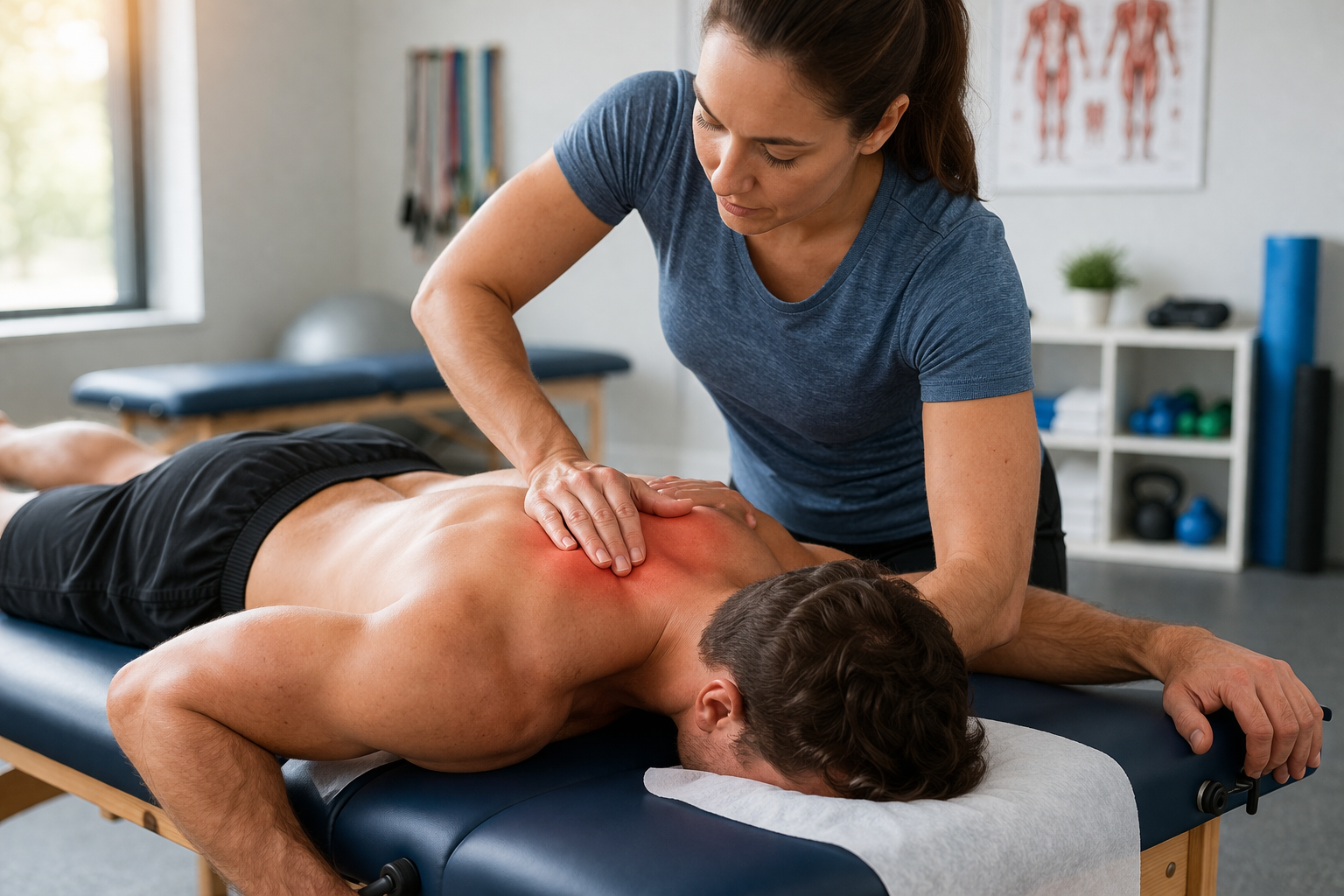
At Scottsdale Physical Therapy & Performance, we start by identifying why the upper back keeps getting overloaded, then build a plan that helps you keep moving, train at the right level, and return to full activity with confidence.
For active adults in Scottsdale, that matters. A desk worker who plays golf on weekends does not need the same plan as a CrossFit athlete, tennis player, or runner with recurring upper back pain after speed work.
We build a personalized treatment plan around pain relief, movement quality, posture correction, and return to activity. The plan may include hands-on care, strengthening exercises, mobility work, load management, and specific changes to training or workstation setup.
When You Can Keep Training And When You Should Back Off
Not every upper back muscle strain means full shutdown. If pain is mild, symptoms stay localized, and your movement is still clean, training can often be modified instead of stopped.
But if the pain is severe, spreading, affecting sleep, or causing obvious compensation, backing off is smarter. Training through a back strain with poor mechanics can turn a common injury into a much longer problem.
How Long Recovery Usually Takes
A mild muscle strain may settle within days. A more irritated trapezius strain or pulled muscle may take a few weeks, especially if it has been building for a while.
Recovery tends to move faster when people reduce aggravating load, improve posture, restore movement early, and follow through with rehab rather than waiting for pain to disappear on its own. Proper treatment usually beats passive waiting.
Preventing Another Flare-Up
Fix Training Load
Preventing another upper back muscle strain usually comes down to simple, consistent habits. Maintain good posture, use proper lifting techniques, take regular breaks during long periods of sitting or standing, and keep the upper back strong.
Clean Up Desk and Daily Posture
Incorporating ergonomic adjustments to your workstation can reduce daily stress on the thoracic spine. Adding shoulder blade squeezes, rows, prone cobras, and mobility work helps maintain proper posture and better body mechanics over time.
When To See A Physical Therapist
If you experience recurring upper back strain symptoms around the neck, shoulders, and shoulder blades that never fully settle, it’s wise to see a physical therapist sooner rather than later; these are classic signs you need a physical therapy check-up.
Early assessment can help identify the underlying cause, reduce pain, improve movement quality, and prevent chronic issues, and you can request an appointment with a physical therapist in Scottsdale to get that process started.
FAQ
How Do I Know If I Have An Upper Back Muscle Strain Or Something More Serious?
A simple upper back muscle strain usually causes localized pain, stiffness, tenderness, and pain with movement. Red flags include chest pain, shortness of breath, fever, numbness, weakness, unexplained weight loss, or loss of bladder or bowel control, which need urgent medical evaluation.
Should I Use Ice Or Heat For Upper Back Pain?
Use cold therapy in the first 48 hours if the area feels freshly irritated or inflamed. After that, heat therapy can help increase blood flow, relax tight muscles, and alleviate pain when stiffness is the bigger issue.
Can I Stretch A Pulled Muscle In My Upper Back?
Yes, but only gently. Gentle stretching can help once symptoms calm down, while aggressive stretching too early can make the affected muscle more irritated.
What Muscles Are Usually Involved?
The trapezius muscle is a common source, but the rhomboids and other upper back stabilizers may also be involved. These muscles help control the shoulder blades and support movement through the thoracic spine.
When Should I Get Checked In Scottsdale?
If the pain is severe, keeps coming back, limits your workouts, or is not improving with home care, get it evaluated. At Scottsdale Physical Therapy & Performance, we help active adults and athletes in Scottsdale figure out what is driving the problem and what to do next.