If your glutes feel like they’re not doing much during squats, lunges, or a run, despite training regularly, you’re probably dealing with inactive glutes rather than weak ones. Glute activation exercises are the fix for this specific problem: waking up muscles that have effectively gone quiet, often after an injury, surgery, or too many hours sitting at a desk. Below, we cover why glutes shut off in the first place, the best activation exercises to bring them back online, and how Scottsdale Physical Therapy & Performance adds neuromuscular activation training when exercise alone isn’t cutting it.
Why Your Glutes “Shut Off” (and Why Glute Activation Matters)
Your glute muscles are three muscles working together: the gluteus maximus (the largest, responsible for hip extension and power), the gluteus medius, and the gluteus minimus (both stabilize the hip and pelvis during single-leg movement like walking and running). When any of these gluteal muscles becomes inactive, other muscles, most commonly your hip flexors, lower back, and hamstrings, compensate to pick up the slack. This muscle imbalance is a big part of why weak or inactive glutes show up as knee pain, hip pain, or low back pain rather than glute pain itself.
Glutes typically go quiet for one of three reasons. The first is prolonged sitting and poor posture. A desk job is the classic culprit, since the hip flexors stay shortened and the glutes stay lengthened and unused for hours at a time. Sitting also tilts the pelvis forward, and active glutes help counteract that anterior pelvic tilt. The second is inhibition after an injury or surgery, a natural protective reflex called arthrogenic muscle inhibition, where the nervous system turns down activation of the muscles around an injured joint. The third is poor movement patterns that let other muscles dominate exercises that should be glute-driven. Active glutes also take pressure off your lower back during lifts and help you engage the right muscles in compound movements like squats and deadlifts. Beyond athletic performance, active glutes matter for everyday movement too, like climbing stairs comfortably or standing up from a chair without your lower back taking the strain, which is why glute activation work also functions as basic injury prevention.
Glute Activation Test: Are Your Glutes Actually Working?
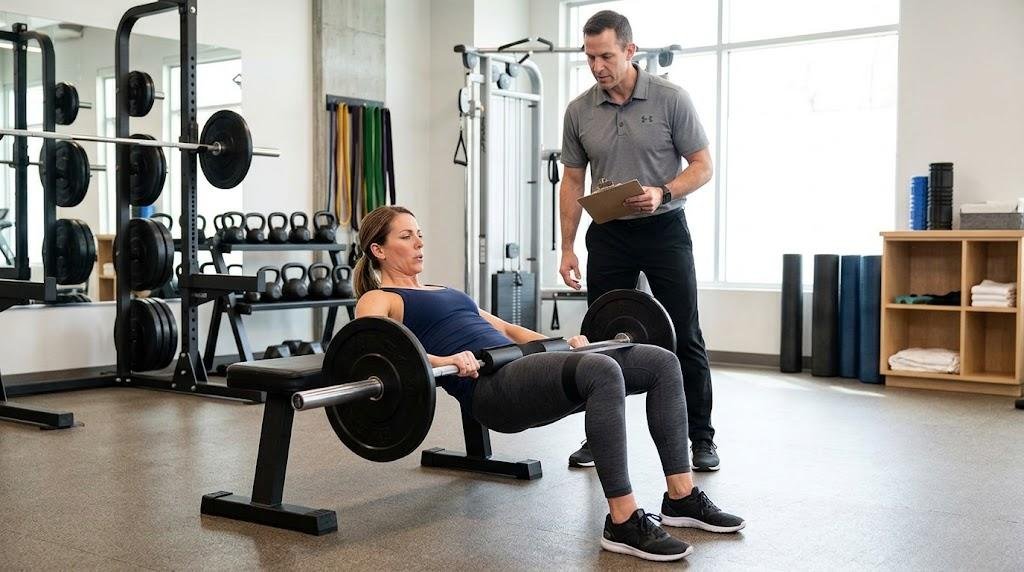
A simple way to check is a single-leg bridge or a step-down: if you feel the work mostly in your hamstrings, lower back, or the front of your hip rather than your buttock, your glutes likely aren’t activating the way they should. Some people also notice their hips drop or rotate during single-leg movements like stairs or lunges, a sign that the gluteus medius specifically isn’t stabilizing the pelvis the way it needs to.
Glute Activation Exercises to Build Glute Strength
These glute exercises work best starting with the beginner moves and building toward the advanced ones, either as a dedicated warm-up before training or as a standalone routine several times a week. Beginners can start with glute bridges and donkey kicks before moving on to the harder glute activation exercises.
Glute Bridge
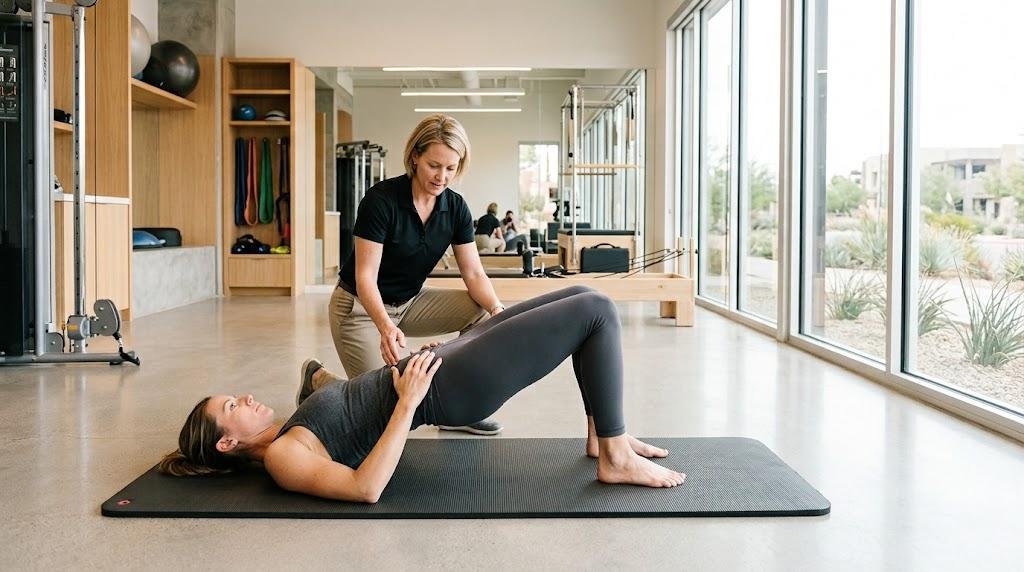
Lie on your back with knees bent, feet flat and hip-width apart. Squeeze your glutes and lift your hips until your body forms a straight line from shoulders to knees, then lower slowly. Focus on feeling the squeeze in your gluteus maximus specifically, not just your hamstrings. Aim for 2 to 3 sets of 12 to 15 reps.
Donkey Kicks
Start on your hands and knees. Keeping your knee bent at roughly 90 degrees, lift one leg up and back, squeezing your glute at the top, then lower with control. Keep your core engaged so your lower back doesn’t arch to compensate.
Single-Leg Glute Bridge
Same starting position, but extend one leg straight while keeping the other foot flat on the floor. Lift your hips using only the planted leg, keeping your hips level rather than letting the extended side drop. This isolates each side and exposes any left-right imbalance more clearly than the double-leg version.
Hip Thrusts
Sit on the ground with your upper back resting against a bench, knees bent and feet flat, hip width apart, holding a resistance band or light weight across your hips if you have one. Drive through your heels to lift your hips into full hip extension, squeezing your glutes hard at the top, then lower with control. Hip thrusts are one of the most effective exercises for building the glutes, which are among the most powerful muscles in the body, since the bench support lets you load hip extension directly instead of compensating through your lower back.
Clamshell
Lie on your side with knees bent and stacked, feet together. Keeping your feet touching, lift your top knee toward the ceiling, then lower it slowly with control. This targets the gluteus medius specifically, which is often the weakest link behind hip and knee pain.
Banded Lateral Walk
Place a resistance band around your legs just above your knees or ankles. In a slight squat position, step sideways while keeping tension on the band throughout, then reverse direction. This is one of the most effective ways to specifically target the gluteus medius under continuous load.
Bulgarian Split Squats
Once basic activation is solid, this single-leg exercise builds real strength on top of it: with your back foot elevated on a bench, lower into a lunge on the front leg, keeping your torso upright, then drive back up through your front glute.
How Physical Therapy and truFlex Help Reactivate Glutes
Traditional activation exercises work well for many people, but when inhibition is significant, often after surgery, a serious injury, or years of a sedentary movement pattern, exercise alone can take a frustratingly long time to reconnect the mind-muscle connection. This is where truFlex neuromuscular activation training comes in: rather than relying purely on voluntary muscle contraction, it uses controlled electrical stimulation to activate the motor nerves that drive the muscle, helping the nervous system relearn its connection to the glutes while you rebuild strength with the exercises above.
How Scottsdale Physical Therapy & Performance Approaches Glute Activation
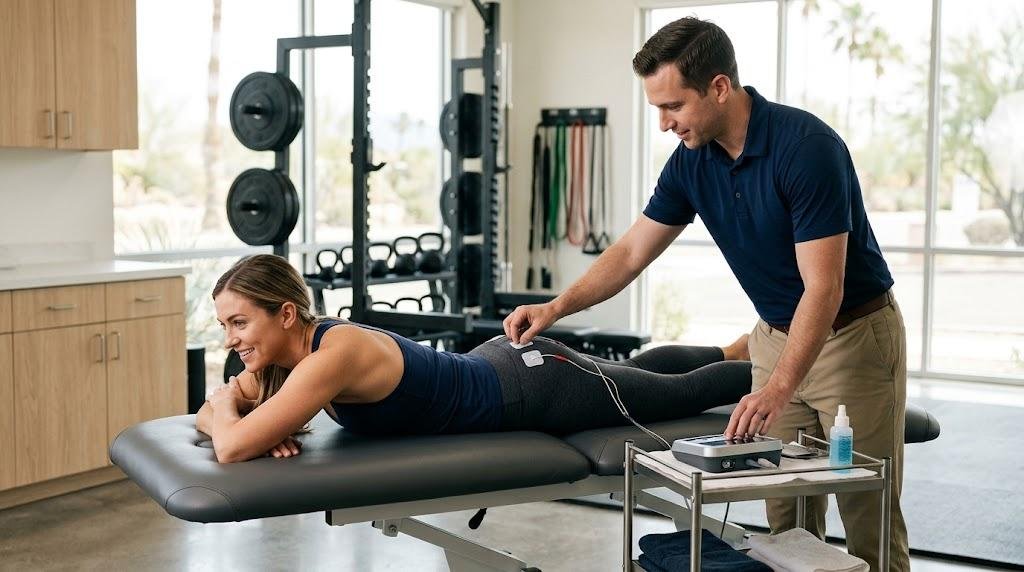
At Scottsdale Physical Therapy & Performance, glute activation work starts with a biomechanical assessment to find out why your glutes shut off in the first place. If your glutes have gone quiet after a hip or knee injury, after surgery, or from years at a desk, our neuromuscular activation training (truFlex) supports the reactivation process, and we pair it with the activation exercises above to make sure the improvement carries over into your training and daily movement, not just into the treatment session itself.
If your glutes aren’t responding to exercise alone, or you keep dealing with hip or knee pain that traces back to weak glutes, schedule an evaluation or reach out to our team to find out whether truFlex is a good fit for what exercise alone hasn’t fixed and to start building real hip stability again.
Frequently Asked Questions
What Is the Best Exercise to Activate Glutes?
There’s no single best exercise since different movements target different parts of the glutes, but the single-leg glute bridge is one of the most effective all-around options because it isolates each side and exposes imbalances that double-leg exercises can mask.
How Do I Know My Glutes Are Activated?
You should feel the squeeze in the glute itself. If your hamstrings, lower back, or the front of your hip are working harder, slow the rep down, pause at the top, and rest a hand on your glute to check that it’s firing. If it still isn’t, your glutes need more focused activation work.
What Exercise Has the Highest Glute Activation?
EMG research (muscle activity measurement) generally points to hip thrusts, the single-leg glute bridge, Bulgarian split squats, and banded lateral walks as producing some of the highest glute activation, since they demand either heavy load or extra stabilization compared to basic double-leg movements.
What Is the 8-8-8 Method for Glutes?
The 8-8-8 method is popular gym shorthand rather than a clinical protocol, and versions vary. Most use 8 reps each of three glute activation exercises, such as glute bridges, clamshells, and banded lateral walks, as a warm-up before training.