Most people think being physically fit means training hard and sweating a lot. In real life, physical fitness is built from a few simple parts you can train on purpose.
This guide breaks down the physical fitness components health related, how to spot weak links, and how to build a balanced fitness plan without overthinking it.
What “Health-Related Components” Actually Means
The health related components of physical fitness are a classic framework used in sports medicine and exercise science. They focus on qualities tied to physical health, daily function, and long-term overall health.
Most models talk about the five health related components: cardiorespiratory endurance, muscular strength, muscular endurance, flexibility, and body composition.
Why Active Adults And Athletes Should Care
If you only train one thing, you can get strong in one lane and still feel limited. You might have great muscle mass but poor aerobic fitness, or great cardiovascular endurance but low muscular fitness.
Training all related components of physical fitness helps support athletic performance, keeps you consistent, and makes your fitness routine easier to sustain.
Brief “What’s Happening” In Your Body When Fitness Improves
Fitness changes are your body’s ability to adapt to repeated stress in a smart dose. Your cardiovascular system learns to deliver oxygen more efficiently through your heart, lungs, and blood vessels.
Your skeletal muscles learn to produce force, repeat effort longer, and coordinate bodily movement produced by your nervous system with better control and less wasted energy.
Overview Of The Five Components

The Five Components Of Physical Fitness At A Glance
Here is the quick map of the components of physical fitness most people mean when they say “health related fitness.”
-
Cardiorespiratory Endurance: how well you sustain effort while your heart and lungs deliver oxygen.
-
Muscular Strength: how much force a muscle group can produce.
-
Muscular Endurance: how long muscle groups can repeat contractions against resistance.
-
Flexibility: range of motion at a joint without pain or difficulty.
-
Body Composition: the ratio of fat mass to fat-free mass, including lean muscle mass.
Common Causes Of Feeling “Not Fit” Even When You Work Out
A lot of “I’m training but not improving” is just a mismatch between training and the limiting component. These are common patterns we see.
-
Too much intensity, not enough recovery or progressive overload.
-
Plenty of strength training, not enough endurance training or cardiovascular training.
-
Strong major muscle groups, but poor mobility and flexibility training.
-
Guessing at body fat percentage and muscle mass changes instead of tracking well.
How To Use This Framework Without Getting Obsessive
The goal is not perfection in every category. The goal is a training program that fits your life, supports good health, and moves you toward your fitness goals.
If one component is far behind, bring it up first. That one weak link often explains plateaus, nagging aches, and why your workout routine feels harder than it should.
Component 1: Cardiorespiratory Endurance
What Is Cardiorespiratory Endurance?
Cardiovascular endurance, also called cardiorespiratory endurance, refers to the body’s ability to sustain physical activity while the heart, lungs, and blood vessels supply oxygen to working muscles.
Good aerobic fitness improves circulation and stamina, and it is linked with lower risk of heart disease, stroke, and other chronic diseases.
Signs Your Aerobic Base Is The Limiter
You do not need a lab test to notice patterns. These clues often show up first.
-
You gas out early in workouts, even if your strength is solid.
-
You recover slowly between sets, sprints, or drills.
-
Moderate intensity exercise feels harder than expected for your body weight.
How To Train Cardiovascular Endurance In A Practical Way
Pick a method you will actually repeat. Consistency matters more than choosing the perfect modality.
-
2 to 4 sessions per week of aerobic exercises like brisk walking, cycling, swimming, or rowing.
-
Build duration first, then build intensity.
-
Add 1 short session of intervals once your base is steady.
Guideline For Most Adults
The ACSM physical activity guidelines call for at least 150 minutes of moderate-intensity exercise or 75 minutes of vigorous exercise each week. That baseline supports cardiovascular endurance and overall health.
If you are already active, you can progress beyond this, but the guideline is a solid floor for most fitness centers and home programs.
Component 2: Muscular Strength
What Is Muscular Strength?
Muscular strength is the ability of a muscle group to exert force or lift and carry weight. The stronger your muscles, the heavier weight you can lift and move, especially when you keep proper form.
Strength matters for athletic performance, joint support, posture, and everyday tasks like stairs, carrying groceries, and getting up from the floor.
What Strength Looks Like In The Real World
Strength shows up as maximum force, but it also shows up as control. Many people can exert force, but they lose alignment when the load gets challenging.
A good strength plan builds capacity across all major muscle groups, not just your favorites.
How To Measure Strength Without Getting Lost In Numbers
A common method is a one-rep max (1RM) test, which is the maximum weight you can lift for one rep. If you are new to lifting or experience pain, consider submaximal testing options or estimated 1RM calculations for safety.
Many people use a safer estimate from a challenging set of 3 to 5 reps.
If testing is not your thing, track your strongest clean set with good technique and repeat it every 4 to 6 weeks.
How To Train For Strength
Strength responds well to progressive overload, which means gradually increasing weight, volume, training frequency, or intensity over time.
To improve strength, use heavier weights with fewer reps, and work close enough to fatigue that the last reps are challenging without breaking form.
Weekly Strength Basics For Most Adults
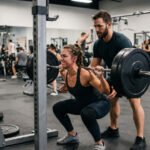
Most adults do well with strength training exercises two to three days per week. Use a variety of movements and equipment, and train push, pull, squat, hinge, carry, and core patterns.
Bodyweight exercises count too. Push ups, split squats, and loaded carries can build strength when programmed well.
Component 3: Muscular Endurance
What Is Muscular Endurance?
Muscular endurance is the ability of a muscle or group of muscles to sustain repeated contractions against resistance for an extended period. It is muscle group specific, meaning your legs can have great muscle endurance while your shoulders fatigue fast.
Higher muscular endurance supports sports that demand continual contraction, repeated sprints, long practices, and steady work output.
Clues You Need More Muscular Endurance
Muscle endurance issues often feel like “burn” and early fatigue, not heavy strain. You might notice these patterns.
-
You lose reps quickly set to set, even with lighter weights.
-
Your form breaks down late in the workout, especially in smaller muscle groups.
-
Long sessions feel harder than short, intense efforts.
How To Train Muscle Endurance Without Trashing Your Joints
Endurance responds well to high repetitions and controlled tempo. Keep the load manageable and focus on quality.
-
2 to 3 sets of 12 to 20 reps for key movements.
-
Shorter rest, but not rushed technique.
-
Rotate exercises to spread stress across muscle groups.
Endurance-Friendly Exercise Examples
Planks, push-ups, lunges, step-ups, and burpees can build muscular endurance when they are scaled correctly. You can also use circuits that alternate major muscle groups to reduce local overload.
If you feel joint pain, scale the range, change the angle, or use a different tool. The target is the muscle, not irritation.
Component 4: Flexibility
What Is Flexibility?
Flexibility is the range of motion of a joint or group of joints without pain or difficulty. It supports unhindered movement, balance, coordination, and agility at any age.
Improving flexibility aids in injury prevention, reduces stiffness, and helps with functional movement, especially when combined with good strength and control.
Why Flexibility Matters For Performance And Aging Well
Maintaining full range of motion through your major joints can reduce the likelihood of injury and enhance athletic performance. It also helps you keep moving well as your tissues adapt to training and to normal aging.
Flexibility work can also reduce muscle tension that builds up from repetitive positions, long sitting, and heavy training blocks.
Types Of Stretching
To increase flexibility, there are three types of stretching commonly used: static stretching, dynamic stretching, and proprioceptive neuromuscular facilitation (PNF), which involves alternating contraction and relaxation of muscles to improve range of motion.
Each one has a place, and your choice depends on timing and goals.
Dynamic Stretching
Dynamic stretching uses active movements that take joints through a full range of motion. It usually fits best in a warm-up before strength training or endurance training.
Static Stretching
Static stretching involves holding a muscle for about 10 to 30 seconds. It is often easiest after training or later in the day when you are not trying to produce power.
How Often To Do Flexibility Work
Flexibility exercises should be performed at least two to three days per week to improve range of motion. Short, consistent sessions beat occasional long sessions.
Simple stretching exercises like yoga poses, shoulder rolls, and hip mobility flows can help you move through wider ranges during sport and daily tasks.
Component 5: Body Composition
What Is Body Composition?
Body composition describes the ratio of fat mass to fat-free mass in the body. Fat-free mass includes muscle, bone, organs, and water, and it is often discussed as lean muscle mass or fat free mass.
A healthy body composition is not about one perfect number. It is about supporting physical performance, healthy body weight, and lower risk of chronic diseases.
Why Body Composition Is A Health Marker
Maintaining a healthy ratio of body fat to muscle mass is a critical marker of overall health. A person with a high body fat percentage is associated with a higher risk of heart disease, diabetes, and some cancers.
Body composition reflects the balance between physical activity, dietary habits, and metabolism, so it is best viewed over time, not week to week.
Start By Knowing Your Baseline
To see improvements in body composition, you need to know your starting point. Many people try to estimate body fat percentage from a mirror or a scale, and that can mislead your decisions.
If you want to accurately measure body composition, options include skinfold calipers, bioelectrical impedance, and DEXA. DEXA can also provide information related to bone mineral density.
How To Improve Body Fat Composition In A Balanced Way
Improving body composition often means reducing fat mass while increasing or maintaining lean muscle mass. Resistance training supports muscle retention, and regular aerobic activity helps manage energy balance and aerobic fitness.
Aim for steady habits, not aggressive swings. A balanced fitness plan usually works better for mental health and consistency than extremes.
Combining The Five Components Into A Training Program

Benefits Of A Balanced Approach
Regularly engaging in physical activity that targets all five components helps optimize physical health, mental health, and quality of life. It also slows the loss of bone density and muscle mass that can come with aging.
Sample Weekly Training Template
-
Strength training 2 to 3 days per week, hitting all major muscle groups.
-
Cardiovascular training 2 to 4 days per week, mixing steady and faster work.
-
Flexibility training 2 to 3 days per week, plus dynamic stretching in warm-ups.
-
One day focused on lighter weights, technique, and recovery movement.
Symptoms That May Suggest An Imbalance
This is not a diagnosis list. It is a pattern list that can help you choose what to prioritize.
-
Quick breathlessness. Aerobic fitness or pacing may be the limiter.
-
Muscles give out early. Muscular endurance may need more work.
-
You feel unstable under load. Strength, motor control, or core strategy may need attention.
-
Stiff joints that block movement. Flexibility or mobility work may be missing.
-
Weight changes without performance gains. Body composition habits may need adjusting.
Red Flags And When To Seek Urgent Care
Most training soreness is normal. Some symptoms are not “push through” signals.
Seek urgent care if you have any of the following during or after exercise.
-
Chest pain, chest pressure, or symptoms that feel cardiac.
-
Fainting, severe dizziness, or shortness of breath at rest.
-
New neurologic symptoms like weakness, numbness, or loss of coordination.
-
Sudden swelling, redness, or calf pain that is not explained by training.
-
Severe pain that escalates quickly or does not improve with rest.
Practical Steps And Support
At-Home Steps You Can Do Today
If you want quick momentum, keep it simple. Choose one action per component and build from there.
-
Walk briskly for 10 to 20 minutes, staying in a moderate intensity zone.
-
Pick two strength moves for major muscle groups and do 2 sets with good form.
-
Add one endurance finisher, like a plank series or push ups at an easy pace.
-
Do 5 minutes of dynamic stretching before training, then static stretching later.
-
Track a baseline, like waist measurement or a consistent scale trend, then reassess monthly.
How Physical Therapy Helps You Train Smarter
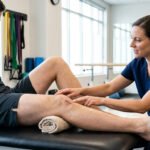
A good PT approach is not just rehab. It is an assessment and plan that respects your goals and your current capacity.
In a performance-focused clinic, we look at movement quality, joint range, strength across muscle groups, and how your body handles load and fatigue.
What We Assess
-
Movement quality and joint range of motion.
-
Strength and endurance across different muscle groups.
-
Load tolerance and fatigue response.
-
Flexibility and mobility limitations.
-
Coordination and motor control.
What A PT Plan Often Includes
Most plans are built around progressions you can repeat. The goal is to help you build a fitness plan that is sustainable and specific.
-
Strength training progressions, including resistance training dosage and tempo.
-
Endurance training structure, including how long to keep your heart rate elevated.
-
Flexibility exercises that match your sport and your daily demands.
-
Technique coaching for proper form, especially under heavier weights.
-
Return-to-activity steps that protect tissues while improving athletic performance.
Prevention And Return-To-Activity Tips That Work
If you have been inconsistent, start with frequency, not intensity. Your body’s ability to adapt improves when the signal is regular and reasonable.
Warm up with dynamic stretching, train with control, and save all-out sessions for when your base is ready. Most setbacks come from doing too much, too soon.
Mental Health Benefits Of Physical Fitness
Regular physical activity releases endorphins, the body’s natural “feel-good” chemicals, which reduce stress, anxiety, and depression while improving sleep quality and self-esteem. Steady training supports mental health and overall quality of life.
Frequently Asked Questions
Are The Health Related Fitness Components The Same For Everyone?
The framework is the same, but the emphasis changes. An endurance athlete may focus more on cardiorespiratory endurance, while a power athlete may prioritize muscular strength and maximum force output. The best approach is balanced, then tailored.
How Do I Know If I Should Lift Heavy Weights Or Lighter Weights?
If your goal is developing muscular strength, heavier weights with fewer reps usually make sense. If your goal is muscular endurance, lighter weights with higher reps are often a better fit. Many people benefit from both across the week.
Can Fitness Centers Accurately Measure Body Composition?
Some can, but results vary by tool and hydration. If you want the most precise data, ask what method they use and how they standardize testing. If you just need trend data, consistent conditions matter more than perfect accuracy.
How Often Should I Stretch If I Feel Tight All The Time?
A good starting point is two to three days per week for flexibility exercises, plus short daily movement breaks. Use static stretching after training and dynamic stretching before activity. If tightness is paired with pain, consider an assessment instead of forcing range.
Does Improving Fitness Help Mental Health Too?
Yes, regular physical activity is linked to improved mental health and quality of life. Many people notice better sleep, less stress, and improved mood with steady training. That said, training is one tool, not a replacement for professional mental health care when needed.
Brief Medical Disclaimer
This article is educational and not medical advice. If you have symptoms that worry you, or a medical condition that affects exercise, talk with a qualified clinician for individualized guidance.
Ready For A Plan That Fits Your Body And Goals?
If you want help building a balanced program across the components of physical fitness, a PT-led approach can save you months of guessing. At Scottsdale PT & Performance, we help active adults and athletes train with clarity, confidence, and a plan that matches your needs.
Book an evaluation and we will map your strengths, identify the limiter, and build a practical next-step fitness journey you can actually stick with.