Many runners wonder which stretching exercises for runners actually help, and which ones just waste time. This guide covers a simple pre-run routine, smart post-run stretches, and how to choose the right stretches for your body.
Why Stretching Matters For Runners
Stretching is an essential part of almost every workout, especially running, but it works best when you match the method to the moment. The goal is not to crank on tight muscles. The goal is to prepare your running muscles, protect range of motion, and support recovery and running comfort.
What Is Happening In Your Body
Running loads your lower body with repeated impact and spring-like work from the calves, hips, and gluteal muscles. Over time, multiple muscles can get stiff, especially after long runs or speed days, and limited hip mobility for runners can further affect comfort and efficiency. A calm plan that pairs warm-ups, movement prep, and a proper cool-down tends to work better than random stretching.
Types Of Stretching And When To Do Them
Stretching falls into two categories: dynamic and static. Dynamic stretching involves moving your joints or muscles through controlled motions for a set number of repetitions, helping to activate muscles and increase blood flow. Static stretching involves moving a joint or muscle to its limit and holding the position for a period of time, which helps increase flexibility and relieve tight muscles.
For runners, the simple rule is: perform dynamic stretching as part of your warm-up before running to prepare and activate your muscles, and save static stretching for after your run when your muscles are warm. Avoid static stretching before running, as it can reduce muscle activation and performance. If you stretch before running, keep it brief and dynamic.
Common Reasons Runners Get Tight
Tightness does not always mean something is wrong. These are common, non-alarmist reasons runners notice stiffness:
- Training volume spikes, especially for long distance runners
- Limited hip mobility and tight hips, often involving the hip flexors
- Calf stiffness in the calf muscles and the soleus muscle
- More sitting time, which can reduce hip extension and affect stride
- Skipping a consistent warm-up or cool-down, even in gym class style workouts
- Old pain patterns where one side guards, like the left leg or right leg
Symptoms And What They May Suggest
Use these as clues, not conclusions. If symptoms persist or change your running for 2–3 weeks, it’s worth getting assessed:
- Left knee or right knee soreness after hills may suggest quad or hip control limits
- A cranky left ankle or right ankle after speed work may suggest calf capacity limits and the need for focused foot and ankle exercises for runners
- Pinching in the left hip with stride may suggest hip flexor or hip joint irritation
- Stiffness behind the knee may suggest hamstring or calf tension
- Pulling in the inner thigh may suggest adductor overload
- Upper trunk tightness or shoulder fatigue may suggest upper body muscles and arm swing control
Red Flags And When To Seek Urgent Care
Most running tightness is manageable, but get medical help quickly if you notice:
- Sudden swelling, redness, or a hot joint
- A pop with immediate inability to bear weight
- Numbness, loss of strength, or foot drop
- Chest pain, severe shortness of breath, or fainting
- Fever, unexplained weight loss, or night pain that does not change with position
Warm-Up First So Stretching Works
Most doctors recommend warming up before stretching and running. Warming up can be as simple as walking for 5 to 10 minutes to get the blood flowing through the body. Every training session should start with an adapted warm-up and end with an appropriate cool-down.
Pre-Run Dynamic Warm-Up
Dynamic warm-ups, such as leg swings and walking lunges, increase blood flow before running. High knees increase heart rate and activate hip flexors during warm-up routines. Butt kicks stretch the quads and activate hamstrings as part of a dynamic warm-up.
- 5 to 10 minutes easy jog or brisk walk
- 1 to 2 rounds of the drills below, done in a controlled manner
- Keep your core engaged and your upper body upright
Dynamic Drill 1: Leg Swings
Leg swings can be performed forward, backward, and side-to-side to loosen hip joints before running. Start tall, hold a wall lightly, and move in a smooth rhythm.
- Forward and back: swing the right leg while the left foot stays planted
- Side to side: keep hips square and avoid twisting the pelvis
- Do 10 to 12 reps, then switch sides
Dynamic Drill 2: Walking Lunges With Rotation
Walking lunges help engage hips and core during warm-ups. Step into a long stride with the front knee stacked over the ankle, then rotate gently through your trunk.
- Keep the foot flat on the front leg
- Let the back heel lift naturally
- Take a few deep breaths as you move, then switch legs
Dynamic Drill 3: High Knees And Butt Kicks
Treat these as quick primers, not a workout. Keep your contacts light, shoulders relaxed, and breathing steady.
- High knees: drive the knee forward and up, then land softly
- Butt kicks: keep your knees under you and avoid arching your low back
- Add light arm circles to wake up the shoulders and upper body
Optional Dynamic Drill 4: Lateral Leg Swings (“Open the Gate/Close the Gate”)
To further warm up the hips, lateral leg swings can be added. Stand tall, hold onto a support, and swing the leg side to side in a controlled manner, opening and closing the gate. This drill helps activate the lateral hip muscles and prepares the hips for running.
Cool-Down Before You Stretch
A cool-down should be performed before stretching, which involves reducing the intensity of exercise for about 5-10 minutes. This can be an easy jog, walk, or gentle bike. It helps your heart rate come down and keeps blood moving before you hold stretches.
Post-Run Static Stretching Guidelines

Static stretching should be saved for after exercise to help increase flexibility and relieve tight muscles. It is essential to stretch after a run when the muscles are warm, as they are more flexible at that point. Hold each post-run stretch for around 30 seconds and repeat once or twice on each side.
Aim for mild to moderate tension during stretches feel a gentle pull but no sharp pain, numbness, or tingling. If you experience discomfort, reduce the stretch intensity or stop.
Static Stretch 1: Hip Flexor Stretch
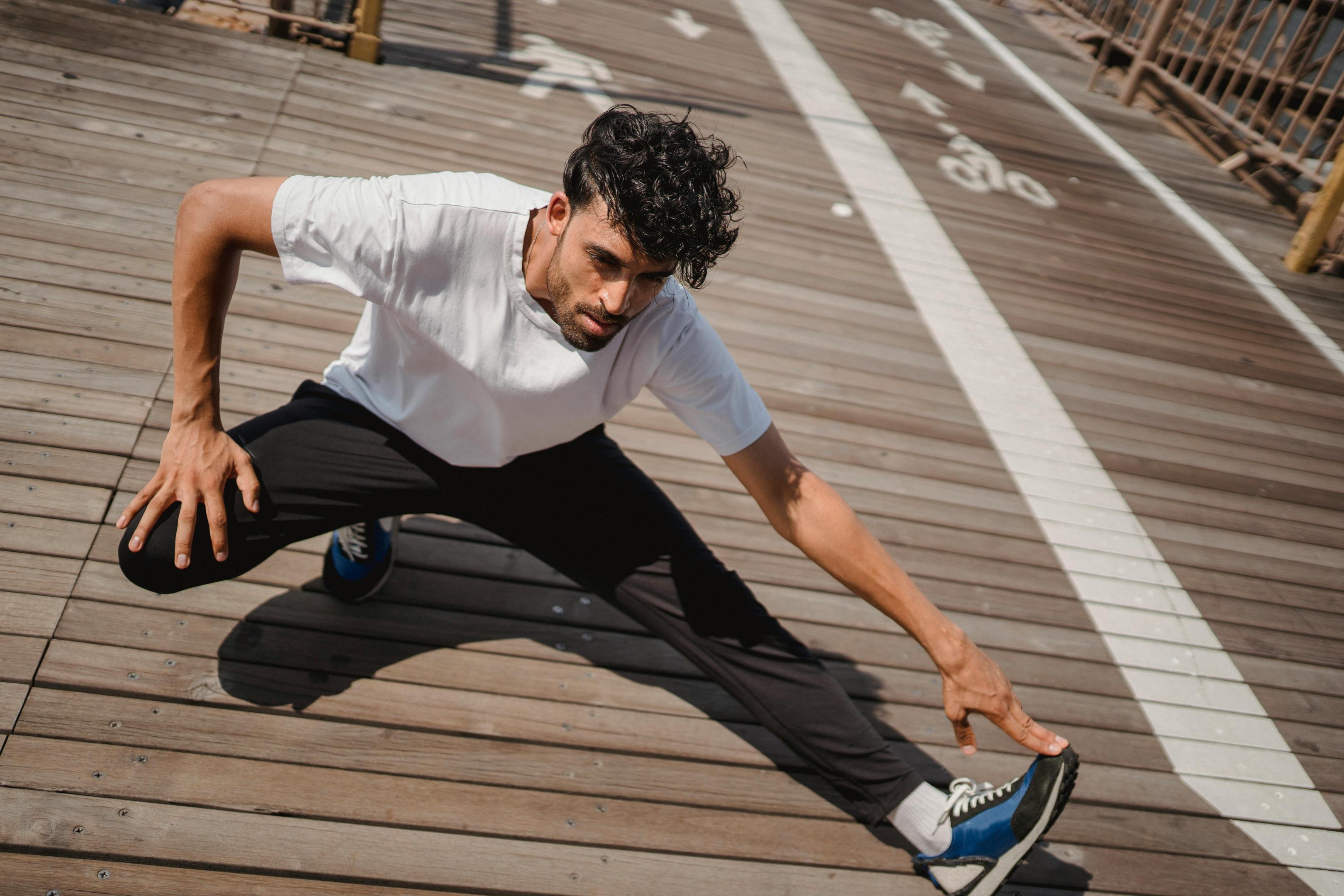
This hip flexor stretch is a staple for runners who sit a lot or feel tight at the front of the hip. Start in a half-kneeling starting position with the left leg forward and the back knee down.
- Keep feet hip width for balance, not on a tightrope
- Tuck the pelvis slightly, bring hips forward, and keep the upper body upright
- You should feel a stretch in the front of the back hip
- Take slow deep breaths, then switch sides
Static Stretch 2: Hamstring Stretch With A Straight Leg
For a hamstring stretch, keep one leg straight while you hinge forward at the hips. Place the other foot slightly behind as the other leg supports you.
- Keep your back long and lean forward from the hips
- Stop when you feel a deeper stretch, not a sharp pull
- If you feel nerve-like tingling, ease off and shorten the range
Static Stretch 3: Wall Calf Stretch
Proper technique for calf stretch involves pushing a wall with one leg behind. Put your hands on the wall at shoulder width, then step the back leg behind you.
- To target the gastrocnemius, keep the back knee straight, heel down, and toes pointed forward
- To target the soleus muscle, slightly bend the back knee while keeping the heel down and toes forward
- Hold the stretch, then switch sides
Static Stretch 4: Figure-Four For Glutes And Hips
The figure-four stretch targets the glutes and hips effectively as a static stretch. Sit tall and cross your ankle over the opposite knee, then gently pull the leg in.
- Keep your chest lifted and shoulder blade relaxed down and back
- You can guide the knee with your left arm or right arm, depending on the side
- Aim for a calm stretch across the glutes, not joint pressure
Note on IT Band and Lateral Hip Stretching
While many runners focus on the iliotibial (IT) band, it’s important to understand that the IT band itself is a thick band of connective tissue and not highly stretchable. Instead, focusing on stretching and strengthening the lateral hip muscles, including the tensor fascia latae (TFL), and improving hip control can be more effective for managing lateral knee or hip tightness.
Common Stretching Mistakes Runners Make
- Stretching cold muscles before warming up, which can increase injury risk
- Holding static stretches for too long pre-run, reducing muscle activation
- Overstretching painful or irritated joints instead of modifying or skipping
- Neglecting consistent warm-up and cool-down routines
- Ignoring side-to-side differences and pushing through asymmetrical tightness
At-Home Relief Now
If you feel stiff after a run, keep it simple. Stretching after a run may help promote blood flow to the muscles, enabling them to repair and recover more quickly.
- Do a 5 to 10 minute walk first, then stretch
- Pick 2 to 4 stretch targets that match what feels limited
- Hold static stretches for 30 to 60 seconds after muscles are warm to aid recovery
- If your left side feels tighter, do not force it. Start smaller and build
Injury Prevention And Performance Notes
Targeting key areas like hip flexors, lateral hip muscles, and calves may help support comfort, short-term range of motion, and recovery feel. Stretching can contribute to better running comfort and movement quality but is only one piece of the puzzle. Strength training, progressive training, adequate sleep, and proper fueling are equally important for overall running injury prevention and performance.
How Physical Therapy Helps Runners In Scottsdale
Many runners benefit from working with a leading physical therapy clinic in Scottsdale, AZ that understands running demands and training goals.
If tightness keeps coming back, a physical therapy evaluation can help you stop guessing. In Scottsdale, AZ, we often look at how your hips, knees, ankles, and trunk work together, then build a sports performance physical therapy plan that fits your mileage and goals.
A Good Plan Usually Includes:
- Movement testing, including single-leg control and mobility checks, with discussion of availability and cost of Scottsdale PT & Performance services
- Assessment of ankle dorsiflexion and hip extension range
- Cadence and training load review to optimize running mechanics
- Guidance on dynamic vs static stretching timing for your week
- Strength progressions for calves, hips, and glutes
- Return-to-run loading that matches your tissue tolerance and schedule
Prevention And Return-To-Activity Tips
Regular habits beat occasional big sessions. Perform mobility work or stretching for at least 5 minutes a day a few times a week to maintain flexibility, and consider how a broader health and wellness journey with Scottsdale Physical Therapy can support your long-term goals.
- Keep your warm-up consistent, even on easy days
- Save long holds for post-run, not before
- Rotate your stretch menu across hips, calves, hamstrings, and glutes
- If a stretch irritates the joint, shorten the range, change the angle, or skip it
- If you notice one knee drifting inward, cue knee forward over the middle toes and keep the foot stable
- For lunges, keep feet closer only if balance is solid, otherwise use hip-width stance
FAQ: Stretching Exercises For Runners
Should I Stretch Before Running?
Yes, but keep it brief and dynamic. Dynamic stretching helps to activate muscles and warm them up prior to running, while static stretching should never be performed before warming up the muscles.
How Long Should I Hold Post-Run Stretches?
Most runners do well with about 30 seconds per stretch, repeated once or twice per side. Longer holds can be fine if they feel good and do not flare symptoms.
Does Stretching Help DOMS After Running?
Stretching after running may help reduce muscle and joint stiffness known as delayed onset muscle soreness (DOMS). It may not eliminate soreness, but it often helps you move more comfortably the next day.
What If My Left Leg Feels Tighter Than My Right Leg?
That is common. Start with smaller intensity, focus on control, and compare how both sides respond over a week, not one session.
Is Yoga Good For Runners?
It can be. Incorporating yoga routines, such as those by Yoga with Adriene, can benefit post-run recovery if you keep the effort easy and treat it as mobility and breathing practice, not a max-stretch session.
Brief Medical Disclaimer
This article is educational and is not a substitute for medical advice, diagnosis, or treatment. If you have severe pain, progressive weakness, numbness, or sudden swelling, seek urgent care.
Ready For A Smarter Stretch Plan
If you want a runner-specific plan that blends mobility, strength, and training progression, book an evaluation with Scottsdale Physical Therapy & Performance. We will help you choose the right stretch targets, build a routine you will actually follow, and keep you moving toward your next run with more confidence.