Back pain after a workout, a round of golf, a long day at a desk, or lifting heavy objects can be confusing to interpret. Many active adults in Scottsdale assume they pulled a muscle, rest for a few days, and wait for it to improve. Sometimes that is exactly what happened. Other times, the pain pattern points more toward a herniated disc or another disc-related issue.
Understanding the differences between strained muscle vs herniated disc is crucial. Both can cause general back pain, limit movement, and interfere with training, work, and sleep. Identifying the source of back pain is essential for targeted treatment especially when symptoms affect how you move or when numbness, tingling, or weakness appear.
Why Muscle Strains and Herniated Discs Are Often Confused
Both muscle strains and herniated discs can cause acute pain, stiffness, muscle spasms, and difficulty bending, twisting, or standing upright. Low back pain is extremely common; in 2020, it affected 619 million people globally and remains a leading cause of disability and work-related absences.
The key difference lies in the pain pattern. Muscle pain tends to be dull, aching, and localized to the injured area. Disc pain is sharper, more irritable, and often radiates into the hip or one or both legs due to nerve irritation.
What Causes Muscle Strains and Herniated Discs?
A muscle strain occurs when muscle fibers become overstretched or torn, often from excessive force, sudden movements, improper lifting, poor posture, or lifting heavy objects when fatigued. A pulled muscle or pulled back muscle describes this injury.
A herniated disc, sometimes called a slipped or ruptured disc, happens when the softer disc material pushes through a tear in the tough outer layer (annulus fibrosus) of a spinal disc. This can irritate nearby spinal nerves or, in some cases, the spinal cord. The lumbar spine is a common site for herniation.
Common Signs and Symptoms: A Direct Comparison
| Symptom | Muscle Strain | Herniated Disc |
|---|---|---|
| Pain Type | Dull, aching, localized | Sharp, radiating, often into legs/hip |
| Onset | Sudden localized pain | Variable; may worsen with sitting or bending |
| Muscle Spasms | Common | Less common |
| Neurologic Symptoms | Rare | Numbness, tingling, muscle weakness possible |
| Pain Behavior | Worsens with movement of affected muscle | May worsen with nerve compression activities |
| Severity Grading | Mild to severe tearing of muscle fibers | Can vary; some asymptomatic |
When to Seek Medical Attention: Recognizing Red Flags
If your pain sticks around for more than a week or two, gets worse, or you start noticing numbness, tingling, or weakness, it’s time to see a healthcare professional. And if you experience serious signs like new back pain with fever, major weakness, loss of bladder or bowel control, or trouble walking or moving your limbs, don’t wait get medical help right away. These symptoms need prompt attention to avoid complications.
Diagnosis and Evaluation
Your physical therapist will take a good look at your history and do some hands-on testing to see how your movement is affected, where it hurts, how strong your muscles are, and if there are any nerve-related signs. This helps figure out whether it’s a muscle issue or something involving nerves. From there, they can put together a treatment plan that fits you personally.
To put it in everyday terms, maybe bending down to tie your shoes or sitting in the car for a long drive causes sharp or radiating pain with a herniated disc, while a strained muscle might just feel sore or stiff after standing for a while or finishing a workout.
Treatment Approaches for Muscle Strain and Herniated Disc

Muscle Strain Treatment
Most muscle strains get better with some rest, using cold or warm compresses depending on how the injury is healing, and taking over-the-counter pain relievers as needed. The RICE method (Rest, Ice, Compression, Elevation) is a good starting point. Anti-inflammatory medications can help ease pain and swelling, but it’s best to use them carefully and not rely on them too much so your body can heal naturally.
If your pain doesn’t settle down, a targeted physical therapy check-up can help you regain movement, build strength, and fix any movement habits that might have contributed to the injury.
Herniated Disc Treatment
For herniated discs, the focus is usually on conservative care first things like physical therapy, neuromuscular activation training to support proper muscle firing, changing how you move or what activities you do, managing pain, and making lifestyle tweaks to ease pressure on your spine. Sometimes, epidural steroid injections are used to calm nerve irritation and provide relief.
Surgery is a last resort and usually only considered if symptoms don’t improve with these treatments or if nerve problems get worse.
Physical Therapy’s Role in Recovery
Physical therapy plays a big part in recovery for both muscle strains and herniated discs, but the approach is different for each. For muscle strains, therapy focuses on easing pain, improving range of motion, and strengthening the muscle without pushing it too hard. For herniated discs, therapy aims to reduce nerve symptoms, stabilize your core, improve spinal alignment, and teach you ways to move that protect your back.
Hands-on therapy, gradual exercises, posture coaching, and learning better lifting techniques are all part of the process especially for active folks who want to improve sports performance while getting back to golf, running, CrossFit, or just everyday life.
Scottsdale Physical Therapy & Performance: Specialized Care for Active Adults
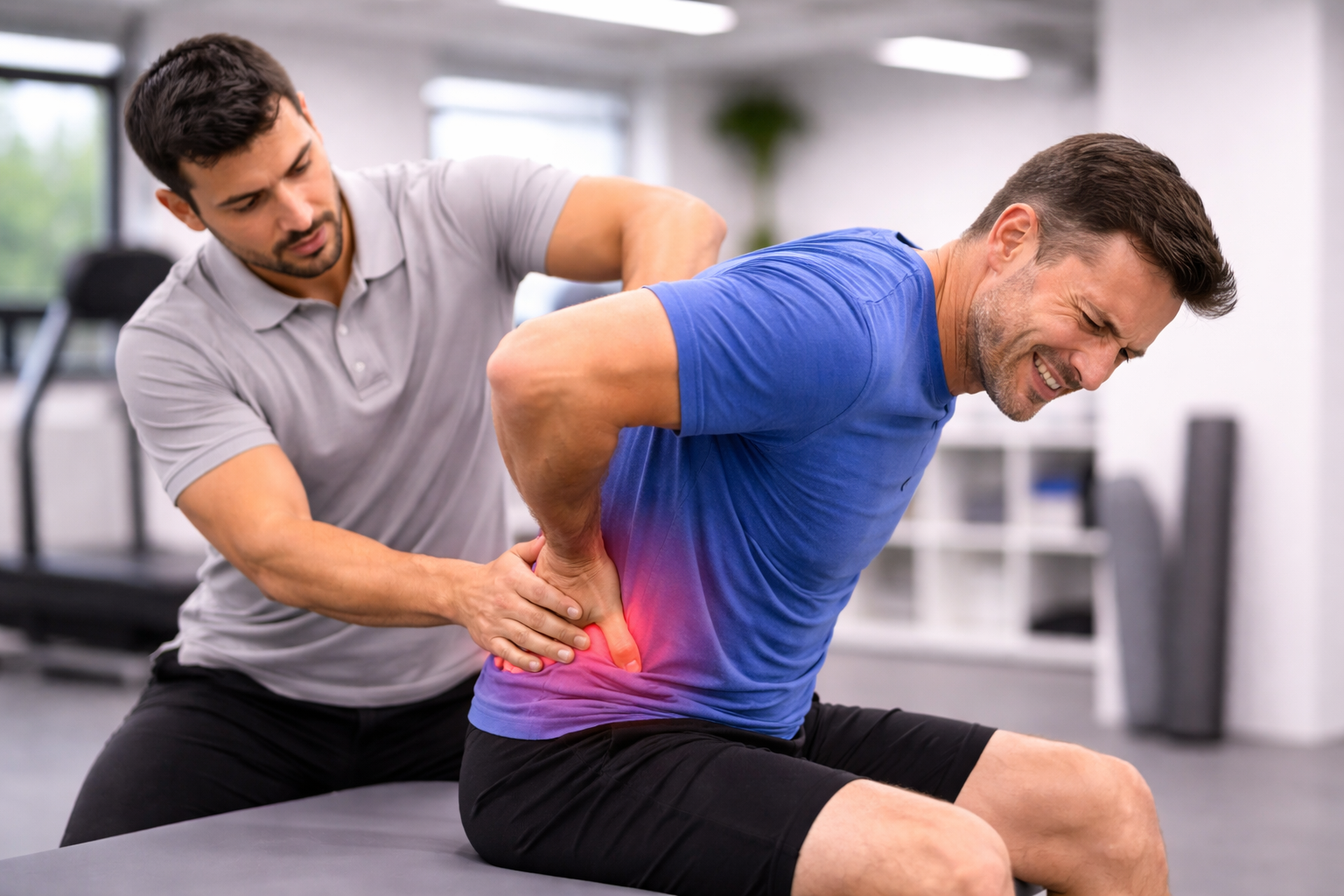
Here at Scottsdale Physical Therapy & Performance, we specialize in helping active adults and athletes. We look at how your symptoms change with different movements and activities, find where you might be tight or weak, and figure out what’s holding you back from doing what you love.
We create personalized plans that include manual therapy, one-on-one strength and neuromuscular activation training, movement coaching, and practical tips to adjust your workouts and daily habits. Our goal is to give you honest, effective care that helps you recover steadily and get back to your best not just quick fixes or passive treatments.
FAQ
Can a Pulled Back Muscle Feel Like a Herniated Disc?
Absolutely. Both can cause general back pain and limit how you move, especially early on. But herniated discs are more likely to cause sharp, radiating pain along with tingling, numbness, or muscle weakness due to nerve irritation.
How Long Does Recovery Usually Take?
Mild muscle strains often get better in a few weeks. Recovery from disc issues varies a lot depending on nerve involvement and how long symptoms last. If things don’t improve or get worse, it’s a good idea to see a professional and consider a personalized health and wellness physical therapy plan.
Ready to Get Clarity on Your Back Pain?
If you’re not sure whether your pain is from a strained muscle or a herniated disc, don’t just guess. Getting checked out can help you start the right treatment sooner. If you’re an active adult in Scottsdale looking for a movement-focused, personalized recovery plan, come see us at Scottsdale Physical Therapy & Performance to request an appointment with a physical therapist in Scottsdale and learn more about availability and cost for Scottsdale PT & Performance services. We’re here to help you move better and feel stronger reach out and let’s get you back to doing what you love.