A back spasm can stop your day fast. One awkward lift, a hard workout, too much sitting, or a back injury that already had your back muscles irritated, and suddenly your lower back locks up. For active adults and athletes, that kind of pain is not just annoying. It changes how you train, how you sit, how you sleep, and how confident you feel moving.
When people search for stretches for muscle spasms in back, they usually want two things. They want something that feels safe right now, and they want to know they are not making the problem worse. That is exactly where a smart plan matters, because some simple stretches can calm the area down, while the wrong movement can ramp symptoms up fast.
Why Back Muscle Spasms Happen
Muscle spasms are often a protective response. When the tissues around your lumbar spine feel irritated or overloaded, the back muscles may tighten to guard the area. Sometimes that starts after a strain, heavy lifting session, awkward twist, or long stretch of sitting. Sometimes a deeper issue like disc irritation or joint sensitivity may be part of the picture, which is one reason repeated spasms are worth evaluating.
Long periods of sitting, especially at a desk, are also a common setup for back pain and tightness. If your hips stay stiff, your abdominal muscles and glutes are not doing much, and your lower back keeps taking the load, the back muscles can start guarding. That is one reason irritated backs often hate long periods in one position and feel better with light movement.
When Stretching Helps and When It Does Not
The right stretch should feel like a gentle stretch, not a fight. Mild pulling, tightness, or stiffness is usually fine. Sharp pain, spreading pain down the right leg or left leg, numbness, tingling, or pain worse after each rep is a sign to stop. Listen to your body, relax into the movement, and do not push past discomfort into pain.
Stretching works best when the spasm is part of a muscle-driven problem and not the only answer you are relying on. If the back keeps locking up, if you cannot get into a neutral position, or if symptoms keep returning when you lift heavy objects, run, golf, or train, you probably need more than a stretch. You need to know what is overworking, what is underperforming, and which movements your body can actually tolerate. Modern physical therapy techniques can help sort that out faster because they help identify which movements are calming things down and which ones keep feeding the problem.
Safe Stretches for Muscle Spasms in Back
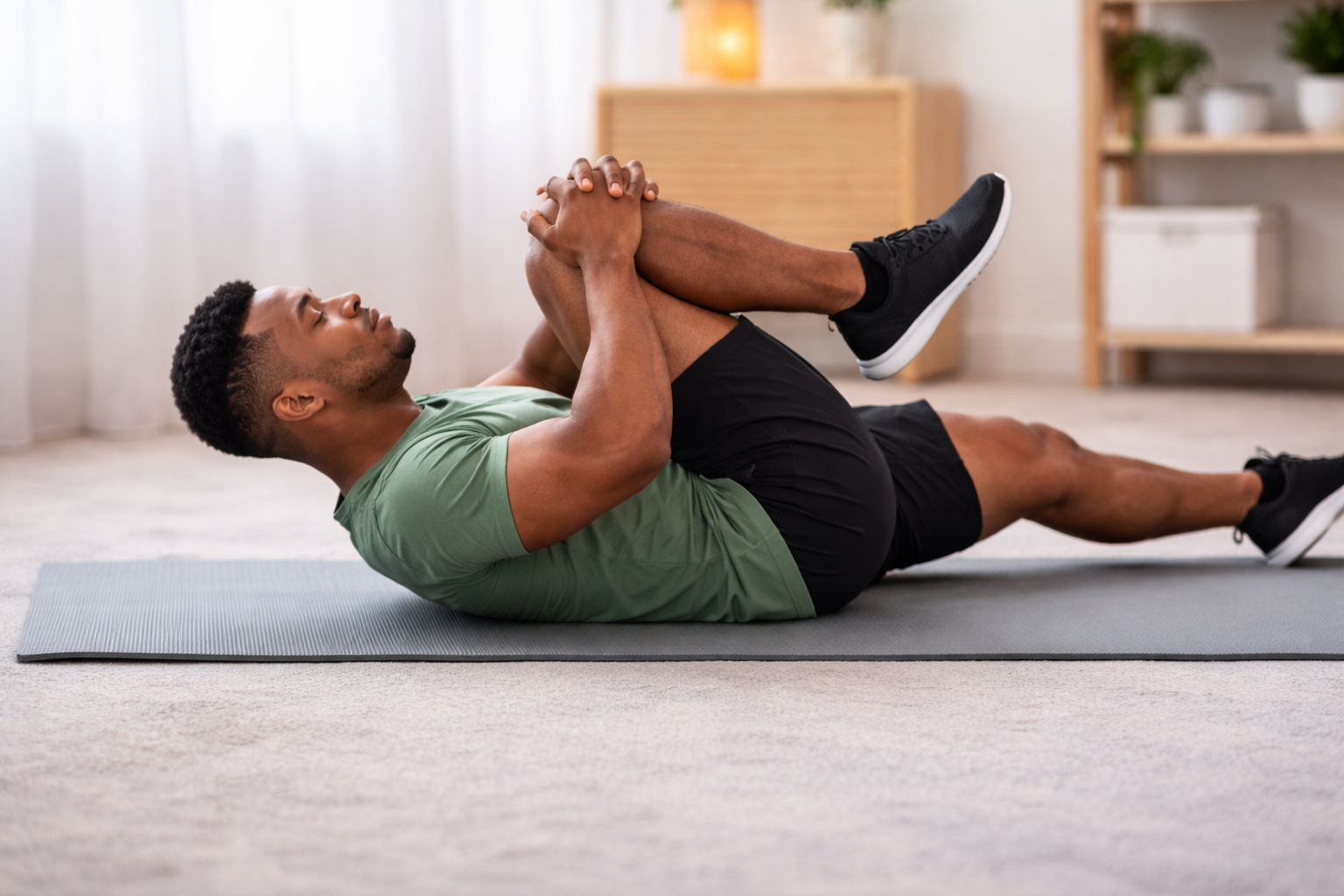
Knee-To-Chest Stretch
For many people, the knee to chest stretch is one of the safest places to start. Lie on your back with feet flat on the floor and knees bent. From that starting position, keep one knee bent, then gently pull your right knee toward your chest while the opposite leg stays with the foot flat or the leg straight if that feels better. Hold the stretch, rest, then return to the starting position and repeat on the opposite side with the left knee. This stretch can help lengthen the lower back and ease tension in the painful area.
Keep your head, shoulders, and stomach relaxed while you breathe. Think slow inhale, slow exhale, belly button soft, back muscles unclenching. If bringing one leg in feels fine, you can try both knees to chest with bent knees, but only if it feels easy and controlled. If your pain shoots into the opposite side, thigh, or buttocks, back off.
Lower Back Rotation Or Knee Rolls
Another good option is the lower back rotational stretch, sometimes called knee rolls. Lie on your back with knees bent, feet flat, and arms out for balance. From this starting position, slowly roll both knees gently to the left side while keeping your shoulders as quiet as possible on the floor. Come back to center, then move in the opposite direction toward the right side. This can relieve tension in the lower back and help the spine tolerate rotation again.
Use a small range at first. You do not need to force your knees flat on the floor. A comfortable stretch for 15 to 20 seconds is enough, then return to the starting position and repeat. If one side feels noticeably tighter, that matters. It may suggest that one hip, one side of the lower spine, or one leg is adding more stress to the system.
Cat-Cow
Cat cow is a helpful choice when your back feels stiff and compressed. Start on hands and knees with your spine in a neutral position. Gently arch your back toward the ceiling like a cat, then slowly let your chest move forward as your spine dips in the other direction. The cat stretch helps increase flexibilityand ease tension in the back and core muscles, and many people tolerate 10 to 20 smooth reps well.
Do not chase a huge range. Keep the movement smooth, let your shoulders and hips move with the spine, and match the motion to your breath. If toes pointed behind you feels better than tucked toes, do that. This should feel like mobility work, not a max effort stretch.
Pelvic Tilt
The pelvic tilt is simple, but it is often one of the most effective exercises for calming tight back muscles. Lie flat on the floor with knees bent and feet flat. Tighten the abdominal muscles and lightly squeeze the buttocks so the lower back gently presses toward the floor. Then relax and return to a comfortable starting position.
This is useful because it brings control back to the lower back without a big motion. If you tend to lose good posture, overarch your lower back, or feel unstable when you lie on your back, pelvic tilts can reconnect the core muscles and help you find a better position before you move into bigger stretches, especially if you are also working to overcome training or performance plateaus.
Add Strength Once The Spasm Starts Settling
Once the spasm starts settling, a few simple strengthening exercises can help prevent recurring spasms by supporting the area and reducing overload. A bridge exercise is a good next step. Lie on your back with knees bent, feet flat, and arms by your side. Tighten your core muscles and raise your hips slowly, then lower with control. The bridge exercise strengthens the back and core muscles and also brings the glutes into the plan.
That matters because weak or poorly timed support from the glutes, hamstrings, and trunk can leave the lower back doing too much work. Performing these exercises regularly helps maintain back health, improve movement quality, and prevent future flare-ups, especially if you want to return to lifting, hiking, golf, or sports performance training in Scottsdale without feeling fragile.
What To Avoid When Your Back Is In Spasm
Do not force a hamstring stretch with one leg straight if that position lights up your lower back. Do not bounce. Do not crank into toe touches just because your toes feel far away. And do not throw a foam roller directly on the most painful area if even light pressure feels aggressive. Early on, less is often better.
It is also smart to avoid complete bed rest. That usually makes the body stiffer and more sensitive. If sitting is uncomfortable, change position often. If standing in one spot is rough, take short walks. Light movement helps get blood to spasming muscles and can help break the spasm cycle better than shutting everything down, and adjunct options like red and near-infrared light therapy may further support tissue recovery in some cases.
Keep Moving Between Stretches
One of the best resets for back pain is walking. Even five to ten minutes can help your body relax, reduce guarding, and restore a more natural rhythm through the hips, pelvis, and spine. It is very important to keep mobile as we age, even if we have pain, and that applies even more if you are trying to calm a spasm without getting stuck in it.
Daily simple stretches, regular physical activity, and smart breathing during each stretch often make a bigger difference than one long session. A routine of simple stretches often can lead to meaningful improvements in pain and mobility, but consistency matters more than intensity, especially when you are on a longer health and wellness journey. Think easy reps, frequent movement, and steady progress.
When Physical Therapy Makes Sense
If your spasms keep returning, if you have low back pain that does not improve, or if stretching leads to worse pain, numbness, or tingling into the extremities, get checked. A physical therapist can help identify which movements are safe, which movements are painful, and whether the issue is mostly muscular or connected to something deeper in the spine, and you can request an appointment with a physical therapist in Scottsdale to get a thorough evaluation.
Physical therapy can help restore mobility to painful areas, improve quality of movement, and build the support system your lower back has been missing. That may include hands-on treatment, graded mobility, core strengthening, hip work, and advanced options like neuromuscular activation training, plus a plan for returning to activity instead of just resting and hoping the pain settles.
How Scottsdale Physical Therapy & Performance Approaches It
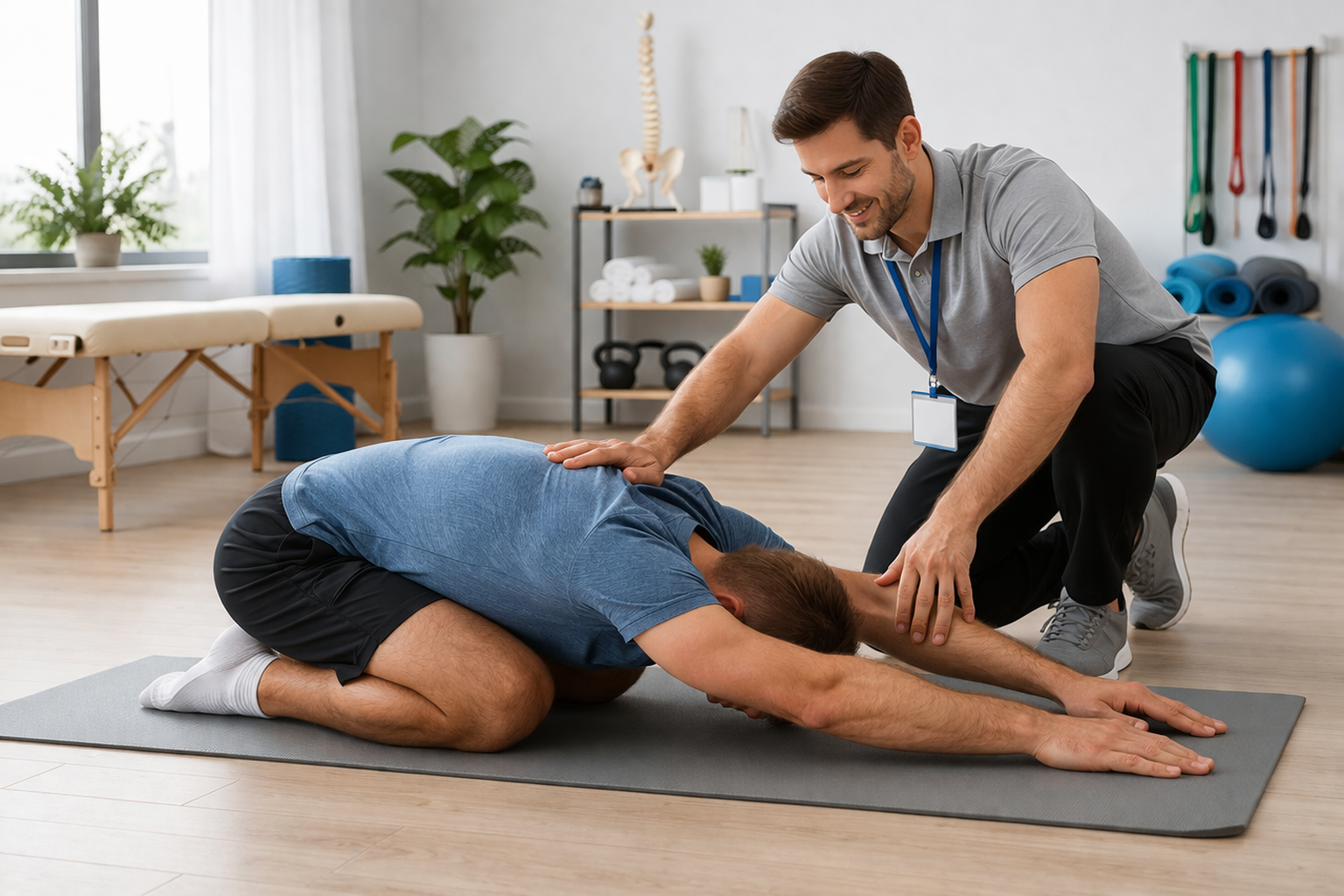
At Scottsdale Physical Therapy & Performance, we do not just hand out a few stretches and hope your back calms down. We look at why the spasm started in the first place. That may mean assessing how you move, how you train, how your hips and core are contributing, and whether your symptoms act more like a muscle strain, an irritated joint, or something that needs a different plan. The clinic’s approach centers on finding the real cause, building a treatment plan around your goals, and helping you get back to training, golf, running, lifting, or everyday activity without feeling like you have to shut everything down.
They combine expert evaluation with personalized care, using the latest techniques and evidence-based practices to address both symptoms and underlying causes. This comprehensive approach ensures that each patient receives targeted therapy designed to restore function, reduce pain, and prevent future spasms. Their focus on education empowers patients to understand their bodies better and maintain progress long-term, which is a hallmark of Scottsdale Physical Therapy & Performance.
FAQ
Should I Stretch a Back Spasm Right Away?
Usually yes, but only with gentle movements that do not increase pain. Start with easy options like knee to chest, pelvic tilts, or small knee rolls, and stop if symptoms spread or intensify.
How Often Should I Do Stretches for Muscle Spasms in Back?
A few short sessions during the day usually work better than one long session. Repeat what feels helpful, rest between sets, and pair stretching with walking or other light movement.
Is Heat, Rest, or Movement Better?
Brief rest can help, but complete rest usually does not. In most cases, light movement and controlled stretching are more useful than staying in bed all day.
When Should I See a Physical Therapist?
If pain persists, keeps returning, or interferes with training, work, sleep, or normal movement, it is time. The same is true if you notice numbness, tingling, weakness, or pain that shoots down a leg.
If your back keeps tightening up, if stretching only helps for a few hours, or if you are changing how you train because you do not trust your lower back, it’s time for a thorough evaluation. The physical therapy clinic in Scottsdale, AZ offers expert assessment and personalized treatment to help you regain confidence and move without limits.