A sudden sharp pull in the inner thigh during a golf swing, a lateral lunge, or a quick change of direction usually means you’ve strained one of your adductor muscles. Groin strain recovery time depends heavily on how severe the tear is, but most active adults with a mild or moderate strain are back to full activity within one to six weeks once they rehab it properly. Here is what the groin muscles actually do, how recovery changes by grade, and what physical therapy looks like at each stage. It’s an injury we treat regularly at Scottsdale Physical Therapy & Performance, especially in golfers dealing with pain during their swing.
What Is a Pulled Groin Muscle? How the Groin Muscles Work
The groin muscles connect your lower abdomen to your thighs, and the ones strained most often are the adductor muscles. They run along your inner thigh from the pubic bone down toward the knee, and their job is pulling your leg inward toward your body’s midline. A pulled groin muscle happens when one of these muscles, most often the adductor longus muscle, is stretched or torn beyond its normal range, usually during a sudden lateral movement, an aggressive swing rotation, or a quick change of direction. This is one of the more common sports injuries in golf and lateral-movement sports. Golfers are especially prone to it during an aggressive downswing, and CrossFitters and weightlifters can strain the adductors during lateral lunges or wide-stance squats.
Symptoms, Grades, and Groin Strain Recovery Time
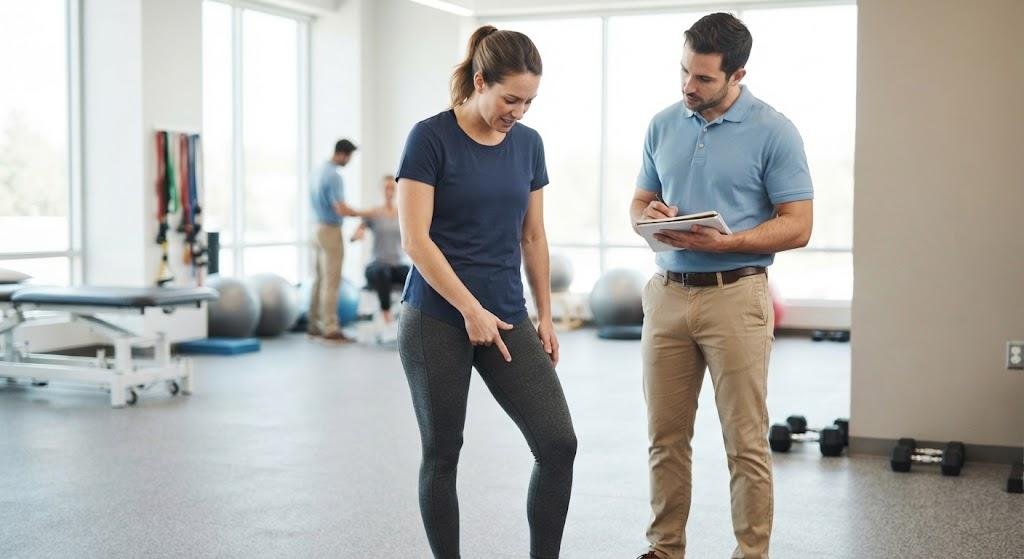
Beyond the initial sharp pain in the groin area, watch for tenderness along the inner thigh, muscle spasms, swelling, and sometimes bruising that shows up a day or two later. Pain typically worsens when you bring your legs together against resistance, squeeze a ball between your knees, or push off during a lateral movement.
Groin strains are graded on a 1-to-3 scale, and the grade drives your recovery timeline:
- Grade 1 (mild): Mild overstretching that damages up to 5% of the muscle fibers. Mild pain during activity but you can usually still walk normally. Recovery typically runs 1 to 3 weeks.
- Grade 2 (moderate): A partial tear with moderate pain, swelling, and some loss of strength. Recovery typically runs 3 to 6 weeks.
- Grade 3 (severe): A complete muscle tear, sometimes with a popping sensation at the moment of injury, severe pain, significant swelling, and difficulty walking. Recovery can run 8 to 12 weeks or longer, and severe strains can take over four months.
Your age, overall health, and prior fitness level also affect how long healing takes. A physical examination usually confirms the grade, though imaging may be used for a severe strain or if a provider wants to rule out a sports hernia, which can feel similar but is a different injury involving the lower abdomen and groin area rather than a muscle strain itself.
When Groin Pain Might Be a Sports Hernia Instead
Groin pain that lingers for weeks despite rest, or that worsens specifically with coughing, sneezing, or sit-ups, can point toward a sports hernia rather than a straightforward muscle strain. Sports hernias are less common than groin strains, but they turn up in the same kinds of sports injuries, the ones built on repetitive twisting and cutting. If your symptoms don’t fit the typical strain pattern, bring it up with your provider.
Treatment for a Groin Strain
In the first few days, the priority is calming the injured muscle down. Rest from the aggravating movement, an ice pack applied for 10 to 15 minutes at a time, and gentle compression all help reduce pain and swelling when you first treat a groin strain, and your provider may also recommend anti-inflammatory medications for pain relief. Complete rest beyond the first few days doesn’t help, since the muscle needs some gentle movement and blood flow to support the natural healing process rather than stiffening up. A torn groin or strained groin muscle rarely requires anything beyond rest, ice, and a structured return to activity. Surgery is uncommon for an isolated adductor strain, though sports medicine providers may consider it for a severe complete tear. Returning to sport or working out before the muscle has fully healed raises the chance of re-injuring it, which is part of why a staged return matters more than how quickly the initial pain fades.
How Physical Therapy Helps Groin Strain Recovery
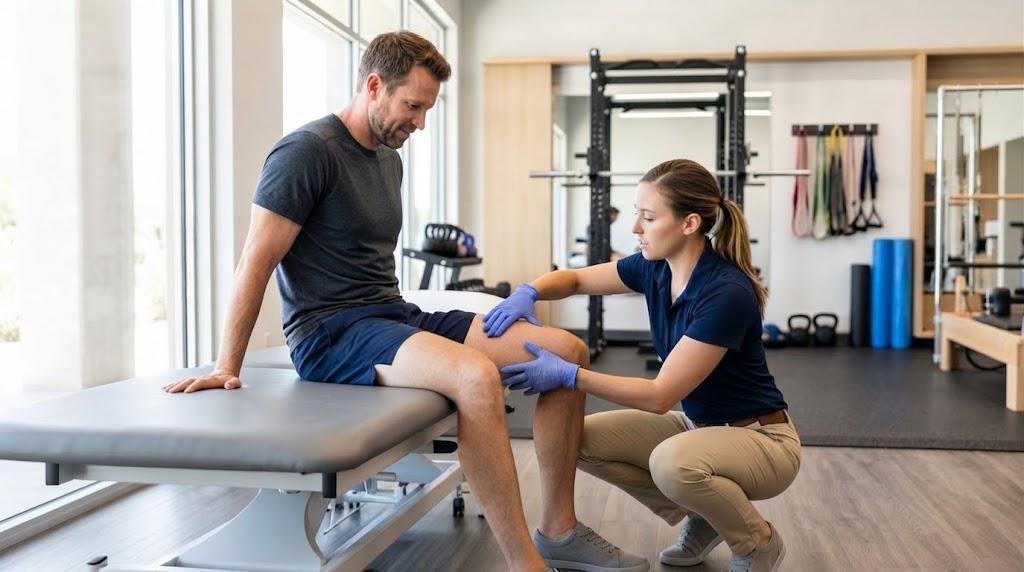
Physical therapy is what rebuilds muscle strength and reduces the risk of re-injury, which is common with groin strains if you return to sport too early. A physical therapist typically starts with gentle stretching and pain-free range of motion, then progresses to isometric adductor strengthening (squeezing against resistance without movement), followed by dynamic strengthening like lateral lunges and cable adduction as pain allows. The final stage tests sport-specific movements like a golf swing, a lateral shuffle, or a change of direction before clearing you to return to full training. Skipping straight from rest to full activity without this staged progression is how a groin strain turns into a recurring problem instead of a one-time injury.
Preventing Groin Strains
Most groin strains can be prevented with a few consistent habits: a proper dynamic warm-up before playing sports like golf, martial arts, or CrossFit, gradually building intensity rather than jumping straight into an intense physical activity, and maintaining adductor strength and flexibility year-round rather than only after an injury happened. A mild groin strain that isn’t given time to heal fully can also build up scar tissue, which leaves the area more prone to re-injury. That’s another reason a proper diagnosis and full rehab matter, even when a groin strain feels only moderately uncomfortable at first.
How Scottsdale Physical Therapy & Performance Approaches Groin Strain Recovery
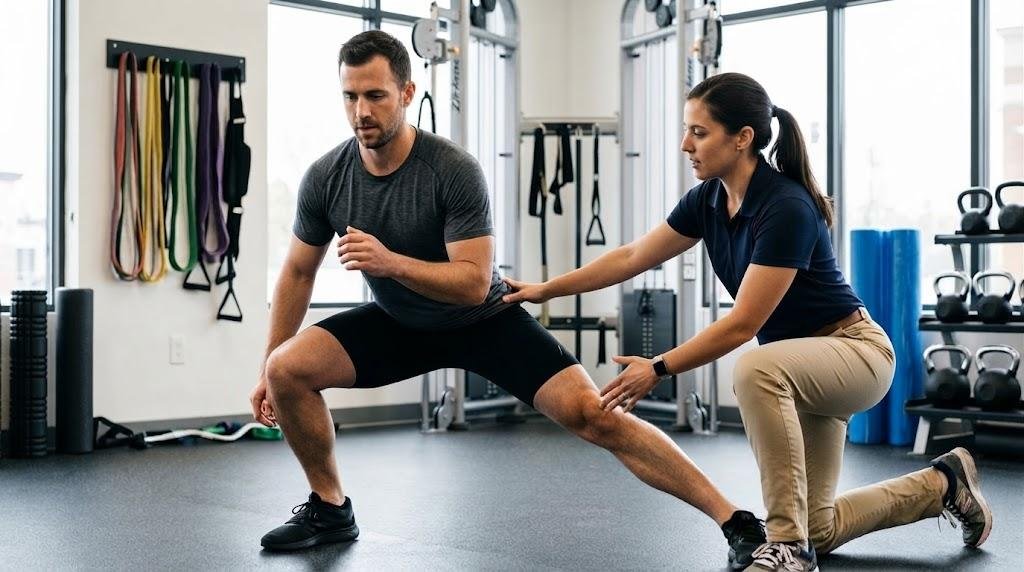
At Scottsdale Physical Therapy & Performance, we make sure your adductor muscles can handle the specific demands of your sport again, and normal walking is only the first checkpoint. For golfers, that means confirming your hip rotation and swing mechanics don’t keep placing excess load on the same muscle group that got injured in the first place. For CrossFitters and weightlifters, that means testing lateral lunges and wide-stance movements under real load before clearing you, rather than assuming pain-free walking means you’re ready.
If groin pain is holding back your training and you’d rather get a real treatment plan than guess at your own recovery, schedule an evaluation or reach out to our team, and we’ll start with a biomechanical assessment of your sport, then build the plan from there. This kind of adductor strain often overlaps with broader hip pain, so a full evaluation helps rule out other contributing factors too.
Frequently Asked Questions
How Do You Heal a Pulled Groin Fast?
There’s no real shortcut past the muscle’s own healing timeline, but staying consistent with early rest and ice followed by progressive physical therapy exercises gets you back to full activity as fast as the grade of strain allows. Returning to sport too soon, before the muscle has regained strength, is the most common reason recovery drags on longer than it should.
Is Walking Good for a Groin Strain?
For a mild strain, usually yes. Gentle walking within a pain-free range supports healing better than complete rest does. For a more severe strain, you may need to shorten your stride or use crutches briefly, and a physical therapist can guide when to progress.
How Do You Tell If You Pulled Your Groin?
A pulled groin typically causes sharp pain along the inner thigh at the moment of injury, tenderness when you press on the area, and pain when you bring your legs together against resistance. If you’re not sure whether it’s a muscle strain or something else, like a sports hernia or a hip joint issue, a physical examination can usually tell the difference.
Does a Groin Strain Ever Go Away?
Yes, the vast majority of groin strains heal completely with appropriate rest and rehabilitation. The exception is when the muscle isn’t given a proper chance to regain strength before returning to sport, which raises the risk of re-injury and can make the same spot feel chronically vulnerable over time.