If your lower back starts aching every time you stand in the kitchen, coach on the sidelines, work at a standing desk, or wait in line, you are not overthinking it. Standing and lower back pain is common, but it usually points to a real load tolerance or movement issue, not just “getting older” or having a tight back.
Many people notice their lower back feels fine when moving but starts to hurt when standing still for too long. This kind of pain can disrupt workouts, workdays, errands, and recovery because your body rarely gets a proper break.
In some cases, the irritation is mild and goes away after a few days. But sometimes, it can turn into chronic lower back pain that comes back with prolonged standing, walking, or even after sitting. Usually, back pain that shows up when standing signals a movement or loading problem that needs a closer look instead of just quick stretches and hoping it improves.
Why Standing Can Trigger Lower Back Pain
Standing sounds simple, but it places ongoing demand on the lumbar spine, core muscles, leg muscles, and back muscles. When those tissues are sharing load well, standing feels easy. When they are not, the same posture can create increased pressure in the lumbar region and lower spine.
Unlike walking, standing does not create as much natural blood flow through changing positions. If you stay in one stance for extended periods, muscle fatigue, muscle tension, and joint compression can build up. For some people, poor posture or incorrect posture is the main driver. For others, the underlying cause is disc sensitivity, facet irritation, spinal stenosis, or a muscle strain.
Pain often involves several structures working together. For example, irritated spinal discs, joint inflammation, muscle overload, and nerve sensitivity can all play a role in the discomfort you feel.
What The Pain Usually Feels Like
Common Symptoms People Notice First
The most common symptoms include aching in the lower back, spine pain after prolonged standing, and stiffness when trying to stand tall after being in one position too long. Some people describe sharp pain in one spot. Others say it feels like pressure, burning, or fatigue across the whole lumbar spine.
You may also notice that standing with an arched back, locked knees, or most of your body weight shifted onto one leg makes things worse. That pattern often adds additional stress to the lower spine and can irritate surrounding muscles and nerves.
If the pain starts to travel, other symptoms matter. Tingling, leg weakness, numbness, or pain moving into the glutes or legs can suggest nerve pain or nerve root irritation instead of a simple muscular problem. Those following symptoms raise the stakes and should not be brushed off.
When Symptoms Suggest More Than Simple Fatigue
Lower back pain when standing may be mild and resolve on its own, especially after a few days of rest, position changes, and gentle stretches. But severe pain, pain that lasts a few weeks, or pain paired with leg weakness is a different conversation.
If you cannot train, cannot work comfortably, or cannot do the activities you enjoy, that is already a sign to get help. If pain lasts, gets sharper, or starts acting more like nerve damage than muscle fatigue, you need a proper exam and appropriate treatment.
Medical attention should be sought sooner if you have numbness, tingling, weakness, loss of bladder control, or severe pain not improving with rest. Signs of nerve root compression increase the need for a healthcare provider visit, especially when symptoms continue despite conservative care.
The Most Common Causes Of Standing And Lower Back Pain
Poor Posture And Static Loading
Poor posture is one of the biggest risk factors here. Slouching, leaning forward, or standing with an exaggerated arch can increase pressure on the lumbar region and leave your abdominal muscles and core muscles doing a poor job of support. Over time, that posture can cause pain even if no single injury happened.
Incorrect posture while standing also puts additional stress on your back muscles and spine. If your ribs flare, your pelvis tips forward, or your knees lock out while you stand, your body starts leaning on passive structures instead of muscular support. That is when standing feels harder than it should.
Hyperlordosis can also be part of the picture. When the lower spine curves inward more than it should, the lumbar spine can become more irritated during standing, especially if the hips are stiff and the trunk is not well controlled.
Muscle Fatigue, Overuse, And Deconditioning
Muscle strain and fatigue often result from standing in the same position for long periods. Prolonged standing can strain your leg muscles and back muscles, especially when those tissues are already underprepared from a sedentary lifestyle or a recent drop in regular exercise.
A sedentary lifestyle can leave the abdominal muscles and back muscles weak, which means your body has fewer options when it needs to hold posture. Overuse of back muscles also contributes to pain from standing because they end up doing the job your hips, trunk, and leg muscles should help with.
This is common in active adults too. You can be strong in the gym and still struggle with static standing if your endurance, joint mobility, and postural control are lagging behind your max strength.
Joint And Disc Related Problems
Facet joint syndrome and spinal stenosis are common causes of lower back pain when standing. People with lumbar spinal stenosis often feel worse standing upright or walking and better when they lean forward or sit, because those positions can change space around the nerves in the spinal canal.
Spinal disks can be involved too. Disc-related pain may show up as local back pain, stiffness, or symptoms that move into the hip or leg. Degenerative conditions like osteoarthritis can also create pain and stiffness in the lumbar spine, especially with age-related changes. AAOS notes that degenerative changes in the spine can begin in your 30s and become more relevant as load tolerance drops.
Sciatica-like symptoms can show up when a lumbar nerve root becomes irritated, which may create pain, numbness, or tingling traveling into the glute or leg, similar to the patterns people notice with lower back pain when bending over.
Lifestyle And Load Management Factors
Age can be one of several risk factors, especially as normal degenerative changes, recovery capacity, and load tolerance shift over time.
Smoking also raises the risk by decreasing blood flow to the spine, which can affect tissue health and recovery.
Heavy lifting and lifting heavy objects with improper mechanics can make things worse fast. Twisting under load or repeatedly moving heavy objects without trunk control can irritate the lower spine and cause lingering back pain when standing later in the day.
Body weight matters too. Maintaining a healthy weight helps reduce strain on the joints and lower back, and wearing supportive shoes keeps the feet in a more neutral position to reduce pressure through the chain.
What Makes It Worse
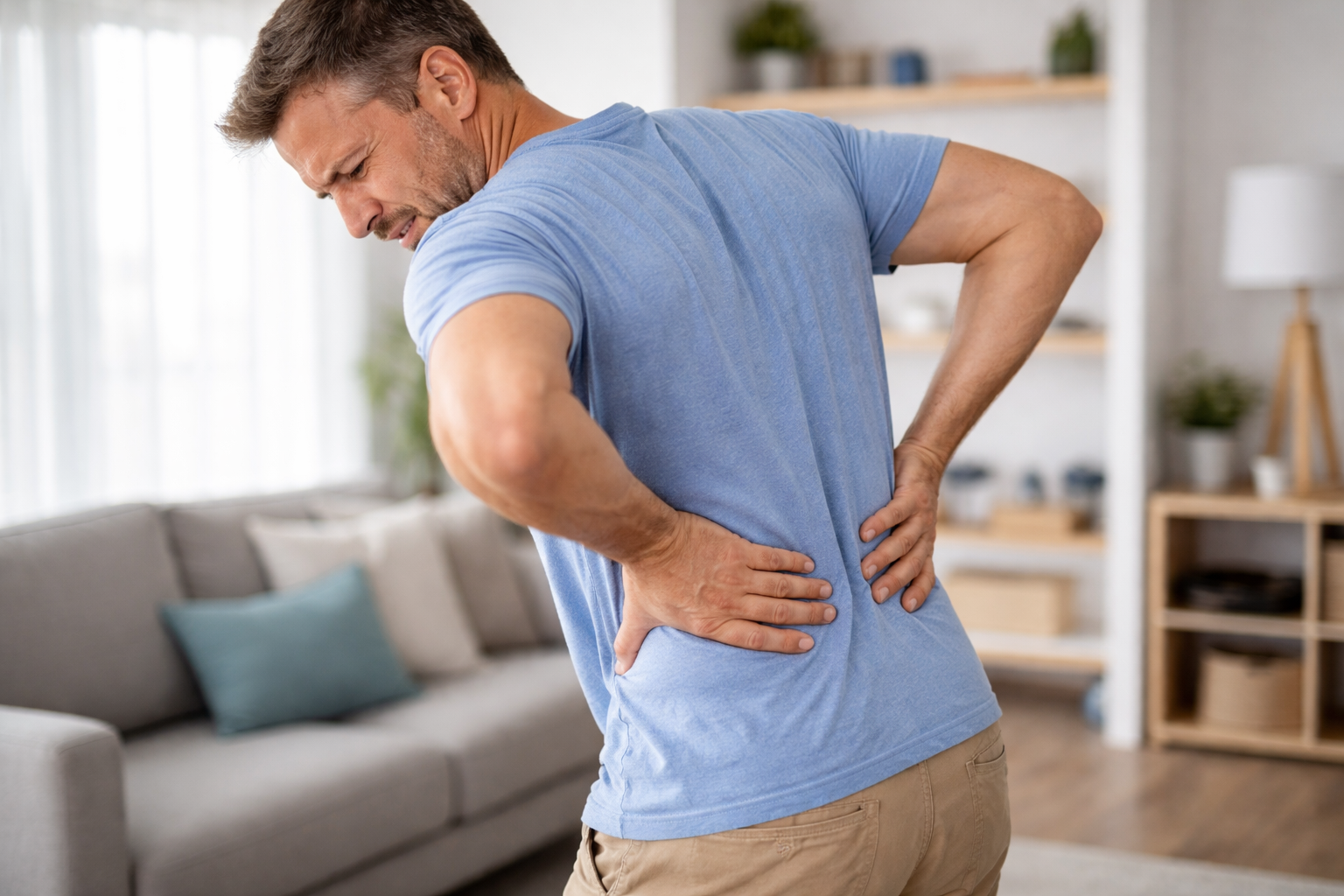
Standing in one place is usually worse than walking because your system is not getting much variation. Long work hours, poor footwear, an unsupportive workstation, and a monitor set too low all add up. Even neck position matters. Adjusting the monitor height to eye level can reduce neck strain and keep the rest of the posture from collapsing.
Many people also lock out their knees, shift onto one leg, or stand with their pelvis pushed forward. That supported position may feel relaxed at first, but it often drives more pressure into the low back over time. If you spend extended periods at a standing desk, register, sideline, or workbench, the setup itself may be feeding the problem.
Another overlooked issue is what happens after standing. If you sit slumped in a seated position all day, then ask your body to suddenly tolerate prolonged standing later, the transition is rough and can contribute to both lower and upper back pain causes and tension. Alternating between sitting and standing is often more effective than chasing one perfect posture.
Simple Strategies That Can Relieve Pain
Position Changes Matter More Than People Think
To relieve pain from standing, start with regular breaks. Taking breaks every 30 minutes to stretch, walk, or shift position can reduce pain, improve blood flow, and unload tired tissues. Alternating between sitting and standing during long work hours is often one of the fastest ways to get less pain.
Using a staggered stance while standing can also help. So can elevating one foot on a small stool, especially during chores like cooking or washing dishes, because it may reduce pressure through the sacroiliac area and lower back.
These changes are simple, but they are not trivial. They work because they reduce static load and give your system movement options again.
Mobility And Stretching That Actually Helps
Gentle stretches can help alleviate discomfort in the lower back, especially when stiffness and muscle tension are part of the problem. Hamstring stretches can release tension in the lower back, and hip flexors often need attention too because tight hip flexors can pull the pelvis into a position that worsens standing pain. Scottsdale PT’s own back pain content also emphasizes strengthening and mobility work around the spine, hips, and hamstrings for relief and function, and highlights critical signs you need a physical therapy check-up so you do not ignore recurring issues.
Lower back stretches can help alleviate pain and tension, but they should match the person. If your pain is more irritable, aggressive stretching may not help. In that case, gentle stretches, repeated movement, and breathing work are often a better entry point.
Postural exercises can stretch your back and abdominal muscles to stabilize your spine, and lumbar stabilizing exercises can strengthen the hip and leg muscles that help unload the back during standing and walking. Engaging in regular strengthening exercises for your back muscles can also help prevent pain from overuse.
Heat, Ice, And Short Term Pain Relief
For short term pain relief, heat and ice can both help. Ice is usually more useful during the first 48 to 72 hours after a flare, especially if the area feels inflamed. After that, heat can help relax muscles and reduce guarding.
That said, passive tools alone usually do not solve standing and lower back pain. They may relieve pain, but lasting back pain relief usually comes from changing mechanics, improving strength, and restoring tolerance to load.
How Physical Therapy Helps
A physical therapist looks at more than just where it hurts. We look at medical history, training demands, movement habits, joint mobility, strength, endurance, and whether the issue looks more muscular, joint-driven, or nerve-related. Consulting with a Scottsdale Physical Therapy & Performance clinician can help address the root cause instead of only chasing symptoms.
Treatment often includes specific exercises, education, progressive loading, and manual therapy techniques when they fit. Therapeutic exercises can strengthen your lower back and abdominal muscles, core-strengthening exercises can improve function and reduce pain, and sports performance-focused movement retraining can help you maintain correct posture without feeling rigid.
A good treatment plan should also show you how to prevent pain. That may include workstation changes, supportive shoes, better lifting mechanics, regular exercise, and better control when moving from sitting to standing, walking, lifting, and sport, especially for active adults on a health and wellness journey.
How Scottsdale Physical Therapy & Performance Approaches It
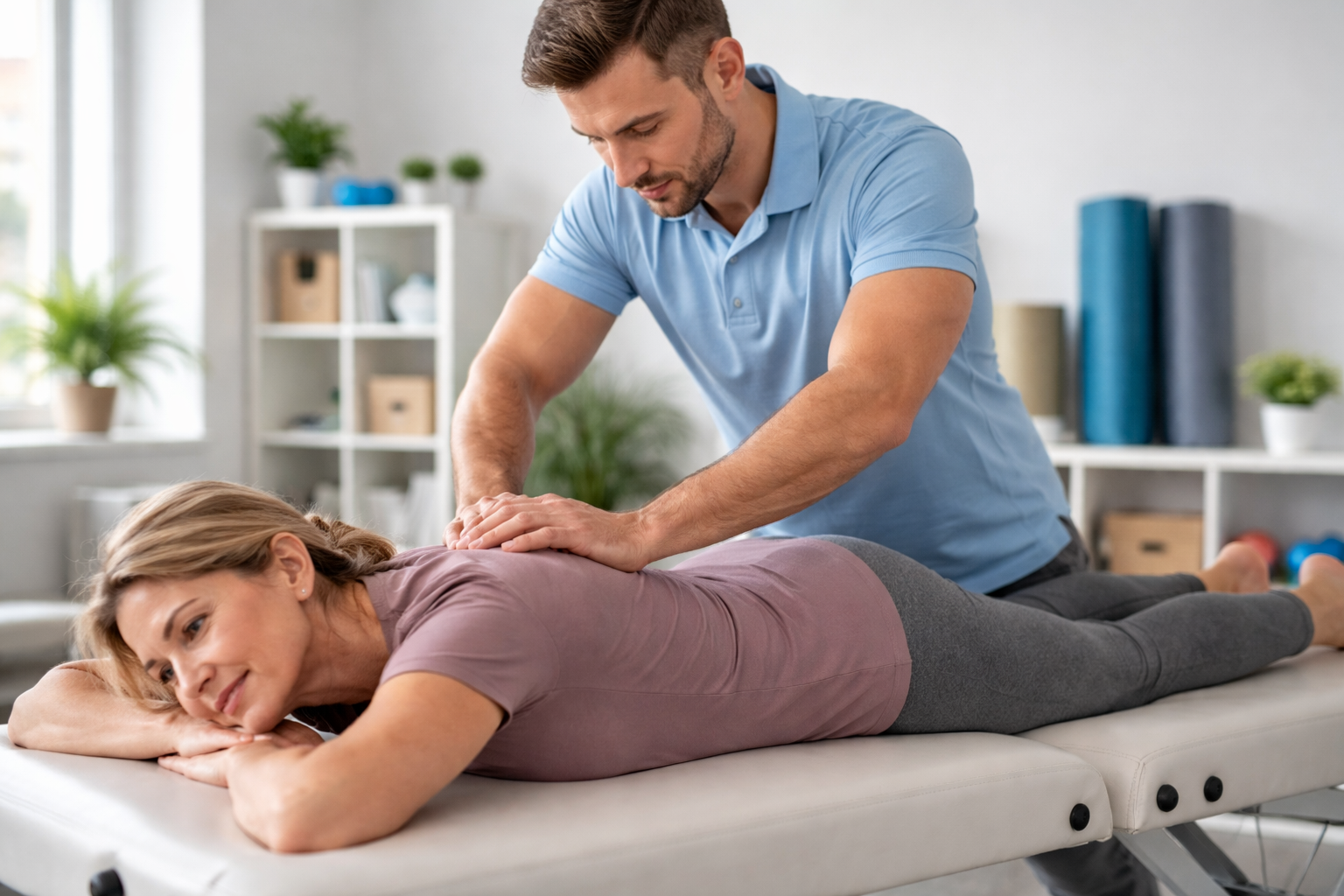
At Scottsdale Physical Therapy & Performance, this issue would not be treated like a generic back pain handout. The first step is figuring out the underlying cause. Is it muscle fatigue, a mobility restriction, spinal stenosis, disc sensitivity, poor posture, or a load management issue tied to training and daily life?
From there, care is built around what your body actually needs. That may include manual therapy techniques for stiff segments or irritated soft tissue, strength work for the core muscles and hips, movement drills to improve correct posture, and specific exercises that help you tolerate standing, walking, lifting, and sport with less pain, all delivered through Scottsdale PT & Performance’s personalized services and pricing structure.
For some people, that means modifying training without shutting it down completely. For others, it means building tolerance for long workdays, golf, hiking, or gym sessions without the low back tightening up every time they stand still, which is a core focus at Scottsdale Physical Therapy & Performance for active adults.
The Scottsdale piece matters too. People here are often active, on their feet, training regularly, golfing, hiking, coaching, or working long hours. The plan has to help you return to activity, not just survive daily tasks. That is a different standard, and it should be.
When To See A Physical Therapist
If your pain is not improving after a few days, if it keeps coming back after a few weeks, or if it is limiting workouts, work, or sleep, it is time to stop guessing. You should also seek professional help if you are unable to do the activities you enjoy because of back pain, and consider requesting an appointment with a physical therapist in Scottsdale.
See a healthcare provider or physical therapist sooner if you notice severe pain, numbness, tingling, weakness in the legs, or symptoms that suggest nerve damage. And if your back pain persists despite conservative care, further medical intervention may need to be considered.
Final Thoughts
If standing is consistently setting off your back, it is worth getting it looked at before it becomes a bigger limitation. At Scottsdale Physical Therapy & Performance, we help active adults and athletes figure out what is really driving the pain, reduce symptoms, and build a plan that gets them back to training, work, and daily life with more confidence.
FAQ
Is Lower Back Pain From Standing Always Serious?
No. Lower back pain from standing may be mild and resolve on its own, especially if it is related to temporary muscle fatigue or a recent increase in load. But if pain lasts, becomes severe, or comes with numbness, tingling, or leg weakness, it should be evaluated.
What Is The Fastest Way To Relieve Back Pain When Standing?
Usually the fastest first step is changing position. Try regular breaks, a staggered stance, one foot on a stool, supportive shoes, and gentle stretches. If symptoms keep returning, the better answer is finding the underlying cause.
Can Weak Core Muscles Really Cause Standing Pain?
They can contribute. Weak or poorly coordinated core muscles and abdominal muscles may leave the back muscles doing too much work during prolonged standing, which can increase fatigue and irritation.
Should I Keep Exercising If Standing Hurts My Back?
Usually yes, but the type of exercise matters. Regular exercise and specific exercises often help, while painful loading patterns may need to be modified for a short period. A physical therapist can help you keep moving without making things worse.
When Should I Worry About Nerve Pain?
Be more concerned if you have sharp pain traveling down the leg, numbness, tingling, leg weakness, or changes in bowel or bladder control. Those symptoms may suggest nerve irritation and deserve prompt medical attention.