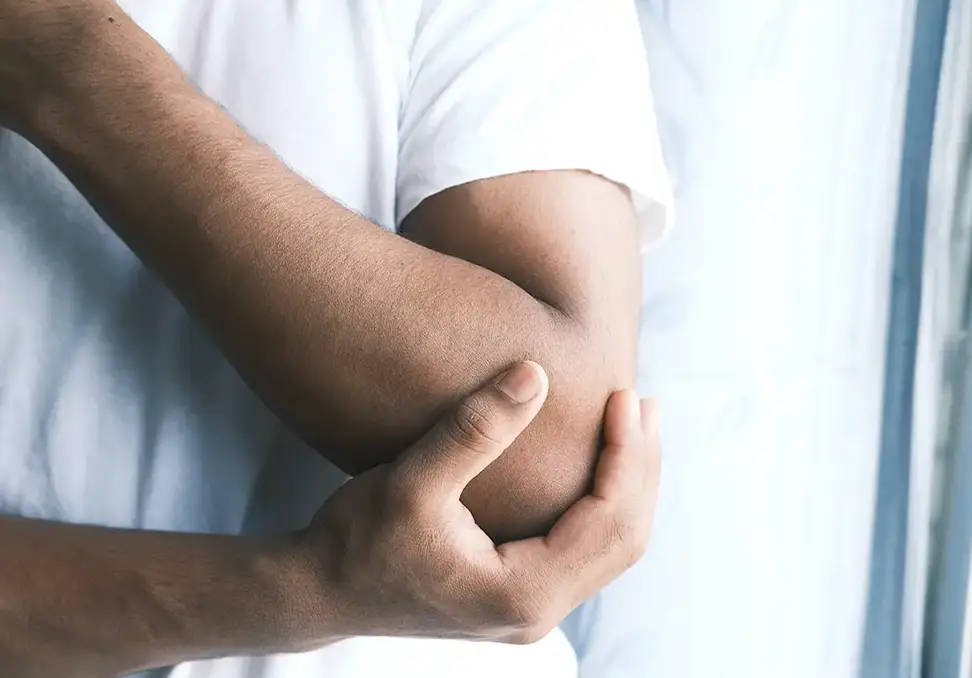
If you are experiencing elbow pain right where your arm folds, it can be distracting fast. You might feel pain when you pick up a bag, type at your desk, or even when you simply bend and straighten your elbow joint.
Pain in this area can be felt in different spots: the front crease of the elbow, the inside near the bony bump, or the outside near the elbow lateral area. Knowing which part hurts helps narrow down possible causes.
The good news is that many causes of elbow pain respond well to a few smart changes, simple home steps, and the right strength plan. This guide breaks down what may be going on, what symptoms matter most, and when it is time to get a healthcare provider involved.
Where Exactly Is the Pain Located?
“Pain where elbow bends” usually points to the front crease of the elbow, or the inside of the elbow near the bony bump. Some people also mean pain that shows up as the elbow is flexed, especially if a person frequently bends the arm at work, during lifting, or while sleeping. Location helps narrow the possibilities, but it does not confirm one diagnosis. Think “possible causes,” not a final label.
What Is Happening Inside the Elbow Joint
The elbow joint is where your upper arm meets your forearm muscles, and it is built to handle both motion and load. Tendons attach muscle to bone, ligaments stabilize, and nerves travel through narrow tunnels near the joint.
When pain begins, it is often because tissue is irritated by repetitive movements, a sudden overload, or a position that creates nerve compression. Over time, chronic irritation can affect blood flow to the irritated area and slow recovery.
Common Causes of Elbow Pain Near the Bend
Below are common causes of elbow pain that can create pain and tenderness near the crease, the inner side, or the elbow lateral area. More than one issue can exist at the same time.
- Cubital Tunnel Syndrome and Ulnar Nerve Entrapment. Cubital tunnel syndrome occurs when the ulnar nerve becomes inflamed, swollen, and irritated as it passes through the cubital tunnel on the inside of the elbow. Bending the elbow increases pressure on the ulnar nerve within this tunnel, often causing symptoms similar to hitting your funny bone. Symptoms may worsen when the elbow is bent.
- Tennis Elbow and Lateral Epicondylitis. Tennis elbow occurs when the tendons on the outside of the elbow become inflamed, typically from repetitive wrist and arm movements. Tennis players are not the only ones who get it, repetitive wrist and repetitive movements at work can do it too.
- Golfer’s Elbow, Also Called Medial Epicondylitis. Golfer’s elbow affects the tendons on the inside of the elbow and is triggered by activities involving repetitive wrist flexion or gripping. Sports injuries from golfing can do it, but so can lifting, yard work, and hand tool use, and golfers should also be aware of knee injury risks and prevention when they play.
- Radial Tunnel Syndrome. This is another nerve compression pattern that can mimic elbow lateral pain. It often feels deeper, and can flare with repetitive wrist extension and gripping.
- Biceps Tendinitis. Biceps tendinitis is inflammation of the tendon connecting the biceps muscle to the forearm, causing pain during bending or lifting. This often shows up in the front crease when you curl, carry, or pull.
- Elbow Bursitis. Irritation of the bursa near the elbow can restrict movement and cause swelling and pain. It is often more obvious at the back of the elbow, but it can still limit motion and create elbow stiffness.
- Ligament Sprains and Tendon Strain. Ligament sprains involve tearing of connective tissue often from sudden injury or overuse. A strained or injured tendon can also cause joint pain and tenderness with lifting or pushing.
- Arthritis, Including Rheumatoid Arthritis. Arthritis can cause pain, stiffness, and sometimes a grinding sensation when moving the elbow. Rheumatoid arthritis can involve multiple joints and may come with longer lasting morning stiffness.
- Bone Spurs or Past Injury Changes. Previous fractures can change how the elbow moves, and bone spurs can irritate nearby structures. This can lead to ongoing soreness, catching, or reduced range of motion.
Risk Factors That Make Elbow Pain More Likely
Most elbow pain is often caused by strained or inflamed soft tissues such as tendons or ligaments, and certain patterns raise the odds.
- Repetitive Wrist and Elbow Motion. Think typing, tools, lifting, or repeated gripping, especially on your dominant arm.
- Sport Demands. If you play tennis, swing a golf club, throw, or do high volume strength work, load builds fast on the forearm muscles controlled by the elbow and wrist, which can increase the risk of sports-related overuse injuries.
- Prolonged Elbow Bending. Sleeping with the elbow bent, long phone time, or a foam elbow brace worn incorrectly can all affect nerve and muscle function, especially for the ulnar nerve.
- Sudden Spikes in Activity. Weekend projects, heavy lifting, or new workouts can overload tissues that are not conditioned yet.
Symptoms and What They May Suggest
Use this as a pattern guide, not a self diagnosis. A physical exam can help confirm what fits.
- Outside Pain and Tenderness Near the Lateral Epicondyle. The main symptoms of tennis elbow include pain and tenderness on the outside of the elbow, which may worsen with gripping. You may also feel pain with lifting a pan, turning a doorknob, or shaking hands.
- Inside Pain on the Inner Side of the Elbow. The main symptoms of golfer’s elbow include pain and tenderness on the inside of the elbow, which may also radiate down the forearm. Many people notice it when they grip, curl, or carry.
- Numbness or Tingling Into the Hand. The most common symptoms of cubital tunnel syndrome include numbness and tingling in the hand or ring and little finger, especially when the elbow is bent. Some people describe numbness or tingling when driving, sleeping, or holding a phone with the elbow bent.
- Hand Aching Pain, Clumsiness, or Muscle Weakness. If nerve compression persists, you may notice numbness becomes more frequent, grip feels weaker, or fine motor tasks feel off. This can involve the affected arm more than you expect.
- Front of Elbow Pain With Curls or Lifting. This can fit biceps tendinitis, especially if the pain begins during bending or pulling tasks.
- Stiffness, Swelling, or Joint Instability. Common symptoms of elbow pain include dull ache, sharp sensations, tenderness, swelling, reduced range of motion, and joint instability. Acute trauma can also cause inflammation, tears, or structural damage to tendons, bursae, or bones.
Red Flags and When to Seek Urgent Care
Most cases can be managed with self care treatments and a few days’ rest. Still, some signs should push you toward medical evaluation right away.
- Inability to Move or Straighten the Elbow. Symptoms indicating the need for medical consultation include inability to move or straighten the elbow.
- Severe Swelling After Injury, Deformity, or Suspected Fracture. Other conditions that can cause elbow pain include fractures, dislocations, and ligament tears. You should visit an urgent care center or emergency room straight away if you have severe pain or swelling.
- Fever, Warmth, or Redness Around the Elbow. These signs may indicate infection or inflammation and require prompt medical attention.
- Persistent Numbness, Tingling, or Weakness. You should call your healthcare provider if you experience numbness, tingling, or weakness in the arm or hand, especially if it is worsening or spreading to the little finger.
- Persistent or Severe Pain That Does Not Improve. You should seek medical attention if you have persistent or severe pain that doesn’t improve with home strategies. You should see a doctor if your pain doesn’t get better or gets worse with treatment.
- Pain That Disrupts Daily Life. You should see a doctor if you have pain or trouble moving that affects your regular daily activities.
At-Home Relief You Can Try Now
These steps aim to reduce pain, calm irritated tissue, and encourage healing, without guessing the exact diagnosis.
1) Modify the Aggravating Activity
Resting the elbow and avoiding activities that aggravate the condition is important for recovery. That does not mean total rest forever, it means changing how you load the elbow.
Try reducing gripping force, switching hands when possible, and avoiding repetitive wrist motion for a short window while symptoms settle.
2) Use Ice or Heat Based on What You Feel
Applying heat or ice packs to the elbow can help ease pain and stiffness. Ice often helps after activity flare ups, heat often helps with elbow stiffness before movement.
Use 10 to 15 minutes, and reassess how it feels after.
3) Consider Over the Counter Support
Nonsteroidal anti-inflammatory drugs (NSAIDs) like ibuprofen can help reduce pain and inflammation for some people. Always follow the label, and check with your healthcare provider if you have medical conditions or take other medications.
A simple elbow pad can reduce irritation if leaning on the inner elbow triggers symptoms.
4) Bracing When It Makes Sense
Treatment for tennis elbow and golfer’s elbow often includes rest, physical therapy, and sometimes the use of braces or splints. Using a splint or brace can provide support and reduce strain on the elbow during activities that may cause pain.
For nerve symptoms, some people do well with a foam elbow brace worn at night to limit deep bending. It is one way to help prevent cubital tunnel syndrome from flaring during sleep.
5) Gentle Mobility and Light Strengthening
Gentle stretching and strengthening exercises can help relieve elbow pain and prevent future issues. Performing gentle exercises can help restore range of motion and maintain strength in the elbow.
Start with gentle stretches, then progress to light weights only if pain is staying stable or improving.
6) Nerve Gliding, Only If It Matches Your Symptoms
If your symptoms include tingling in the ring and little finger, nerve gliding exercises may help some people reduce nerve sensitivity. They should feel like a mild stretch or gentle “slide,” not a sharp zing, and persistent symptoms can be a sign you need a more thorough physical therapy check-up.
If symptoms spike, stop and get guidance, because ulnar nerve entrapment can be aggravated by the wrong dose.
How a Physical Therapy Evaluation Helps You Get Clear Faster

If you are in Scottsdale, AZ and the pain is lingering, Scottsdale Physical Therapy & Performance can help you stop guessing and start progressing. A thorough evaluation includes a complete medical history and physical examination focusing on your elbow, wrist, and shoulder. This helps identify repetitive movements, sport demands, and any previous injuries.
The therapist will assess range of motion, muscle strength, and perform special tests to evaluate nerve compression, such as the Tinel’s sign and elbow flexion test. These special tests are helpful but do not diagnose alone; they must be considered alongside the full clinical picture. They may also check for muscle weakness or atrophy in the hand and forearm muscles controlled by the ulnar nerve.
If nerve involvement is suspected, diagnostic tests such as nerve conduction tests and electromyography (EMG) may be used to assess nerve and muscle function. While magnetic resonance imaging (MRI) is occasionally used, it is generally reserved for ruling out other conditions.
Most cases of cubital tunnel syndrome are diagnosed based on history and physical exam, with nerve conduction tests confirming nerve compression. The simple mechanism is that bending the elbow increases pressure on the ulnar nerve within the cubital tunnel, leading to symptoms.
Recovery timelines vary by condition: for example, tennis elbow and golfer’s elbow often improve over several months with conservative sports injury rehabilitation, while nerve compression symptoms may require longer treatment or surgical consultation if severe.
What the Plan Often Focuses On
Most physical therapy plans combine pain relief with gradual loading, so tissues adapt.
- Reduce pain with activity changes and targeted mobility.
- Improve forearm muscle capacity and grip endurance.
- Build tendon tolerance for repetitive wrist tasks.
- Restore shoulder and upper arm strength so the elbow does not do all the work alone.
- Improve nerve and muscle function if nerve compression is part of the picture.
Physical therapists will progress you through exercises carefully, monitoring pain and function, and may use manual therapy techniques to improve joint mobility or nerve gliding. They also educate on posture and ergonomic adjustments to prevent symptom recurrence, which is a key part of sports performance physical therapy.
When Symptoms Point to Cubital Tunnel
Cubital tunnel syndrome treatment often starts with nonsurgical treatment, like activity modification, night positioning, and progressive strength. If severe symptoms persist, your healthcare provider may discuss other treatments, including consultation with orthopaedic surgeons and, in select cases, surgical treatment, after thorough assessment of treatment options and care availability.
Steroid injections are sometimes discussed for tendon-related pain patterns, but they are not the best fit for every case. Treatment options depend on which structure is actually irritated.
Return to Activity Tips, Without Making It Worse
Both tennis elbow and golfer’s elbow are overuse injuries linked with repetitive actions of the wrist and hand. They can also be stubborn, lasting between six months and two years, but most people recover within a year.
The goal is steady progress, not heroic workouts.
- Break Up Repetition. Taking regular breaks during repetitive activities can help prevent elbow pain. Micro breaks every 20 to 30 minutes can matter.
- Adjust Your Setup. Maintaining an ergonomic setup at your workstation can minimize strain on your elbows. Keep the wrist neutral, and avoid resting the inner elbow on hard surfaces.
- Scale Gripping and Loading. Use a lighter grip, bigger handles when possible, and avoid high volume repetitive wrist work early on.
- Warm Up the Forearm Muscles. A few minutes of gentle movement before you load can reduce pain for many people.
- Progress Slowly. Increase one variable at a time, either weight, reps, or frequency, not all three in the same week.
Frequently Asked Questions
Is This Always Tennis Elbow or Golfer’s Elbow?
Not always. Tennis elbow affects the outside of the elbow near the lateral epicondyle, and golfer’s elbow affects the inside of the elbow. Pain where the elbow bends can also be biceps tendinitis, a nerve issue like cubital tunnel syndrome, or joint irritation.
What Does Cubital Tunnel Syndrome Feel Like?
It often feels like the funny bone sensation that keeps coming back. Tingling or numbness in the ring and little finger, especially when the elbow is bent, is a classic pattern.
When Should I Worry About Numbness or Weakness?
You should call your healthcare provider if numbness, tingling, or muscle weakness is persistent, worsening, or affecting hand function. Those signs can reflect ulnar nerve irritation and may need testing.
Do Braces Actually Help?
Sometimes, yes. Braces or splints can reduce strain during irritating tasks, and an elbow pad or night brace can reduce elbow bending that triggers nerve symptoms. Bracing should support a plan, not replace it.
Should I Completely Stop Lifting or Sports?
Usually no, but you should adjust. Rest is important early, then gradual loading helps tissue recover. A physical therapist can help you choose pain-safe movements and rebuild capacity.
Brief Medical Disclaimer
This article is for general education and is not a medical diagnosis. If you have severe pain, swelling after an injury, inability to straighten the elbow, or persistent numbness and weakness, seek medical care promptly.
Ready to Get a Clear Plan?
If you are experiencing elbow pain and home steps are not helping, a Scottsdale physical therapy clinic can provide a comprehensive evaluation of your elbow, forearm, and shoulder mechanics. They will develop a progressive one-on-one recovery and wellness plan focused on relieving pain, restoring muscle function, and safely returning you to lifting, sports, and daily activities with confidence.