Your knee hurts on the stairs, during your run, or every time you squat at the gym, and you want to know why. One of the best clues is where it hurts. A knee pain location chart sorts the knee into areas so you can see which structures sit in each spot and what that discomfort may be associated with. It won’t give you a diagnosis, but it can help you describe your symptoms clearly and decide when it’s time to get checked.
Below you’ll find the chart in text form, a short summary of each area, and links to our more detailed articles. Use it as a starting map, not a self-diagnosis tool.
Understanding Knee Pain by Location
The knee joint is a complex joint where three bones meet: the thigh bone (femur), the shin bone (tibia), and the kneecap (patella). Ligaments hold the bones together, tendons connect muscles to bones so the knee can move, and smooth articular cartilage covers the ends of the bones. Two C-shaped pads of cartilage called the menisci act as a shock absorber between the bones. Because these soft tissues sit in different spots, the exact area where you feel pain often hints at which structure is irritated. Keep in mind that more than one structure can cause discomfort in the same region, which is why a chart is a guide and not an answer.
Four main ligaments keep the knee stable. The anterior cruciate ligament and posterior cruciate ligament cross inside the joint. The medial collateral ligament runs along the inside, and the lateral collateral ligament runs along the outside. Knee injuries to any of these can follow a twist, a hard landing, or a direct blow, while overuse injuries tend to build slowly from repeated loading.
The Knee Pain Location Chart
This pain location chart groups common causes by area. Each entry lists what the pain may mean, how it often feels, and when it’s worth getting it looked at.
| Knee pain location | May be associated with | What it often feels like | When to get evaluated |
|---|---|---|---|
| Front of the knee and around the kneecap | Patellofemoral pain, cartilage irritation under the kneecap, fat pad irritation, arthritis of the kneecap | Dull, aching pain around or behind the knee cap, worse with stairs, squats, or long sitting | Pain that keeps returning with activity or limits training |
| Below the kneecap | Patellar tendon irritation (jumper’s knee) | Sore spot just under the kneecap that flares with jumping or running | Pain that lingers after sessions or is getting worse week to week |
| Inside of the knee | MCL sprain, medial meniscus injury, wear in the inner joint, pes anserine bursitis | Ache or sharp pain on the inner side, sometimes with swelling after a twist | Swelling, instability, or pain after a specific injury |
| Outside of the knee | Iliotibial band syndrome, lateral meniscus tear, LCL injury, wear in the outer joint | Burning pain or tightness on the outer knee, often during running or cycling | Pain that builds every run or ride and doesn’t settle with rest |
| Back of the knee | Hamstring or calf tendon strain, Baker’s cyst, posterior meniscus tear, PCL injury | Tightness or fullness behind the knee, worse when bending fully or squatting | A swollen, warm, or tender calf, or a lump that keeps growing |
Arthritis, including osteoarthritis, can show up in more than one area at once. If your knee pain location shifts around or covers the whole joint, wear in the cartilage may be part of the picture.
Front of the Knee and Around the Kneecap
Most pain at the front of the knee involves the patellofemoral joint, where the kneecap glides along the thigh bone, according to this orthopedic overview of knee pain causes. Runners, lifters, and anyone doing lots of stairs or squats tend to feel it. It’s often an aching pain that’s worse after sitting with your knees bent. Our article on patellofemoral pain syndrome explains this area in more detail.
Below the Kneecap: A Common Spot for Overuse Injuries
Pain just under the kneecap usually points to the patellar tendon, which connects the kneecap to the shin bone. Jumper’s knee is a common overuse problem in basketball, volleyball, and running athletes. It tends to feel sore at the start of activity, settle as you warm up, and then flare afterward. In younger athletes, pain below the knee can also come from Osgood-Schlatter disease, which mostly affects adolescents. You can read more about patellar tendinopathy and how it’s treated.
Inside of the Knee
Pain on the inside of the knee can be linked to the medial collateral ligament, the inner meniscus, or wear in the inner part of the joint. Ligament injuries often follow a blow to the outside of the knee or a sudden cut, while meniscus tears often come with twisting. If your inner knee pain started with a specific injury, our guide to MCL sprain recovery time is a useful next read.
Outside of the Knee
Outer knee pain is often associated with iliotibial band syndrome, an overuse issue common in runners and cyclists. It’s frequently linked to weak hip muscles, which is why a hip check is part of any good assessment. A lateral meniscus tear or an LCL injury can also cause pain here. Our article on how hip and knee pain are connected covers the link between the two.
Back of the Knee
Pain behind the knee can come from a strained hamstring or calf tendon, a meniscus tear toward the back of the joint, or a Baker’s cyst, which is a fluid-filled lump often linked to arthritis. Less often, it can be related to a blood clot, so a swollen, warm, tender calf needs prompt medical care. Our full guide to pain behind the knee walks through each cause.
Popping Sound, Swelling, and Other Signs to Take Seriously
Some symptoms matter more than where the pain sits. According to this guide to knee pain by location, you should seek professional help right away if you hear a popping sound during an injury, can’t bear weight, see significant swelling come on fast, or the knee looks out of shape. These can signal ACL injuries, meniscus tears, or other sports injuries that need a proper diagnosis.
Other signs to watch include joint swelling that keeps coming back, a grinding sensation with stiffness, and pain that keeps getting worse. Popping or locking can point to cartilage or meniscus problems, while weakness or a knee that gives way can suggest a ligament injury. Redness and warmth over the joint can signal inflammation, and numbness or tingling in the leg can mean a nerve is involved. A healthcare provider or healthcare professional can sort out what’s going on with a physical exam and, when needed, imaging tests such as X-rays or an MRI.
Treatment Options and How Physical Therapy Helps
For most patients, care starts with conservative options. In the first days after a flare, many people use the R.I.C.E. approach: rest, ice, compression, and elevation. Over-the-counter anti-inflammatory medication your doctor approves may help with discomfort and inflammation for a short time. From there, the focus usually shifts to adjusting training, managing extra weight on the joint, and a progressive strength plan. Some people also talk with a doctor about medication or injections such as hyaluronic acid, and a smaller group may need surgery after a significant tear. Knee replacement is generally reserved for end-stage arthritis. Surgery is the right call for some cases, but many knee problems improve with a well-built plan first.
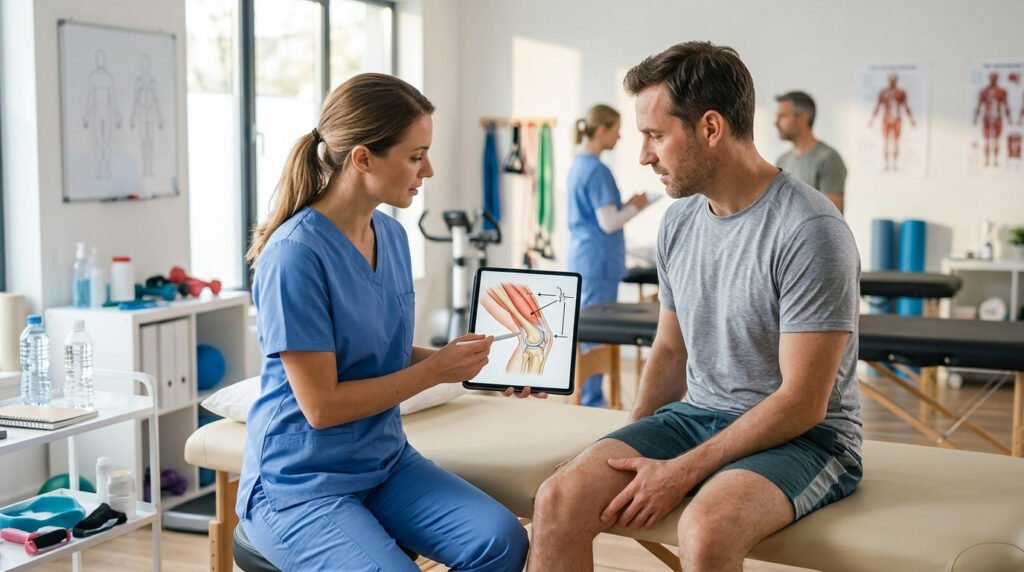
Physical therapy is where the chart turns into action. A physical therapist uses a physical examination to test your strength, mobility, and movement patterns, then builds a more effective treatment plan around what’s actually driving your symptoms. That usually means strengthening the hips and thighs, improving how the knee tracks during squats and landings, and building back up to your sport. Physical therapy strengthens the muscles that support the knee and improves flexibility, which can lead to more comfortable movement and better long-term knee health.

How Scottsdale Physical Therapy & Performance Uses the Chart
We see runners, golfers, pickleball players, and lifters with knee pain every week at our North Scottsdale clinic. Where it hurts is the first question we ask, but it’s never the only one. During a one-on-one, hour-long evaluation, your physical therapist looks at how your hip, knee, and ankle work together, how you move in your sport, and what makes your pain better or worse.
From there, you get an effective treatment plan with clear steps and realistic expectations. If something needs a doctor’s input or imaging, we’ll tell you. Athletes who want to get back to full training can continue into our sports performance program, and you can check current rates on our availability and pricing page. You can find directions and hours on our North Scottsdale contact page.
Turn Your Knee Pain Location Chart Into a Plan
A knee pain location chart is a great place to start, but your knee deserves more than a guess. Pair what the chart shows you with a hands-on assessment from a healthcare provider and you’ll have a much clearer picture of what to do next. If pain is holding back your runs, rounds, or workouts, see how we help with knee pain in Scottsdale and schedule an evaluation with Scottsdale Physical Therapy & Performance. We’ll dig into what’s driving your pain and build a plan around getting you back to what you love.
This article is for general education. It isn’t a diagnosis or a substitute for an exam by a licensed healthcare professional.
Frequently Asked Questions
What does the location of knee pain mean?
A knee pain location chart links the area that hurts to the structures that may be involved, such as the kneecap joint at the front or the IT band on the outside. It’s a helpful clue, not a diagnosis. A physical exam is needed to confirm what’s going on.
Is heat or ice better for knee pain?
Ice is often used in the first few days after a new injury to calm swelling. Heat can feel better for stiffness and long-standing aches. If you’re unsure, ask your physical therapist what fits your situation.
What does arthritis knee pain feel like?
Osteoarthritis often feels like a deep ache with stiffness, especially in the morning or after sitting. Some people notice a grinding sensation or mild swelling. It can affect more than one area of the knee.
What exercises help with knee pain?
Hip and thigh strengthening, controlled squats or step-ups, and balance work are common starting points. The right exercises depend on the cause and where your knee hurts. A physical therapist can match the program to your symptoms and goals.