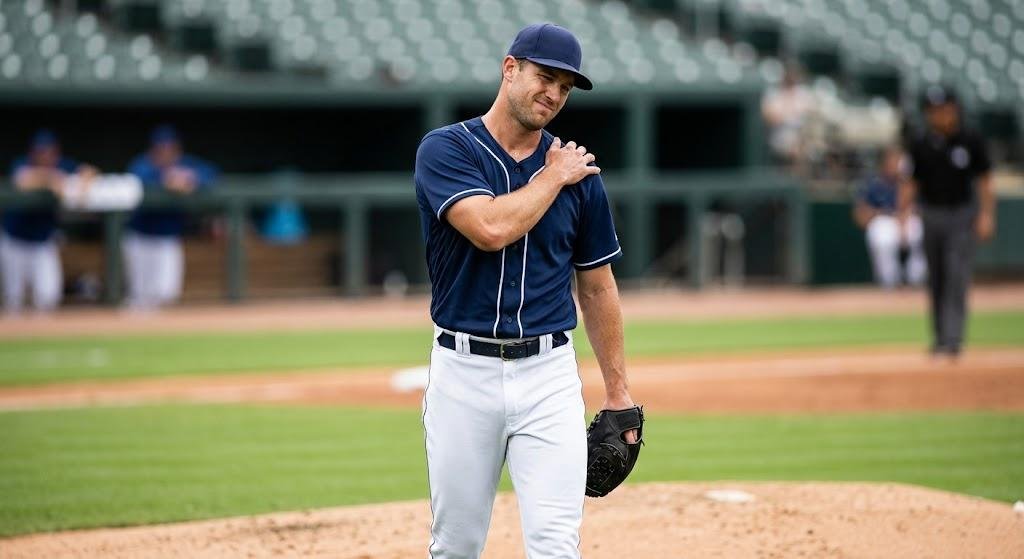
Deep shoulder pain with a catching or popping sensation during an overhead throw, golf swing, or serve usually points to the labrum rather than the rotator cuff. A SLAP tear shoulder injury can feel alarming, especially if you’re picturing surgery right away, but many cases respond well to physical therapy first. Here’s what a SLAP tear actually is, how it differs from a rotator cuff tear, and what non-surgical recovery looks like before surgery gets considered. It’s the kind of shoulder work Scottsdale Physical Therapy & Performance handles regularly for overhead athletes.
What Is a SLAP Tear?
SLAP stands for Superior Labral Anterior Posterior, a tear in the superior labrum, the ring of cartilage lining your shoulder joint socket, specifically at the point where your biceps tendon attaches at the top. The glenoid labrum sits on the glenoid rim of your shoulder blade, deepening the shallow socket and giving the glenohumeral ligaments a stable anchor point. This superior glenoid rim attachment is exactly where the long head of the biceps tendon inserts, which is why a SLAP tear so often involves both structures at once. SLAP tears make up roughly 4% to 8% of all shoulder injuries. The shoulder joint is also the most mobile joint in your body, and that mobility depends heavily on the superior labrum keeping the ball of your upper arm bone stable in a fairly shallow socket. When the labrum tears at the biceps anchor, both the mobility and stability of the shoulder can be affected, which is why symptoms often show up specifically during overhead motion, shoulder abduction, or elbow flexion rather than at rest.
SLAP Tears vs. Rotator Cuff Tears
These two get confused constantly, but they’re different structures with different symptoms. A rotator cuff tear typically causes weakness lifting your arm and pain that’s more constant, including at night. A SLAP tear more often causes a catching, popping, or grinding sensation deep in the shoulder joint specifically during overhead or throwing motions, sometimes with a feeling of looseness or instability rather than straightforward weakness. It’s possible to have both at once, which is part of why a proper physical examination matters before assuming which one you’re dealing with.
Types of SLAP Tears
SLAP lesions aren’t all the same, and providers classify them into several types based on exactly how the labrum and biceps tendon are affected:
- Type 1: The labrum shows fraying or wear but the biceps tendon attachment stays intact. This type is often seen in older adults as a wear-and-tear pattern rather than an acute injury.
- Type 2: The most common SLAP tear type (a Type II SLAP lesion), where the labrum and biceps tendon anchor are both torn away from the shoulder socket. This is the classic pattern seen in overhead athletes, and it’s a common shoulder injury in that population specifically.
- Type 3: A bucket handle tear, where a torn piece of labrum tissue gets caught inside the shoulder joint itself, sometimes causing mechanical locking or catching.
- Type 4: The tear extends from the labrum into the biceps tendon itself, affecting both structures directly.
Type 2 SLAP lesions account for the majority of cases seen in overhead athletes, which is part of why throwing mechanics get so much attention in both diagnosis and rehab. Left untreated, some SLAP tears can progress into chronic shoulder pain, and you can lose noticeable muscle bulk around the shoulder blade from disuse. That lingering ache feels different from the sharp pain of a fresh acute injury.
Causes and Symptoms of SLAP Tears
SLAP tears happen either acutely, from a fall onto an outstretched arm or a sudden pull on the arm, or gradually, from the repetitive stress of overhead throwing motions. Baseball pitchers, golfers, and tennis players are classic candidates because their sports repeatedly load the shoulder joint through extreme ranges of internal and external rotation. A shoulder dislocation can also cause or contribute to a SLAP lesion, since the labrum helps keep the joint stable and can tear during the dislocation event itself. Age-related wear is a third pathway. Labrum tissue naturally loses some elasticity over the years, and susceptibility rises after age 40, which is why Type 1 fraying patterns show up more often in older adults even without a specific injury moment.
Common symptoms include:
- Deep shoulder pain that’s worse with overhead reaching or throwing
- A catching, popping, or grinding sensation during specific movements
- Pain with certain positions, particularly loaded internal rotation and forward flexion
- A sense of shoulder instability or looseness, especially in throwers
- Decreased throwing velocity or accuracy in overhead athletes who rely on shoulder mechanics
- Persistent pain that lingers well after activity rather than resolving with rest
Because these symptoms overlap with other shoulder pathologies, a diagnostic workup matters more than a best guess.
Diagnosis: Confirming a SLAP Tear
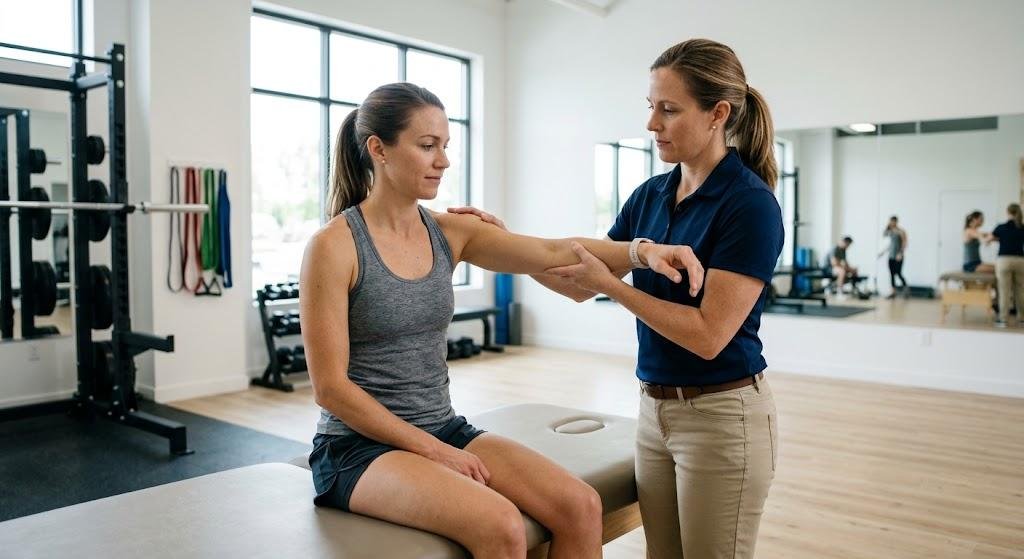
A physical examination with specific provocative tests, such as the Speed test and the Yergason test, which stress the labrum and biceps anchor to reproduce your symptoms, can point strongly toward a SLAP tear, though the labrum’s exact location makes it one of the harder shoulder structures to diagnose definitively without imaging. Your provider will also check your rotator cuff strength and range of motion separately, since ruling out or identifying a concurrent rotator cuff issue changes the treatment picture. Magnetic resonance imaging, sometimes with contrast dye injected into the joint (an MRI arthrogram), gives the clearest picture of the tear’s exact location and severity, which matters for treatment planning since not all SLAP lesions are treated the same way. A standard MRI without contrast can sometimes miss smaller labral tears, which is why the arthrogram version is often preferred when a SLAP tear is suspected specifically.
Treatment Options for a SLAP Tear: From Physical Therapy to SLAP Tear Surgery
Non-surgical treatment comes first for most SLAP tears, particularly milder Type 1 tears or Type 2 tears without significant shoulder instability. That means activity modification for the affected arm, nonsteroidal anti-inflammatory drugs (NSAIDs) for pain relief, a cortisone injection when inflammation needs calming, and a structured physical therapy program. Surgical treatment is reserved for specific situations: significant shoulder instability, a large tear, bucket handle tears that cause mechanical locking, or symptoms that don’t improve after a genuine trial of conservative care, usually three to six months of physical therapy. Most often that means an arthroscopic SLAP repair procedure performed by an orthopaedic surgery specialist. During a SLAP repair, a surgeon uses a small camera and instruments to reattach the torn labrum and biceps anchor to the shoulder socket using suture anchors. For some patients, particularly those with biceps tendon involvement, a biceps tenodesis (relocating the biceps tendon attachment point) may be recommended instead of or alongside a labral repair, depending on age, activity level, and tear pattern. Revision surgery is uncommon but sometimes needed if the initial repair doesn’t hold up under the demands of return to competitive throwing.
The surgical decision also depends heavily on your sport and performance demands. An overhead-throwing athlete faces a different risk-benefit calculation than someone with moderate shoulder demands, since throwers sometimes see slower returns to their prior performance level even after a technically successful repair.
SLAP Tear Recovery Timeline
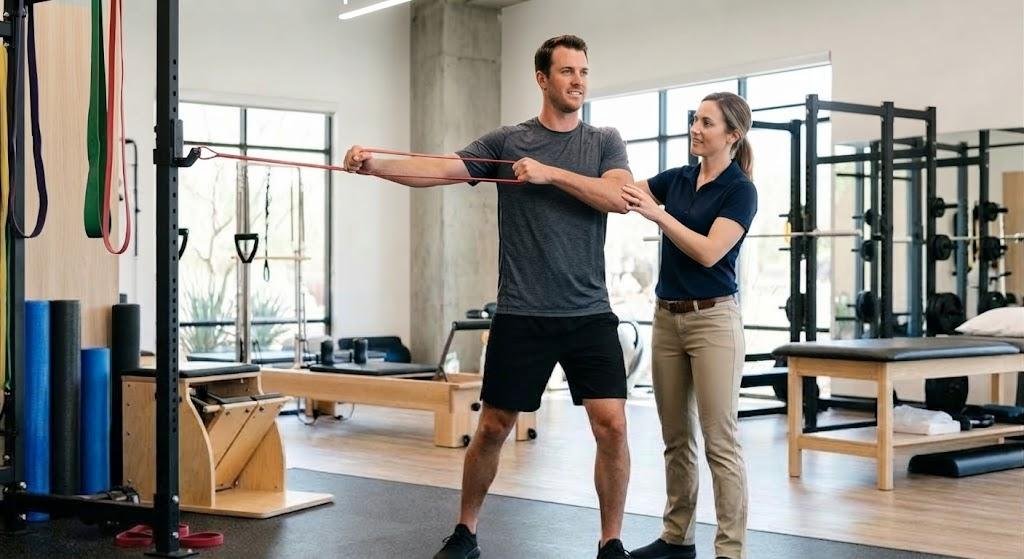
How long recovery takes depends on two things: whether you go the non-surgical or surgical route, and which type of SLAP lesion you have. For non-surgical cases, meaningful improvement often shows up within six to twelve weeks of consistent physical therapy, though full resolution for a Type 2 tear can take three to four months. Surgical recovery runs longer: most SLAP repair patients wear a sling for several weeks post-operatively, begin gentle range-of-motion physical therapy shortly after that, and don’t return to overhead sports until four to six months out, sometimes longer for competitive throwers whose shoulders need to tolerate very high-velocity stress again. Full recovery can take up to a year.
Plan for the long game. Recurring or new SLAP tears are common in athletes who return to the same repetitive overhead motion that caused the original tear without addressing the underlying mechanics. That is why the rehab process, whether post-surgical or non-surgical, spends so much time on movement quality and kinetic chain mechanics rather than treating shoulder strength in isolation.
How Physical Therapy Helps SLAP Tear Recovery
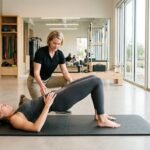
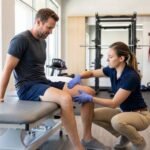
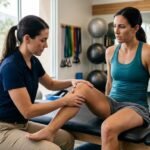
Physical therapy is central to SLAP tear treatment whether or not surgery ends up being part of the picture. Early-stage work focuses on restoring pain-free range of motion and calming irritated tissue, followed by progressive strengthening of the rotator cuff and scapular stabilizing muscles, the shoulder muscles that support the shoulder joint from the outside while the labrum itself heals or adapts. For throwers specifically, a therapist will also address the kinetic chain beyond just the shoulder, hip and core mechanics that affect how much stress actually reaches the shoulder during a throw or swing. The final phase works back into sport-specific movements like a throwing progression, a full golf swing, or a serve before you’re cleared to compete.
Living With and Managing SLAP Tears Long-Term
Superior labrum anterior posterior (SLAP) tears don’t have to end your season or your sport. Many SLAP tears respond well to a structured approach, and the athletes who do best with SLAP tears are the ones who commit fully to the rehab process rather than rushing back. Whether you’re managing SLAP tears non-surgically or recovering from SLAP repair surgery, consistency with your physical therapy program matters more than any single treatment decision. SLAP tears that are properly rehabilitated, whether surgically or non-surgically, give athletes a realistic path back to throwing, swinging, or serving, though some throwers take longer to reach their prior level.
How Scottsdale Physical Therapy & Performance Approaches SLAP Tear Recovery
At Scottsdale Physical Therapy & Performance, Dr. John Dodson brings a specific advantage to SLAP tear cases: a TPI Level 1 certification and a clinical internship with a professional baseball organization, working under a physical therapist who specializes in baseball-specific rehabilitation. That means return-to-sport throwing protocols and overhead-athlete mechanics aren’t a generic add-on. They’re a core part of how our team manages shoulder cases. For golfers dealing with pain, the same overhead-loading principles apply to a full swing rather than a throw, and getting that mechanic right is often what determines whether symptoms come back once you’re cleared.
If you’re dealing with deep shoulder pain that’s affecting your throwing, swing, or serve, schedule an evaluation or reach out to our team before assuming surgery is your only option. This kind of shoulder pain often responds to the right non-surgical approach, and an evaluation will tell you which path fits your injury.
Frequently Asked Questions
Is a SLAP Tear Worse Than a Rotator Cuff Tear?
Neither is inherently worse. They’re different injuries with different symptom patterns and treatment approaches. SLAP tears tend to cause more catching and instability symptoms during overhead motion, while a rotator cuff tear more often causes weakness and constant pain. Severity within each category varies widely, so the specific grade and your functional demands matter more than which structure is involved. Anterior labral tears and posterior tears can show up alongside SLAP tears too, so a proper physical examination has to sort out which structure is actually at fault.
How Do You Fix a SLAP Tear in the Shoulder?
Many SLAP tears improve with a structured physical therapy program focused on rotator cuff and scapular strengthening, without needing surgery. When conservative treatment doesn’t resolve symptoms after several months, or when there’s significant shoulder instability, a SLAP repair surgical procedure may be recommended, followed by its own rehabilitation timeline.
How Serious Is a SLAP Tear in the Shoulder?
Severity varies quite a bit depending on the specific type of tear and how much it affects shoulder stability. Many SLAP tears, especially milder ones, respond well to non-surgical management and don’t progress to more serious problems. The more concerning cases involve significant instability or tears that don’t respond to a genuine trial of conservative treatment.
How Long Does It Take to Recover From SLAP Tear Surgery?
Recovery from SLAP repair surgery typically runs several months, often four to six months before returning to overhead sports, since the repaired tissue needs time to heal before it can handle throwing or swing-level stress again. Non-surgical recovery timelines vary more, but meaningful improvement within six to twelve weeks of consistent physical therapy is common for milder tears.
Can You Prevent SLAP Tears?
There’s no guaranteed way to prevent SLAP tears entirely, since some cases stem from age-related wear rather than a specific mechanical error. Still, isolated SLAP lesions in throwers are often linked to fatigue-driven breakdowns in mechanics, so building shoulder and scapular strength, managing throwing or swing volume, and addressing kinetic chain issues in the hips and core all lower the odds of a SLAP tear developing in the first place.