Can You Golf With Sciatica?
Yes, many people with sciatica can continue to play golf safely by adjusting their routine, refining their technique, and following appropriate treatment plans. Early recognition of symptoms and gradual return to play with proper guidance can help manage pain and prevent further injury. Key strategies include modifying your swing, using proper equipment, warming up thoroughly, and consulting with a physical therapist or healthcare provider to tailor your approach.
Sciatica describes leg symptoms from irritated nerve tissue, but the driver can be disc-related, stenosis-related, or sometimes hip and deep glute tissue contributing. Many cases related to disc issues or muscular irritation improve with conservative care, including physical therapy, often within a few weeks to a few months.
What you’ll learn in this article:
- What sciatica actually is and how golf can aggravate it
- Common causes we see in recreational golfers
- Symptoms to watch for on the course and what they might mean
- Red flags that require prompt medical attention
- At-home strategies for pain relief you can try today
- How physical therapy in Scottsdale can help you return to the game
- Safe, step-by-step modifications for getting back on the course, including a clear return-to-golf progression

What Is Sciatica and Why Golf Can Aggravate It
Sciatica refers to a symptom pattern caused by irritation of the sciatic nerve roots, typically involving nerve roots from lumbar levels L4 through S3 in your lower spine. This irritation causes pain that usually travels from your low back or buttock down into one leg. The sensation can feel like an electric shock, burning, or deep ache following a narrow path rather than spreading widely.
The sciatic nerve is the longest nerve in your body, formed from nerve roots exiting between your vertebrae, passing through your pelvis and deep gluteal muscles, then traveling down the back of your thigh, splitting near your knee to continue into your calf and foot.
When you set up for a golf swing, you bend forward at your waist, rotate your trunk at high speed, and absorb significant impact forces at ball strike. This combination can create torsional stress and shear forces on your lumbar segments. If there’s already irritation at a nerve root from a disc bulge, narrowing, or muscle tension, the swing may increase pressure on sensitive tissue and flare your symptoms.
Walking a golf course adds another layer of load. An 18-hole round typically involves several miles of walking, often on uneven terrain with elevation changes. Bending to tee up, retrieving balls from the cup, and climbing in and out of bunkers also add to the physical demands, providing opportunities to aggravate an already irritated nerve.
How golf may stress the sciatic nerve:
- High-velocity trunk rotation during the downswing and follow-through
- Forward bend at address that can compress lumbar discs
- Repeated impact forces transmitted through the spine at ball strike
- Prolonged walking on uneven ground with directional changes
- Carrying or pulling a heavy golf bag that creates asymmetrical load
Possible Causes of Sciatica in Golfers
Sciatica is a symptom pattern, not a standalone diagnosis. Multiple structures can irritate the nerve, and identifying the primary cause helps guide treatment.
Here are common causes we see in recreational golfers:
- Lumbar disc herniation or bulge (commonly at L4-L5 or L5-S1): Part of the disc’s soft inner material may push backward and compress or inflame a nearby nerve root. Repeated flexion and rotation in the golf swing can worsen this. Symptoms often increase with sitting, bending forward, or coughing.
- Lumbar spinal stenosis or arthritis: Age-related changes narrow the space around nerve roots in your spine. Symptoms typically worsen with standing and walking, and ease when you lean forward or sit down.
- Degenerative disc disease: Disc height decreases over time, transferring more load to facet joints and nerve exit points. This gradual process can cause leg pain that worsens with prolonged activity.
- Piriformis or deep hip muscle irritation: The sciatic nerve passes under (or sometimes through) the piriformis muscle in your buttock. Tightness or spasm here can compress the nerve, especially after long cart rides, driving to the course, or sitting at a desk before playing.
- Facet joint irritation: These small joints at the back of each spinal segment guide movement. Repeated extension and rotation common in the backswing and follow-through can inflame them and refer pain into the buttock or thigh.
- Poor core and hip strength: Weak gluteal muscles and abdominals mean your lumbar spine has to absorb more rotational force during your swing. This extra strain can perpetuate nerve irritation over time.
Imaging like an MRI, combined with a thorough physical exam, helps narrow down the likely cause. In many cases, clinicians start with conservative care first unless red flags are present. Typical recovery windows vary but often range from several weeks to a few months.
Symptoms on the Course: What They Might Mean
Different symptom patterns can offer clues about which tissues are irritated. These aren’t substitutes for an in-person assessment but help you describe what’s happening when you see a healthcare professional.
- Pain that starts in the low back or buttock and shoots past your knee during the downswing or follow-through: May suggest nerve root irritation from a disc or joint issue. Often worse with flexion and twisting movements.
- Leg or calf pain that worsens the longer you walk the course and eases when you lean on your cart or bend forward: Often consistent with spinal stenosis patterns. The forward lean opens up space around the nerve.
- Numbness or tingling in your foot after standing on the driving range for 30 to 45 minutes: Possible nerve compression or increased neural tension from prolonged static posture.
- Buttock pain that worsens after riding in a golf cart between holes or during long drives to and from the course: May point toward deep hip muscle irritation (like piriformis) compressing the nerve. Direct pressure on the gluteal region aggravates it.
- Weakness pushing off your back leg, trouble climbing out of bunkers, or feeling like your leg might give out: Can indicate more significant nerve involvement affecting muscle function.
These are possible patterns, not firm diagnoses. If your symptoms persist or progressively worsen, a professional evaluation gives you clarity and direction.
Red Flags: When to Pause Golf and Seek Prompt Medical Care
Some symptoms mean you should stop golfing and seek medical attention promptly. This isn’t about being overly cautious but about protecting your long-term health.
Seek urgent care if you experience:
- Sudden, severe weakness in your leg or foot (foot slapping when you walk, tripping, inability to push up onto your toes) developing over hours to days
- Loss of bowel or bladder control, or new difficulty starting or stopping urination, especially combined with numbness in the groin or saddle area
- Severe, unrelenting pain that does not improve with position changes and prevents sleep, even with over-the-counter medication
- History of cancer, unexplained weight loss, fever, or recent major trauma (like a fall from a cart) along with new back and leg pain
- Rapidly worsening numbness spreading from your buttock down the entire leg
For these signs, seek emergency or urgent care immediately. Do not continue to play or practice.
The reassuring reality: most golfers with sciatica don’t have these red-flag symptoms. If your pain is bothersome but stable, and you don’t have the warning signs above, conservative care like physical therapy is typically the right starting point.
Immediate At‑Home Relief: What You Can Try Before Your Next Round
These strategies aren’t a substitute for professional evaluation, but they can help calm your symptoms so you can move and sleep better while you figure out next steps.
Positioning for relief:
- Try 5 to 10 minutes lying on your back with your lower legs supported on a chair (knees and hips at 90 degrees). This takes tension off the nerve.
- Side-lying with a pillow between your knees can also relieve pressure.
Gentle nerve-friendly movement:
- Take short, pain-free walks of 5 to 10 minutes on level ground. Flat neighborhood streets work better than hilly or uneven trails when symptoms are flared.
- Keep moving at a comfortable pace; complete rest often delays recovery.
Controlled flexion or extension:
- Notice whether your pain eases when you bend forward (like leaning on a cart) versus gently arching backward.
- Try a few repetitions of whichever direction feels easier, staying within comfort. This helps you understand your symptom pattern.
Targeted stretches (stay below 4/10 pain):
- Supine figure-4 hip stretch: Lie on your back, cross one ankle over the opposite knee, and gently pull the bottom thigh toward your chest.
- Seated hamstring stretch: Sit on the edge of a chair, extend one leg straight with heel on the floor, and hinge forward from your hips with a flat back.
- Gentle cat-camel: On hands and knees, slowly round and arch your spine within a comfortable range.
Heat and ice strategy:
- Apply 10 to 15 minutes of heat before activity to improve blood flow and relax guarding muscles.
- Use 10 to 15 minutes of ice after practice or a round to calm irritation. Keep a thin layer between the pack and your skin.
Temporary activity modification:
- Skip heavy driving range sessions, long bunker practice, and carrying your bag for now.
- If you do play, use a golf cart, limit full swing practice, and favor smooth, controlled swings over maximal power. To maintain progress, consider incorporating functional exercises to improve your golf game during your recovery.
A note on medications:
- Over-the-counter NSAIDs or acetaminophen may help some people manage discomfort.
- Follow label instructions and check with your physician if you have heart, kidney, or stomach conditions.
Track which positions and movements make your symptoms better or worse. This information is valuable when you see a physical therapist or healthcare provider; it helps them understand your specific pattern.
How Physical Therapy Helps Golfers With Sciatica
Physical therapy aims to calm the irritated nerve, improve how your spine and hips move together, and gradually rebuild a swing that doesn’t flare symptoms. At Scottsdale PT & Performance, we approach golf-related sciatica with your specific game in mind. If you’re also concerned about knee injuries during golf, our team offers valuable insights on prevention and therapy.
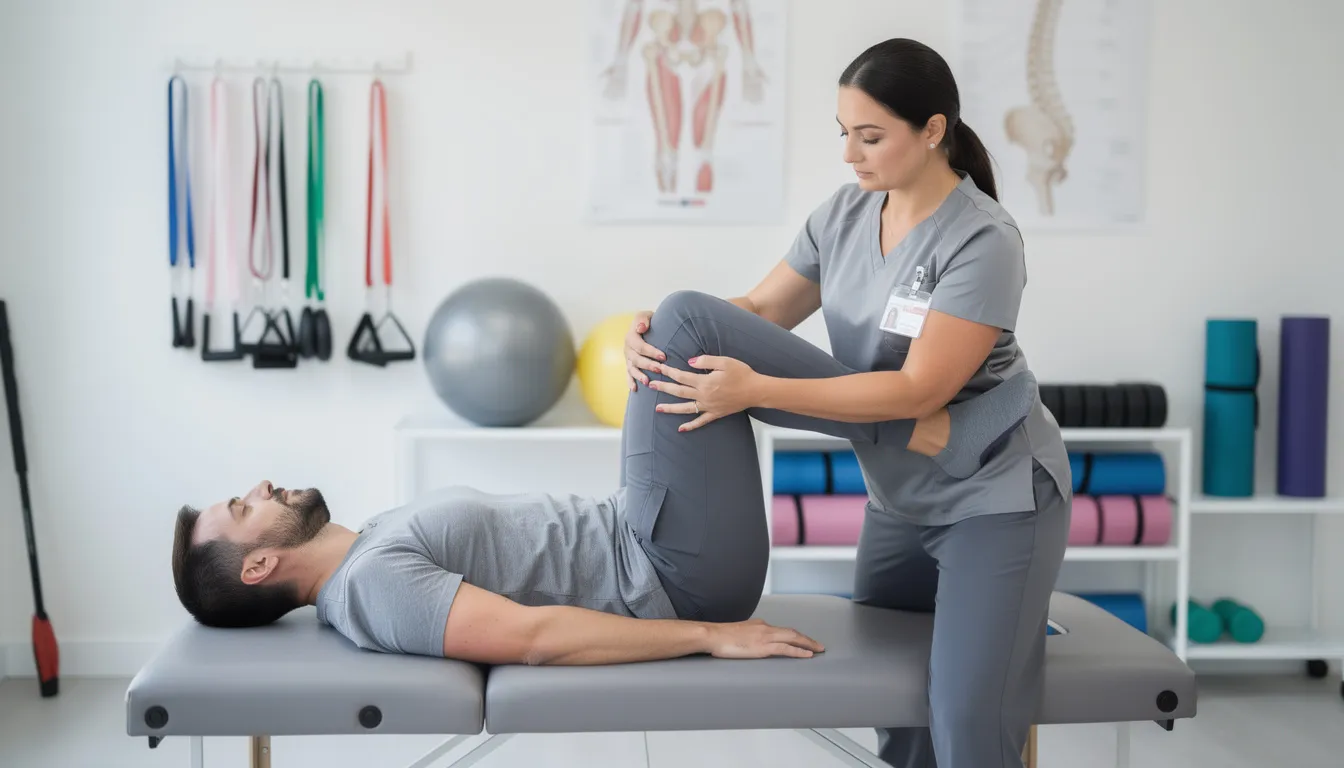
What to expect during your evaluation:
- Review of your medical history, imaging if you have it, and specific golf goals (9 holes vs 18, walking vs cart, handicap targets)
- Discussion of exactly when symptoms show up during tee shots, walking uphill, sitting in the cart between holes
- Movement screen including spine motion, hip rotation, core endurance, and single-leg balance
- Golf-specific tests like simulated address position, partial swings with a mid-iron, and assessment of how you bend to tee up or retrieve the ball
Typical treatment components:
- Symptom-calming techniques: Manual therapy and soft tissue work around the lumbar spine, hips, and gluteal muscles. Gentle nerve glides help improve nerve mobility. Therapeutic positions relieve pressure and reduce leg pain.
- Targeted exercises: Progressive core, glute, and hip external rotation work tailored to golf demands. Think bridges, clamshells, side-steps, anti-rotation holds, and dead bugs. These exercises share the load so your lower back doesn’t do all the work.
- Mobility restoration: Hip and thoracic spine mobility drills reduce the need for your lumbar spine to over-rotate during the swing. Open-books, half-kneeling rotations, and hip circles are common tools.
- Movement re-training: We coach proper setup posture, hip hinge mechanics, and weight shift patterns that protect your back while maintaining distance and accuracy. This often connects with swing analysis to identify positions that stress your spine.
- Load progression: A structured plan that moves you through a return-to-golf progression with clear phases and stop rules.
Return-To-Golf Progression: Four Phases to Safely Resume Play
A gradual return to golf helps prevent flare-ups and supports healing. The typical progression includes:
- Putting and Chipping: Begin with short game practice focusing on minimal trunk rotation and no pain. Stop if you experience sharp pain or worsening symptoms.
- Half Swings: Progress to half swings with mid-irons, maintaining controlled tempo and proper posture. Monitor symptoms closely and pause if pain increases.
- Controlled Full Swings: Move to full swings with shorter clubs or hybrids, emphasizing smooth, controlled motions without excessive twisting.
- 9 Holes to 18 Holes: Gradually increase playing time from 9 holes to a full 18-hole round, incorporating breaks and monitoring for muscle cramps or discomfort.
Stop rules: If symptoms travel farther down the leg, or weakness appears, stop and get evaluated. Also pause if you experience sharp pain, shooting pain down the leg, numbness, or weakness.
Golf-Specific Modifications to Reduce Sciatica Flare-Ups
You don’t always have to quit golf, but you may need to temporarily change how much and how you play. These modifications protect your back while you rebuild strength and mobility.
- Switch from carrying to a push cart or riding cart: This cuts repetitive asymmetrical load, especially on hilly courses with elevation changes.
- Shorten practice sessions: Favor 20 to 30 focused minutes on the driving range (40 to 50 balls) over marathon sessions of 100+ balls. Quality over quantity.
- Adjust your stance and setup: A slightly wider stance, more hip hinge, and neutral spine position decrease lumbar flexion and shear stress during the swing.
- Limit forced rotation: Think “smooth 80% swing” rather than swinging for maximum distance. Focus on tempo and centered strike. Your back will thank you.
- Use shorter or lighter golf clubs temporarily: More hybrids, fewer long irons. This reduces torque demands on your spine with each swing.
- Adjust tee height and ball position: A slightly higher tee for driver and fairway woods allows a more upright swing path and less forward bend at address.
- Build in breaks: Sit, walk around, or do gentle stretching between shots, especially on the back nine when muscle fatigue sets in.
- Track your symptoms: Use a simple 0-10 pain scale each nine holes. If lower back pain symptoms spike above a 5 or start shooting further down your leg, that’s your signal to stop for the day.
These adjustments are often temporary. As you build strength and improve movement patterns through rehab, you’ll gradually return to your normal playing style.

Preventing Future Sciatica Flare-Ups and Staying on the Course
Building “golf durability” means creating habits that keep you playing for years, not just reacting when pain returns. Think of this as your long-term maintenance plan.
- 10 to 15 minute dynamic warm up before every round: Include leg swings, hip circles, bodyweight squats, and torso rotations with a club across your shoulders. Never go straight from your car to the first tee.
- Strength training 2 to 3 days per week: Focus on core, glutes, and upper back. Dead bugs, bird dogs, hip thrusts, glute bridges, and rows support your spine and improve golf performance.
- Weekly mobility work: Target hips and thoracic spine with exercises like open books, half-kneeling rotations, and kneeling hip flexor stretches. Better mobility means less compensation from your lower back.
- Smart scheduling: Avoid back-to-back days of 36 holes. Insert lighter activity days or non-golf movement between heavy rounds, especially during peak golf season.
- Course strategy changes: Choose safer lies instead of attempting highly twisted shots from deep rough, desert lies, or steep bunkers. Protecting your spine is worth an extra stroke.
- Low impact exercises on off days: Swimming, cycling, or walking on level surfaces maintain circulation and endurance without overloading your back.
- Periodic PT check-ins: Schedule tune-up sessions before golf trips or competitive seasons. A quick reassessment catches small issues before they become round-ending problems.
View these steps as part of your golf training plan, not just rehab homework. The golfers who stay on the course longest are the ones who invest in their body between rounds.
Frequently Asked Questions About Golfing With Sciatica
These are questions we hear regularly from golfers at Scottsdale PT & Performance, such as how to overcome golf performance anxiety.
Can I Make Sciatica Worse By Continuing To Play Golf?
Playing through strong, worsening pain, especially shooting leg pain or progressive weakness can prolong your symptoms and delay recovery. However, well-managed golf with appropriate modifications and PT guidance is often safe. The key is respecting pain signals and avoiding activities that cause symptoms to escalate.
Is Walking Or Riding Better For Sciatica?
Early in a flare-up, riding in a golf cart or using a push cart is usually easier on your back. As symptoms calm and strength improves, many golfers gradually return to walking 9 holes, then build up to walking a full 18. Your body will tell you when you’re ready.
How Long Does It Usually Take To Get Back To Normal Golf After A Sciatica Flare-Up?
Timelines vary significantly based on the underlying cause and severity. Many golfers see improvement within several weeks to a few months of consistent conservative care. If pain persists beyond this despite proper treatment, additional workup may be warranted.
Do I Need An MRI Before Starting Physical Therapy?
Not necessarily. Current guidelines recommend starting conservative care first unless red flags are present. A physical therapist can evaluate your movement patterns and symptoms without imaging. MRIs become more useful if symptoms fail to improve after several weeks of optimized care, or if surgery is being considered.
Are There Specific Stretches I Should Avoid?
Use caution with aggressive toe-touch stretching, repeated forced twisting, and prolonged static hamstring stretches that increase leg symptoms. Gentle stretching that stays below a 4/10 pain level is generally safe. If a stretch makes your leg symptoms worse, stop doing it and mention this to your PT.
Will Strengthening My Core Really Help My Golf Game And Sciatica?
Yes. A stronger core and hips share the load during your swing, reducing how much force your lumbar spine has to absorb. This often improves both power transfer (better distance) and pain control. Certain exercises like anti-rotation holds and glute bridges directly support the demands of the golf swing.
Medical Disclaimer
This article is for educational purposes for golfers and active adults in the Scottsdale area. It’s not personal medical advice. Sciatica can have multiple causes, and proper diagnosis and treatment require an in-person evaluation by a licensed healthcare professional. Don’t ignore the red-flag symptoms described above, seek urgent or emergency care when appropriate. Individual outcomes and timelines vary, and the exercises or modifications discussed may not be suitable for every person.
Next Steps for Managing Golfing With Sciatica
If you’re experiencing sciatica symptoms that affect your golf game, consider consulting a spine specialist or physical therapist who understands the demands of golf. A tailored treatment plan that includes proper equipment recommendations, swing mechanics adjustments, and targeted exercises can help you manage pain, avoid further injury, and enjoy your time on the course safely.