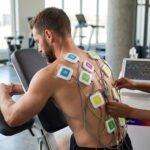
Muscle stimulation therapy sits at the intersection of physiology and technology. A small electrical current passes through electrodes placed on the skin, and the nervous system responds the way it does during a real muscle contraction. Clinics across the country use this tool for pain relief, muscle recovery, and rehabilitation, but the therapy only reaches its full value when a trained physical therapist directs how it is applied. Here’s how it actually works.
What is Muscle Stimulation Therapy
Muscle stimulation therapy uses mild electrical pulses to produce muscle contraction without voluntary effort from the patient. Electrical impulses travel through surface electrodes into the muscle fibers below the skin, prompting the same contraction pattern the brain would normally trigger through the spinal cord and nerves. Electrical muscle stimulation is effective in rehabilitation settings because it recruits muscle fibers that inhibited pain or nerve signaling makes hard to activate voluntarily (Vance et al., 2014). Electrical stimulation therapy delivers these mild electrical currents through the skin using devices ranging from small hand-held units to larger e stim machines with multiple channels.
How Electrical Stimulation Triggers Muscle Contraction and Why That Matters for Muscle Stimulation Therapy
Every voluntary muscle contraction starts as an electrical signal sent from the brain, down the spinal cord, and out through peripheral nerves to the target muscle. Electrical muscle stimulation reproduces that signal artificially. An electric current from the device travels through surface electrodes placed at a specific electrode placement point, and nerves near that site pick up the current and relay it to the muscle fibers underneath, producing a contraction nearly identical to a voluntary one (Maffiuletti, 2010). That mechanism is the entire reason muscle stimulation therapy works clinically: it bypasses a weak or interrupted voluntary signal and delivers the contraction command directly. This matters most after injury or surgery, when pain, swelling, or nerve inhibition prevents a patient from firing a muscle on their own even though the muscle itself is structurally intact. Because the contraction pattern mimics the body’s own electrical impulses, electrical stimulation can improve muscle function over repeated sessions rather than producing an artificial, unsustainable effect (Kern et al., 2018).
Common Forms of Electrical Stimulation Therapy
A few types of electrical stimulation therapy dominate clinical use, and each targets a different physiological goal.
- Transcutaneous electrical nerve stimulation, or TENS, targets pain signals rather than muscle contraction and remains one of the most common forms used for pain management (Johnson et al., 2022). It works by stimulating sensory nerves near the skin surface to interrupt pain signals before they reach the brain, rather than producing a muscle contraction.
- Neuromuscular electrical stimulation, or NMES, focuses on producing a genuine muscle contraction strong enough to rebuild muscle strength after injury or surgery (Nussbaum et al., 2017). Unlike TENS, NMES intensity is set high enough to visibly move the joint, why it is used for muscle re-education rather than pain relief alone
- Functional electrical stimulation aids patients in performing tasks such as walking after a spinal cord injury or managing foot drop linked to multiple sclerosis. It differs from standard NMES because it is timed to activate during a specific phase of a functional movement, such as the swing phase of a step, rather than as an isolated contraction.
- Russian stimulation, a stronger EMS variant, uses higher-intensity electrical current bursts delivered at a specific frequency to recruit deeper muscle fibers for muscle recovery and athletic conditioning. It was originally developed for elite athletic training and produces a more forceful contraction than standard NMES protocols (Happ & Behringer, 2022).
How Electrical Stimulation Affects Athletes and the Body
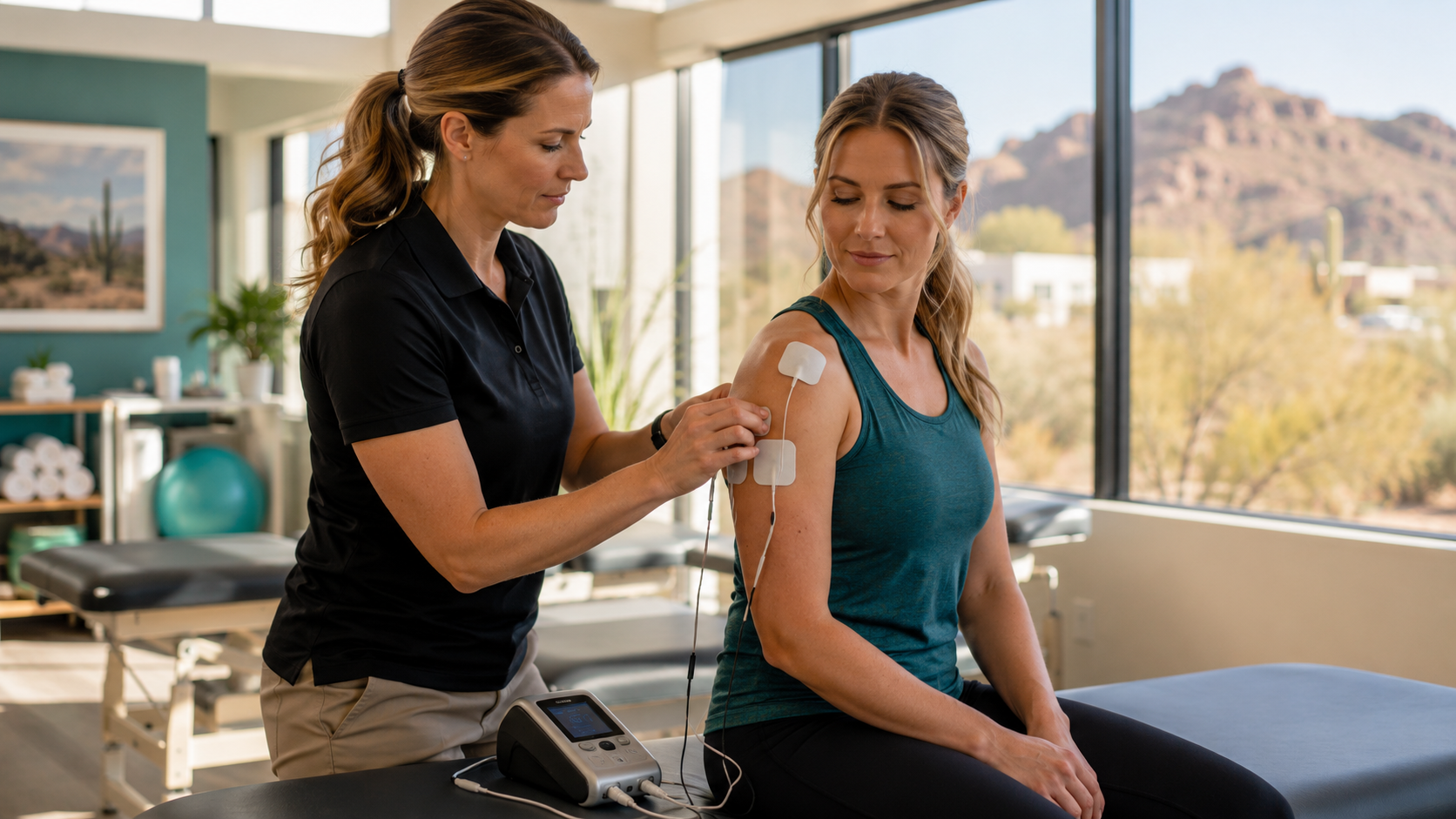
Athletes deal with a narrow window between training hard and breaking down tissue faster than it heals. Electrical stimulation therapy fits into that window across several distinct physiological pathways.
Muscle Recovery Between Training Sessions
Electrical muscle stimulation supports muscle recovery by triggering contractions that clear metabolic byproducts from tissue faster than passive rest alone. Physical therapists frequently reach for e stim after sports injuries because it delivers a controlled dose of muscle contraction without added mechanical stress on a joint still healing from acute trauma.
Blood Flow and Circulation to Injured Tissue
Electrical stimulation promotes blood flow to injured areas by triggering repeated contractions that pump blood through surrounding tissue (Maffiuletti, 2010). That increase in circulation delivers oxygen and nutrients to the injury site faster than an inactive muscle would receive on its own, which shortens the window before an athlete can resume light training.
Tissue Healing and Reduced Muscle Atrophy
Electrical stimulation helps maintain muscle mass during inactivity, which matters most when a cast, brace, or post-surgical protocol keeps an athlete from voluntary movement. Electrical muscle stimulation strengthens atrophied or weakened muscles well before a patient regains full range of motion, helping prevent muscle atrophy and supporting tissue healing during the weeks when active exercise is off the table (Kern et al., 2018).
Muscle Strength and Performance Retention
EMS therapy mimics natural muscle contractions closely enough that a systematic review found NMES-based training and conventional strength training produce comparable strength gains when session volume is matched (Happ & Behringer, 2022). For an athlete sidelined by injury, this means muscle strength losses slow down even without a single voluntary repetition.
Pain Relief and the Nervous System
TENS therapy has been used since the 1960s for pain management, built on research showing electrical stimulation can block pain signals traveling through nerves toward the brain (Johnson et al., 2022). A 2021 review found TENS reduced pain intensity compared to placebo across hundreds of trials, giving clinicians solid ground for using it as a treatment option for acute and chronic pain (Johnson et al., 2022). TENS units can reduce reliance on pain medication for patients managing neck pain, back spasms, or chronic pain tied to overuse injuries, cutting pain without adding another prescription to a patient’s routine (Khadilkar et al., 2008).
A New Approach: Neuromuscular Activation Training
Scottsdale Physical Therapy & Performance powered by Restimulate Health offers neuromuscular activation training using the truFlex device, a technology originally introduced to the market in 2019 for aesthetic muscle toning (Cutera, Inc., 2025). In December 2025, the FDA granted truFlex expanded clearance covering rehabilitative uses, including muscle re-education, prevention or retardation of disuse atrophy, increasing local blood circulation, relaxation of muscle spasms, and immediate post-surgical stimulation of calf muscles to prevent venous thrombosis (Cutera, Inc., 2025). The device is powered by proprietary Multi-Directional Stimulation technology, which delivers electrical current through applicators customized to a patient’s body shape to produce controlled muscle contractions in a targeted muscle group (Cutera, Inc., 2025).
Dr. Edward Alvarez described the expanded clearance as reflecting “a major advancement in how we approach muscle rehabilitation and functional strength,” adding that the device’s precision and customization make it useful for supporting patients “at every stage of their wellness and rehabilitation journey” (Cutera, Inc., 2025).
It’s worth being precise about what this device actually is at a mechanistic level. truFlex is a commercial application of neuromuscular electrical stimulation, the same broad category of treatment used in NMES-based rehabilitation for decades (Nussbaum et al., 2017). Peer-reviewed evidence on NMES gives a realistic picture of what to expect. A meta-analysis of 42 studies involving over 1,400 hospitalized patients found NMES produces a small but real improvement in muscle strength (Waldauf et al., 2023). A separate review of 37 randomized trials found NMES improved quadriceps strength in young adults, though its effect was generally weaker than voluntary resistance training, and its impact on muscle mass remains inconclusive (Bittencourt et al., 2021). Results are not universally positive: a controlled trial in women with knee osteoarthritis found four weeks of NMES did not produce measurable strength gains, underscoring that outcomes depend heavily on dosage, duration, and patient population (Palmieri-Smith et al., 2010).
Who Needs Muscle Stimulation Therapy and Why
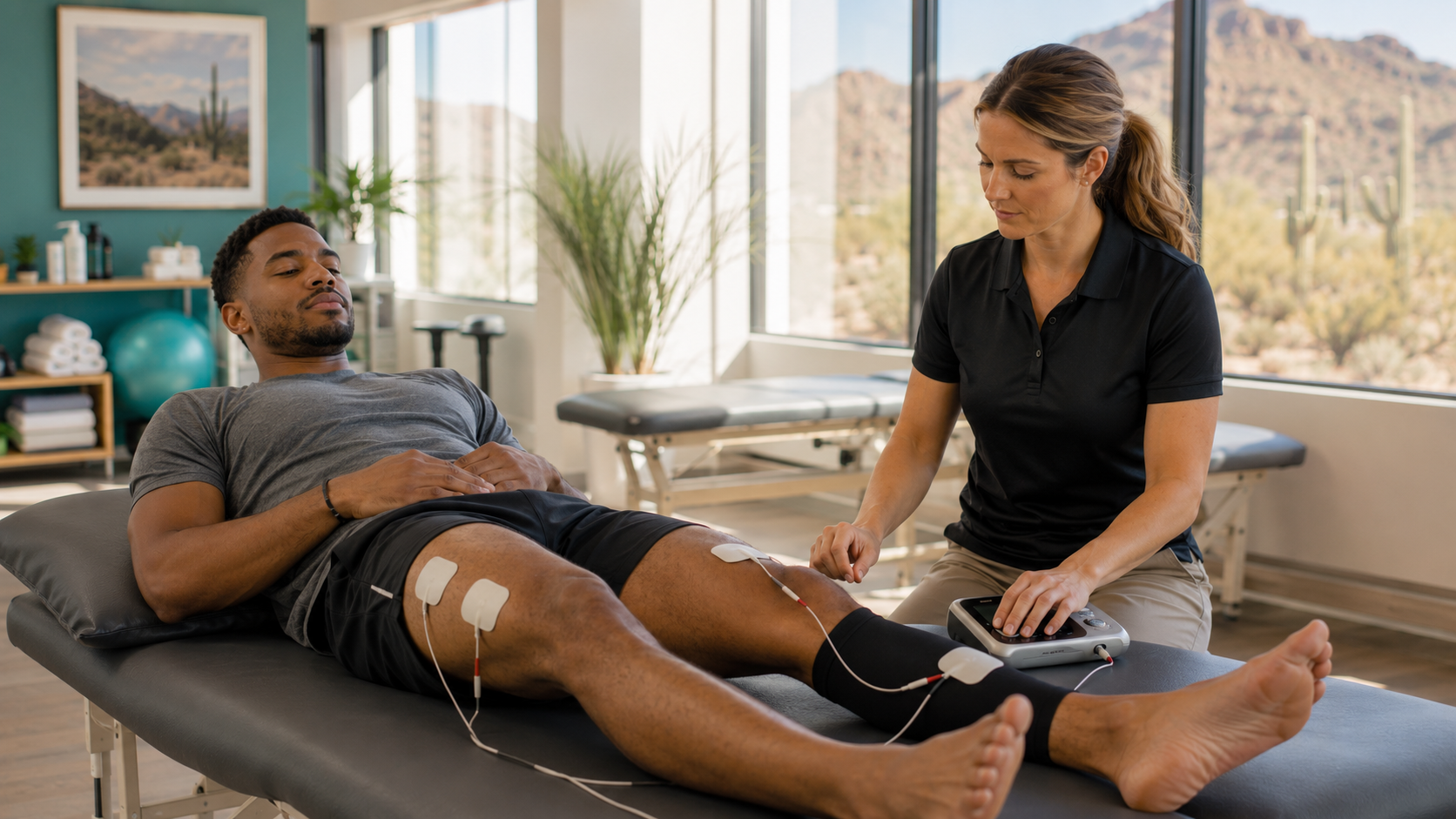
Muscle stimulation therapy fits a wide range of patients, and physical therapists match the modality to the specific health condition in front of them.
- Patients recovering from orthopedic surgery, who use NMES to counter muscle atrophy while surgical restrictions limit voluntary training.
- Athletes managing muscle spasms or overuse injuries, who turn to e stim to reduce discomfort and speed muscle recovery between competitions.
- Individuals with spinal cord injuries, who often rely on functional electrical stimulation to regain the ability to walk despite disrupted signals between the brain and affected muscles.
- People living with multiple sclerosis and related neurological conditions, who use functional electrical stimulation to manage foot drop and other mobility-limiting symptoms.
- People managing chronic pain from conditions such as arthritis, fibromyalgia, or persistent back spasms, who use TENS units for pain relief that reduces dependence on pain medication.
- Patients with weakened muscles following prolonged bed rest or immobilization, who use electrical muscle stimulation to rebuild baseline muscle strength before starting active physical therapy.
Limitations and Side Effects
For people with certain implanted devices, such as pacemakers or defibrillators, electrical stimulation may not be suitable due to the risk of the electrical current interfering with the device’s function. It is important to know that this therapy is not applicable to pregnant women in most cases, since the effects of electrical current on a developing fetus are not established well enough to support routine use (Vance et al., 2014). Common risks of electrical stimulation include skin irritation and, in rare cases, burns near the electrode site, so proper electrode placement and current settings matter. A tingling sensation during treatment is normal and expected, but sharp discomfort signals that a healthcare provider needs to adjust intensity or placement immediately.
How Scottsdale PT and Performance Fills the Gaps
A device alone cannot diagnose why a muscle stopped firing correctly or why pain keeps returning after every flare-up resolves. Physical therapy adds the clinical reasoning that turns muscle stimulation therapy from a passive add-on into a structured recovery plan. Scottsdale PT&Performance builds each patient’s protocol around a full evaluation, then layers electrical stimulation into strength work, mobility training, and movement retraining aimed at the root problem rather than the surface symptom . Their physical therapy services cover post-surgical rehabilitation, sports injury recovery, chronic pain management, and neuromuscular re-education, giving patients a single clinic that can move a treatment plan from acute injury care through full return to activity.
What to Expect During Muscle Stimulation Therapy Sessions
A first visit typically includes a full evaluation, followed by an initial treatment session that sets the direction for the following weeks. Ongoing sessions run about an hour, usually once weekly, spanning roughly eight to twelve visits across three to nine months depending on the injury and goals. During a typical session, a physical therapist selects electrode placement based on the target muscle group, sets the electrical current intensity to a tolerable level, and monitors the muscle contraction response throughout the session. Electrical muscle stimulation or neuromuscular activation training gets folded into that plan alongside manual therapy and progressive loading, so gains made during a stimulation session carry over into daily movement instead of fading once the electrodes come off.
Patients who pair muscle stimulation therapy with guided physical therapy in Scottsdale tend to see faster, more durable results than those relying on a home TENS unit alone. The clinical reasoning behind electrode placement, intensity, and session frequency comes from someone trained to read how a specific injury responds over time, not from a generic setting on a consumer device.
Frequently Asked Questions
What does muscle stimulation therapy feel like?
Most patients describe a tingling sensation followed by a pulsing muscle contraction. Intensity varies depending on the device and treatment goal, and a physical therapist adjusts settings to keep the sensation tolerable while still effective.
Is muscle stimulation therapy the same as a TENS unit?
No. A TENS unit targets pain signals through the nerves, while electrical muscle stimulation and NMES specifically aim to produce muscle contraction for strengthening or muscle re-education. Some clinics use both within the same treatment plan for different goals.
How many sessions of electrical stimulation therapy are needed?
That depends on the health condition being treated. Post-surgical muscle atrophy cases often need consistent sessions over several weeks, while pain management protocols may show results within a few visits.
Can electrical stimulation replace physical therapy?
No. Electrical stimulation therapy works best as one part of a broader plan that includes movement retraining, manual therapy, and progressive strengthening guided by a physical therapist.
Who should avoid electrical stimulation?
People with certain implanted devices, pacemakers, or who are pregnant should consult a healthcare provider before starting treatment, since electrical current near these devices carries added risk.
Bibliography
Bittencourt, D. C., et al. (2021). Effects of neuromuscular electrical stimulation on quadriceps muscle strength: A scoping review of randomized controlled trials. PubMed. https://pubmed.ncbi.nlm.nih.gov/34106246/
Cutera, Inc. (2025, December 18). Cutera announces new FDA clearances for truFlex to support rehabilitation, recovery and muscle wellness [Press release]. PR Newswire. https://www.prnewswire.com/news-releases/cutera-announces-new-fda-clearances-for-truflex-to-support-rehabilitation-recovery-and-muscle-wellness-302644892.html
Happ, K. A., & Behringer, M. (2022). Neuromuscular electrical stimulation training vs. conventional strength training: A systematic review and meta-analysis of the effect on strength development. Journal of Strength and Conditioning Research, 36(12), 3527–3540. https://doi.org/10.1519/JSC.0000000000004114
Johnson, M. I., Paley, C. A., Jones, G., Mulvey, M. R., & Wittkopf, P. G. (2022). Efficacy and safety of transcutaneous electrical nerve stimulation (TENS) for acute and chronic pain in adults: A systematic review and meta-analysis of 381 studies (the meta-TENS study). BMJ Open, 12(2), e051073. https://doi.org/10.1136/bmjopen-2021-051073
Kern, H., Barberi, L., Löfler, S., Sarabon, N., Bondin, S., Zampieri, S., Kern, W., & Musarò, A. (2018). Electromyostimulation to fight atrophy and to build muscle: Facts and numbers. Journal of Cachexia, Sarcopenia and Muscle, 9(1), 5–15. https://doi.org/10.1002/jcsm.12271
Khadilkar, A., Odebiyi, D. O., Brosseau, L., & Wells, G. A. (2008). Transcutaneous electrical nerve stimulation (TENS) versus placebo for chronic low-back pain. Cochrane Database of Systematic Reviews, 2008(4), CD003008. https://doi.org/10.1002/14651858.CD003008.pub3
Maffiuletti, N. A. (2010). Physiological and methodological considerations for the use of neuromuscular electrical stimulation. European Journal of Applied Physiology, 110(2), 223–234. https://doi.org/10.1007/s00421-010-1502-y
Nussbaum, E. L., Houghton, P., Anthony, J., Rennie, S., Shay, B. L., & Hoens, A. M. (2017). Neuromuscular electrical stimulation for treatment of muscle impairment: Critical review and recommendations for clinical practice. Physiotherapy Canada, 69(5), 1–76. https://doi.org/10.3138/ptc.2015-88
Palmieri-Smith, R. M., Thomas, A. C., Karvonen-Gutierrez, C., & Sowers, M. F. (2010). A clinical trial of neuromuscular electrical stimulation in improving quadriceps muscle strength and activation among women with mild and moderate osteoarthritis. Physical Therapy, 90(10), 1441–1452. https://pubmed.ncbi.nlm.nih.gov/20671100/
Restimulate Health. (n.d.-a). Find a Restimulate Health affiliate clinic. https://www.restimulatehealth.com/find-a-clinic
Restimulate Health. (n.d.-b). Leadership and innovation experts. https://www.restimulatehealth.com/restimulate-health-leadership-team
Vance, C. G. T., Dailey, D. L., Rakel, B. A., & Sluka, K. A. (2014). Using TENS for pain control: The state of the evidence. Pain Management, 4(3), 197–209. https://doi.org/10.2217/pmt.14.13
Waldauf, P., et al. (2023). The effects of neuromuscular electrical stimulation on hospitalised adults: Systematic review and meta-analysis of randomised controlled trials. PubMed. https://pubmed.ncbi.nlm.nih.gov/38156975/