Hard workouts, long golf rounds, strength training sessions, trail runs, and weekend sports all put stress on the body. Most active adults expect some soreness after training, but there is a difference between normal fatigue and recovery that keeps dragging out longer than it should. When muscle soreness sticks around, performance drops, movement feels restricted, and every workout starts feeling heavier than the last one. That is usually when people start asking what else they can do besides rest.
That is one reason interest in red light therapy for muscle recovery has grown so quickly among athletes, runners, lifters, and active adults in Scottsdale. They want something that actually fits into a training week without turning into another complicated protocol.
At Scottsdale Physical Therapy & Performance, we regularly work with people trying to recover from muscle soreness, overuse injuries, training fatigue, tendon irritation, and post-workout stiffness. Red light therapy has become one tool that can support tissue healing and recovery when it is used appropriately alongside movement-based rehab and strength programming. It is not a replacement for rehab, but for the right person it can be a useful layer in a broader recovery plan.
What Is Red Light Therapy?
Red light therapy is a form of light therapy that uses low-level, specific wavelengths of red and near-infrared light to stimulate cellular activity inside the body. Most red light therapy treatments use wavelengths between 600 and 900 nanometers because those ranges are able to penetrate the skin and interact with deeper tissues. These wavelengths are commonly delivered through a red light therapy device, panels, handheld devices, or systems used in a doctor’s office or rehab setting.
You may also hear this treatment called photobiomodulation therapy, low level light therapy, low level laser therapy, low power laser therapy, or light emitting diode therapy. While the names vary slightly, they all refer to the same basic concept. Specific wavelengths of red light, typically between 630 and 850 nanometers, are directed toward tissues to influence cellular function and support the body’s natural healing processes.
Much of the effect happens at the cellular level. Red light therapy stimulates mitochondrial activity by interacting with cytochrome c oxidase, which drives increased ATP synthesis. ATP acts as the energy source cells use during cellular respiration, tissue repair, and muscle recovery after exercise.
How Red Light Therapy Works Inside Muscle Tissue
When people hear the term red light, they often assume the treatment only affects the skin. In reality, the wavelengths used in red light therapy can penetrate beyond the surface and interact with human muscle tissue, connective tissue, and blood vessels underneath the skin. That deeper penetration is one reason clinicians and researchers have become interested in skeletal muscle recovery and sports performance applications.
Photobiomodulation can accelerate cellular repair, decrease inflammation, and improve circulation to the treated tissue. Increased blood flow may support nutrient delivery and oxygen transport to muscle tissue after strenuous exercise. Some research also suggests photobiomodulation may support angiogenesis, which refers to the development of new blood vessels that assist tissue healing and recovery.
The therapy may also influence mitochondrial membrane potential and cytochrome c oxidase activity, both of which are connected to energy production inside cells. Laboratory and clinical research has observed increased ATP production following exposure to certain wavelengths of red and near-infrared light. When cells have access to more energy, muscle repair and recovery may happen more efficiently.
Researchers have additionally explored how red light treatment may support cell proliferation, oxidative stress reduction, and tissue repair after training stress or muscle damage. Dosing, wavelength, and treatment timing still need more study before clear universal protocols exist.
Why Muscle Recovery Matters More Than Most People Think
Many active adults focus heavily on workouts while ignoring recovery. That approach usually works for a while, especially for younger athletes, but eventually the body starts showing signs that it is not adapting well to training. Muscle soreness lasts longer, physical performance declines, movement quality changes, and workouts start feeling less productive.
Recovery is about more than resting tired muscles. It involves restoring ion pumps, rebuilding fibers, regulating inflammation, and preparing the tissue for what comes next. Recovery is also tied closely to movement quality, tissue capacity, and long-term performance consistency.
If those systems are overloaded repeatedly without enough recovery support, small issues can gradually turn into chronic pain, tendon irritation, or repetitive strain problems that may require sports injury physical therapy for fast healing. We see this often in Scottsdale with golfers, runners, CrossFit athletes, hikers, and active adults training year-round in the Arizona heat.
Who May Benefit From Red Light Therapy?
Response varies a lot between individuals, which is worth keeping in mind before investing in a protocol. Still, certain groups tend to explore red light therapy for muscle recovery more often because their training demands create repeated stress on muscle tissue and joints.
At Scottsdale Physical Therapy & Performance, we commonly see interest from:
- Runners dealing with lingering calf or hamstring soreness
- Golfers managing shoulder, trunk, or hip fatigue
- Lifters recovering from heavy strength sessions
- Pickleball and tennis players with repetitive overuse irritation
- Active adults trying to maintain training consistency
- People recovering from intense conditioning blocks
- Athletes looking to improve post exercise recovery
Sleep, hydration, nutrition, stress, and training load all shape how someone responds, which is why red light therapy rarely produces the same result for every person.
Red Light Therapy and Delayed Onset Muscle Soreness
One of the most common reasons people try red light therapy for muscle recovery is delayed onset muscle soreness, also known as DOMS. DOMS usually develops within 24 to 48 hours after unfamiliar or high-intensity exercise. It can make simple activities like walking downstairs, sitting down, or lifting overhead feel surprisingly difficult.
Research indicates that applying Red Light Therapy within 24 hours after intense exercise may significantly reduce delayed onset muscle soreness. Some studies suggest the therapy lowers inflammatory mediators and accelerates the clearance of reactive oxygen species created during intense exercise. That combination may help reduce inflammation and improve the recovery process after demanding workouts.
Researchers have also observed reductions in creatine kinase and lactate levels following red light therapy sessions. Those markers are commonly associated with muscle damage and fatigue after strenuous exercise. Lower levels may suggest the body is recovering more efficiently after training.
This does not mean soreness disappears completely. Muscle soreness is still a normal part of adaptation, especially after heavy loading or a new training program. What many athletes notice instead is a significant improvement in how quickly they bounce back between sessions and tolerate repeated training.
Can Red Light Therapy Improve Athletic Performance?
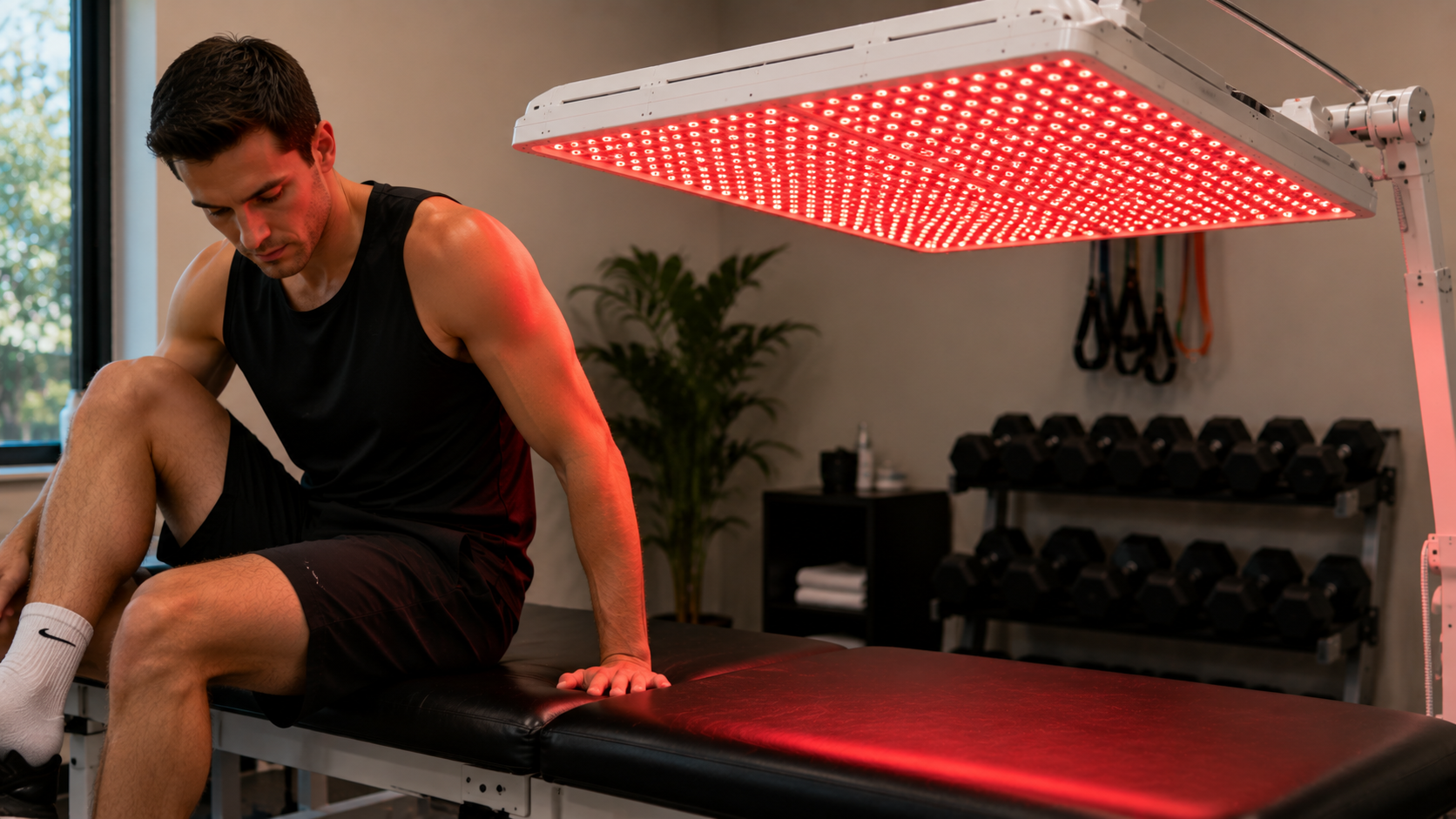
Some research suggests red light therapy may help support athletic performance when used before activity. Red Light Therapy can be applied for three to five minutes before exercise to enhance muscle performance, with effects potentially lasting for several hours after treatment. Researchers believe improved mitochondrial efficiency and ATP production may help muscles generate energy more effectively during exercise.
Pre-conditioning sessions have been studied in activities involving strength, endurance, and repeated muscular effort, especially in the context of sports performance physical therapy in Scottsdale. Some reports have shown improvements in maximum voluntary contraction, fatigue resistance, and recovery after tough workouts. There have even been animal model studies involving exercise trained mice that explored the relationship between photobiomodulation and training adaptation.
Still, there are limitations to the current evidence. A systematic review or meta analysis may show promising trends, but not every study demonstrates the same peak response or measurable improvement in physical performance. Variables like treatment timing, dosage, wavelength, and training status all influence results.
That matters because recovery tools often get oversold online. In practice, most active adults are less concerned about mitochondrial membrane potential and more concerned about whether they can train again tomorrow without feeling completely beat up. Red light therapy may support muscle performance and recovery, but it is not likely to transform someone into a dramatically stronger or faster athlete overnight.
What Red Light Therapy Does Not Fix
One of the biggest misconceptions around red light therapy is the idea that it repairs every injury automatically. Social media often presents it as a universal recovery solution, but tissue healing is far more complicated than that.
For example, red light therapy may help manage symptoms around tendon irritation or muscle tightness, but it does not mechanically repair a torn ligament. It may help reduce soreness after exercise, but it does not correct poor movement patterns or training errors. It can support recovery, but it cannot replace progressive strength development, load management, or movement retraining.
This distinction matters because people sometimes delay proper care while experimenting with recovery tools. If pain keeps worsening, movement becomes restricted, or swelling and weakness persist, a proper physical therapy assessment is usually the better next step.
Using Red Light Therapy for Training and Recovery
Before Workouts
Using red light therapy before workouts is usually aimed at preparing tissues for activity rather than simply treating soreness. Some athletes report feeling looser, more energized, or less stiff after pre-exercise sessions. Research suggests these short sessions may help prime cellular activity before loading muscles heavily.
Pre-workout sessions are typically brief. Many protocols involve three to six minutes of exposure targeting the muscles that will be used during exercise. Some athletes use red light devices before lifting, sprint work, golf training, or interval conditioning.
For people training at high intensities several times per week, even small improvements in readiness can matter. When recovery improves slightly from session to session, the cumulative effect over time may support better sports performance and more consistent training.
After Exercise
Post-workout treatment is where many people notice the clearest effects. Using red light and near-infrared light therapy after exercise is suggested to speed up muscle recovery and support post-exercise gains, although the research is still developing. Most studies exploring recovery applications focus on sessions completed within 24 hours after training.
After intense activity, muscle tissue experiences micro-damage, oxidative stress, and temporary inflammation. Those responses are part of adaptation, but excessive inflammation can prolong soreness and slow recovery. Red light therapy reduces inflammation by shifting cytokine profiles, decreasing pro-inflammatory mediators, and promoting anti inflammatory effects that may help muscles recover more efficiently.
Many active adults in Scottsdale use recovery-focused sessions after long runs, leg days, golf tournaments, or repetitive training blocks. Some golfers even schedule recovery sessions after multiple rounds during peak Scottsdale golf season when trunk and shoulder fatigue start accumulating.
Recovery Timing and Frequency
Protocols for red light therapy sessions often involve two to four sessions per week during higher recovery demand periods. Maintenance-focused programs may shift toward one or two weekly sessions once symptoms improve.
For optimal results, Red Light Therapy can be used both before and after workouts. Pre-conditioning sessions may help support immediate muscle performance, while post-exercise sessions may help support tissue repair and recovery afterward.
Consistency matters more than excessive treatment volume. More sessions are not always better. Overdoing recovery interventions can sometimes interfere with normal training adaptation if the body never experiences appropriate recovery stress naturally.
Is Red Light Therapy Safe?
Red light therapy is considered to have a relatively low risk profile when used appropriately. Most research describes it as a noninvasive treatment with relatively few side effects compared to more aggressive interventions. For most healthy adults, red light therapy safe protocols are straightforward and well tolerated.
Still, safe use matters. During treatment, patients may be advised to wear protective goggles depending on the device being used and the intensity of the light exposure. Protective goggles help reduce unnecessary eye exposure, especially with stronger low level laser systems.
People should also understand that not all red light devices are created equally. Home devices vary significantly in power, wavelength accuracy, and treatment quality. Some at home device systems marketed online may not deliver the dosage needed to produce meaningful results.
There are also medical considerations. People with photosensitivity conditions, active skin disorders, or certain cancer-related concerns should discuss treatment with a healthcare professional before starting therapy. While red light therapy has been studied extensively, it is still important to use treatments appropriately and under professional guidance when needed.
Home Devices vs Clinical Red Light Therapy
Home devices have become increasingly common because they are accessible and convenient. Some people use handheld devices or wearable systems daily as part of a recovery routine. For maintenance-focused recovery work, lower-powered systems may still provide some benefit over time.
Clinical systems used in physical therapy settings are typically stronger and more targeted than consumer-grade units and are often integrated with personal training and neuromuscular activation. That can matter when someone is trying to address muscle damage, chronic pain, or a more persistent recovery limitation. In a rehab setting, treatment parameters can also be adjusted based on tissue depth, symptoms, and training demands.
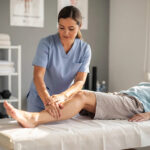
Another advantage of clinic-based treatment is integration with a larger recovery strategy. Red light therapy alone usually produces modest effects. Combining it with mobility work, manual therapy, strength programming, and movement retraining creates a more complete recovery approach focused on long-term resilience instead of temporary symptom relief.
What Conditions May Benefit From Red Light Therapy?
Most people associate red light therapy with beauty concerns or hair growth treatments because those applications are commonly advertised online. In rehab and sports medicine settings, the conversation is usually more focused on tissue healing, pain management, and movement recovery.
Red light therapy has shown promise in helping with:
- Tendon irritation
- Overuse injuries
- Muscle strains
- Joint stiffness
- Delayed onset muscle soreness
- Training-related fatigue
- Recovery after heavy lifting
- Minor soft tissue irritation
- General recovery support during intense training periods
Some studies suggest red light therapy can effectively reduce inflammation and support healing in various musculoskeletal conditions, although more research is still needed across different applications.
There are also situations where red light therapy is unlikely to solve the main issue. Structural injuries involving major tears, fractures, instability, or significant mechanical dysfunction usually require more comprehensive treatment plans.
How Physical Therapy Fits Into Recovery
Recovery is not just about reducing soreness. It is about restoring movement quality, load tolerance, tissue capacity, and confidence during activity. That is why physical therapy remains important even when someone uses additional recovery tools like red light therapy.
When someone comes in with persistent soreness, a lot of the time the issue is not recovery at all. It may be related to poor mechanics, mobility restrictions, strength deficits, compensation patterns, or training progression errors that signal you need a physical therapy check-up.
A runner with repeated calf tightness may need ankle mobility and load management adjustments. A golfer with persistent shoulder soreness may need thoracic mobility work and scapular control training. A lifter struggling with recurring muscle soreness may need recovery programming changes instead of simply adding more treatment modalities.
Movement-based care still drives long-term resilience and performance. Recovery tools can support that process, but they should not replace the fundamentals that keep the body moving well.
Our Approach at Scottsdale Physical Therapy & Performance
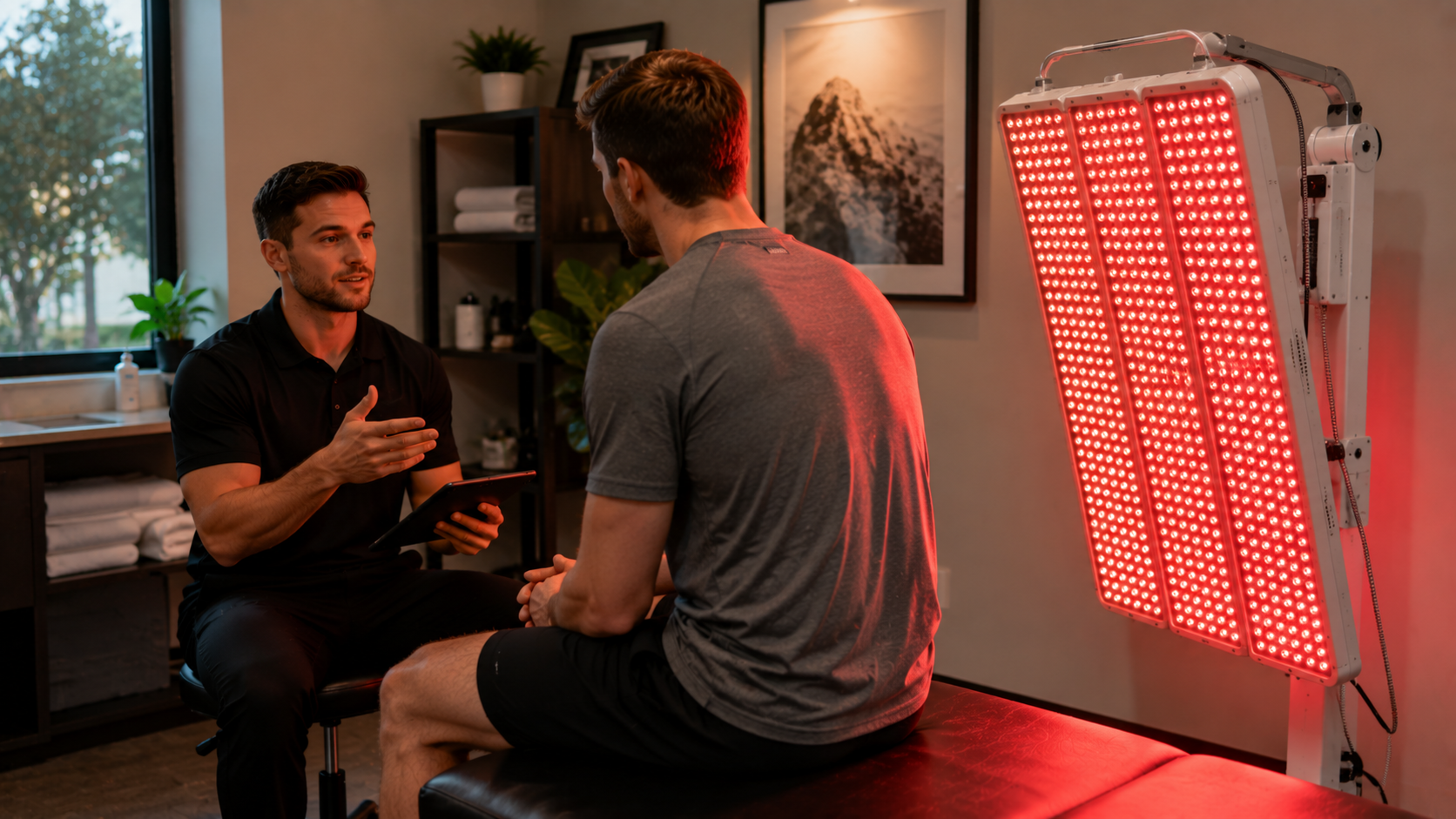
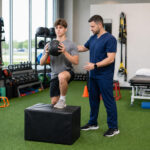
Our clinic takes a performance-focused approach to recovery and rehabilitation at Scottsdale Physical Therapy & Performance. We work with active adults, athletes, golfers, runners, and people who want to stay active without constantly fighting pain and stiffness.
When appropriate, red light therapy may be integrated into a broader treatment plan that also includes:
- Strength training
- Manual therapy
- Movement analysis
- Mobility work
- Return-to-sport progression
- Recovery education
- Load management strategies
We also spend time helping patients understand why symptoms developed in the first place. Someone sleeping four hours a night and training six days a week is not going to fix that with a red light panel.
In Scottsdale, many active adults balance demanding work schedules with year-round recreational activity. Recovery support becomes especially important when the body is repeatedly exposed to golf, hiking, lifting, cycling, running, or court sports without enough downtime between sessions.
Signs Your Recovery May Need More Attention
Some soreness after training is normal. Persistent fatigue and declining performance are different. People often wait too long before addressing recovery limitations because they assume soreness is simply part of being active.
You may benefit from a more structured recovery strategy if you notice:
- Muscle soreness lasting several days repeatedly
- Stiffness that affects movement quality
- Declining athletic performance
- Trouble recovering between workouts
- Persistent tendon irritation
- Fatigue during normal training loads
- Reduced strength or endurance
- Pain that interferes with sleep or daily activity
Those signs do not automatically mean something serious is wrong, but they usually indicate the body is struggling to keep up with current demands and recovery stress.
What To Expect During Red Light Therapy Sessions
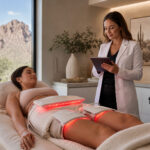
Most red light therapy sessions are relatively simple and comfortable. The treatment is painless, and people usually feel only mild warmth or no sensation at all during exposure. Depending on the area being treated, sessions may last several minutes.
Patients may stand in front of a panel, lie comfortably during treatment, or receive more targeted application through handheld devices. In some cases, therapists combine treatment with active recovery strategies before or after exercise.
Because this is a noninvasive treatment, there is usually no downtime afterward. Many people continue normal activity immediately following treatment and return directly to work, training, or daily activity.
Is Red Light Therapy Worth Using for Muscle Recovery?
Whether red light therapy is worth using depends largely on the individual and their training demands. Someone exercising casually a few times per week may not notice a dramatic difference. An athlete training intensely multiple days per week may notice that even modest recovery improvements help them tolerate higher workloads more consistently.
That is usually where red light therapy fits best. It is not meant to replace sleep, nutrition, hydration, strength training, or proper rehab. Instead, it may serve as another recovery support tool layered into a larger performance and recovery plan.
For active adults dealing with recurring soreness, delayed recovery, or repeated training fatigue, even small improvements in recovery quality can help training feel more sustainable over time.
Where Research Still Has Limits
There is growing interest in photobiomodulation therapy, but there are still important gaps in the evidence. Some studies show significant improvement in muscle recovery markers, while others show more modest effects. Researchers are still trying to determine ideal dosing, timing, wavelength combinations, and treatment protocols.
More research is also needed regarding long-term outcomes and which populations respond best. Some studies involve highly trained athletes, while others involve recreationally active adults or clinical populations. Results are not always directly comparable.
Recovery marketing tends to move faster than the research. It is worth staying grounded about what the evidence actually supports.
When To See a Physical Therapist
If soreness, stiffness, or pain keeps interfering with your workouts or daily activity, it is probably worth getting evaluated rather than continuing to guess. Recovery issues that linger for weeks often involve more than simple muscle fatigue.
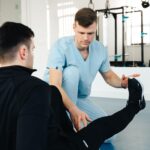
A physical therapist can help determine whether symptoms are related to muscle overload, movement limitations, tendon irritation, training errors, or a more significant injury. That assessment helps guide treatment instead of relying entirely on trial and error.
At Scottsdale Physical Therapy & Performance, we help active adults build recovery plans that support long-term movement, durability, and performance instead of simply masking symptoms temporarily.
Final Thoughts on Red Light Therapy for Muscle Recovery
Red light therapy for muscle recovery is not a shortcut around proper training, recovery habits, or rehab. What it may offer is an additional layer of recovery support for people dealing with soreness, training fatigue, delayed recovery, and soft tissue irritation.
When combined with smart programming, strength work, mobility training, and appropriate recovery strategies, red light therapy may help active adults recover more efficiently between sessions. For some athletes, even small improvements in recovery quality can make training feel more sustainable and consistent over time.
If soreness, stiffness, or recurring pain is limiting your workouts or performance, Scottsdale Physical Therapy & Performance can help you figure out what is driving the issue and what recovery strategies actually fit your body, activity level, and goals, and you can request an appointment with a physical therapist in Scottsdale to get started.
FAQ About Red Light Therapy for Muscle Recovery
Does Red Light Therapy Help Muscle Soreness?
Research suggests red light therapy may help reduce muscle soreness by decreasing inflammation and supporting tissue recovery after exercise. Many athletes use it after tough workouts to help manage delayed onset muscle soreness.
Is Red Light Therapy Better Before Or After Workouts?
Both timing strategies may be useful. Pre-workout sessions are often used to support muscle performance, while post-workout sessions are more commonly focused on recovery and soreness reduction.
How Long Does It Take To See Results?
Some people notice changes in soreness or recovery within a few sessions, while others experience more gradual improvements over several weeks. Response varies depending on training load, injury history, and overall recovery habits.
Can Red Light Therapy Replace Physical Therapy?
No. Red light therapy may support recovery, but it does not replace physical therapy when someone has movement limitations, strength deficits, or more significant injuries that require rehabilitation.
Are Home Red Light Devices Effective?
Some home devices may provide benefit, but treatment quality varies significantly. Clinical systems used in rehab settings are usually more powerful and more precisely targeted than many consumer-grade products.