
A sprained ankle stops you mid-stride. For most active adults in Scottsdale, that moment of ankle pain is more than a physical setback. It puts training, competition, and daily function on hold. Whether your ankle injury happened on the golf course, during a training session, or simply stepping off a curb, the path forward matters more than the moment it happened.
Ankle sprain treatment has changed a lot in the last decade, shaping how we now diagnose, manage, and rehabilitate these injuries. Physical therapy now produces outcomes that rival, and frequently surpass, surgical intervention for most grades of ankle sprain. What follows covers the anatomy behind a sprain, how clinicians grade ankle injuries, what a structured rehabilitation program actually involves, and when surgery is truly warranted. If difficulty walking or persistent ankle pain has been affecting your routine, this is the information you need before making any treatment decision.
Most people don’t understand what’s actually happening inside the joint when they roll an ankle, and that gap leads to bad calls: too much rest, too little rehab, or skipping evaluation altogether.
What Actually Happens When a Sprain Occurs
A sprain occurs when the foot rolls inward during an inversion injury, placing a sudden, excessive load on the lateral side of the ankle. The ankle ligaments stretch past their normal range, and depending on the force applied, they may partially or fully tear. According to Doherty et al. (2014), ankle sprains account for up to 15% of all sports-related injuries, placing them among the most common sports injuries treated globally.
The mechanism is straightforward. The foot rolls, the lateral ligament complex absorbs the force, and tissue damage follows. What varies is which specific ankle ligaments are affected and how severely.
The Three Ligaments Most Sprains Affect
Three primary structures sustain damage in a lateral ankle sprain. The anterior talofibular ligament (ATFL) runs from the fibula to the talus bone and is the first to fail under inversion stress. It is involved in approximately 70% of all ankle sprains (Doherty et al., 2014). The calcaneofibular ligament (CFL) connects the fibula to the calcaneus and is typically injured alongside the ATFL in more moderate sprains. The posterior talofibular ligament (PTFL) is the strongest of the three and sustains damage only in the most severe sprains or complete dislocations.
Medial ankle sprains are far less common and involve the deltoid ligament complex on the inner side of the ankle. They typically require a forceful eversion mechanism and are more often seen alongside fractures or high ankle injuries than in isolation.
A partial tear involves incomplete disruption of ligament fibers, preserving some structural integrity. A full rupture means the ligament has lost continuity entirely, though even complete tears frequently respond to proper rehabilitation without surgery.
Inversion Sprain vs. High Ankle Sprain
Most ankle sprains are inversion sprains, lateral injuries involving the ATFL and CFL. A high ankle sprain is a different injury category. A high ankle sprain affects the tibiofibular ligaments above the ankle joint, specifically the syndesmotic ligament complex. This sprain affects the structural connection between the tibia and fibula and is significantly more complex to rehabilitate.
High ankle sprains are common sports injuries in contact sports such as football, rugby, and ice hockey. They are frequently misdiagnosed as standard ankle sprains, leading to extended recovery when treatment protocols do not address the correct structure. Knowing which ligament is damaged determines the entire treatment path, which is why accurate diagnosis must come first.
Grading an Ankle Injury: From Mild Swelling to Severe Pain
Not every sprained ankle is the same. Clinicians use a three-grade classification system to categorize ankle injuries based on ligament damage, pain levels, and functional loss. Tiemstra (2012), writing in American Family Physician, outlines this grading framework clearly.
- Grade I sprains produce mild swelling, localized tenderness, and minimal ligament damage. The patient can typically bear weight without significant difficulty.
- Grade II sprains involve a partial tear of one or more ankle ligaments, with moderate pain and swelling, some bruising, and reduced ankle function.
- Grade III sprains involve a complete ligament rupture with severe pain, severe swelling, significant bruising, and marked difficulty bearing weight. Grade III does not automatically mean surgery. That distinction matters and will be addressed directly in the treatment section. This kind of sprain may take several months to recover.
Ottawa Ankle Rules: How Clinicians Rule Out Fractures
Before treatment begins, broken bones must be ruled out. The Ottawa Ankle Rules are a validated clinical decision tool that guides clinicians in determining whether X-ray imaging is necessary after an ankle injury. Developed by Stiell et al. (1992) and published in JAMA, the rules have demonstrated sensitivity rates above 96% for detecting fractures.
A patient warrants imaging when there is bone tenderness along the posterior edge of the fibula or tibia, tenderness over the navicular or base of the fifth metatarsal, or an inability to bear weight on the injured foot for four steps, both at the time of injury and during the physical examination. When soft tissue and ligament damage is suspected past what plain X-rays can reveal, magnetic resonance imaging provides detailed visualization of the injured structures.
Ankle Sprain Treatment Without Surgery: What Physical Therapy Includes
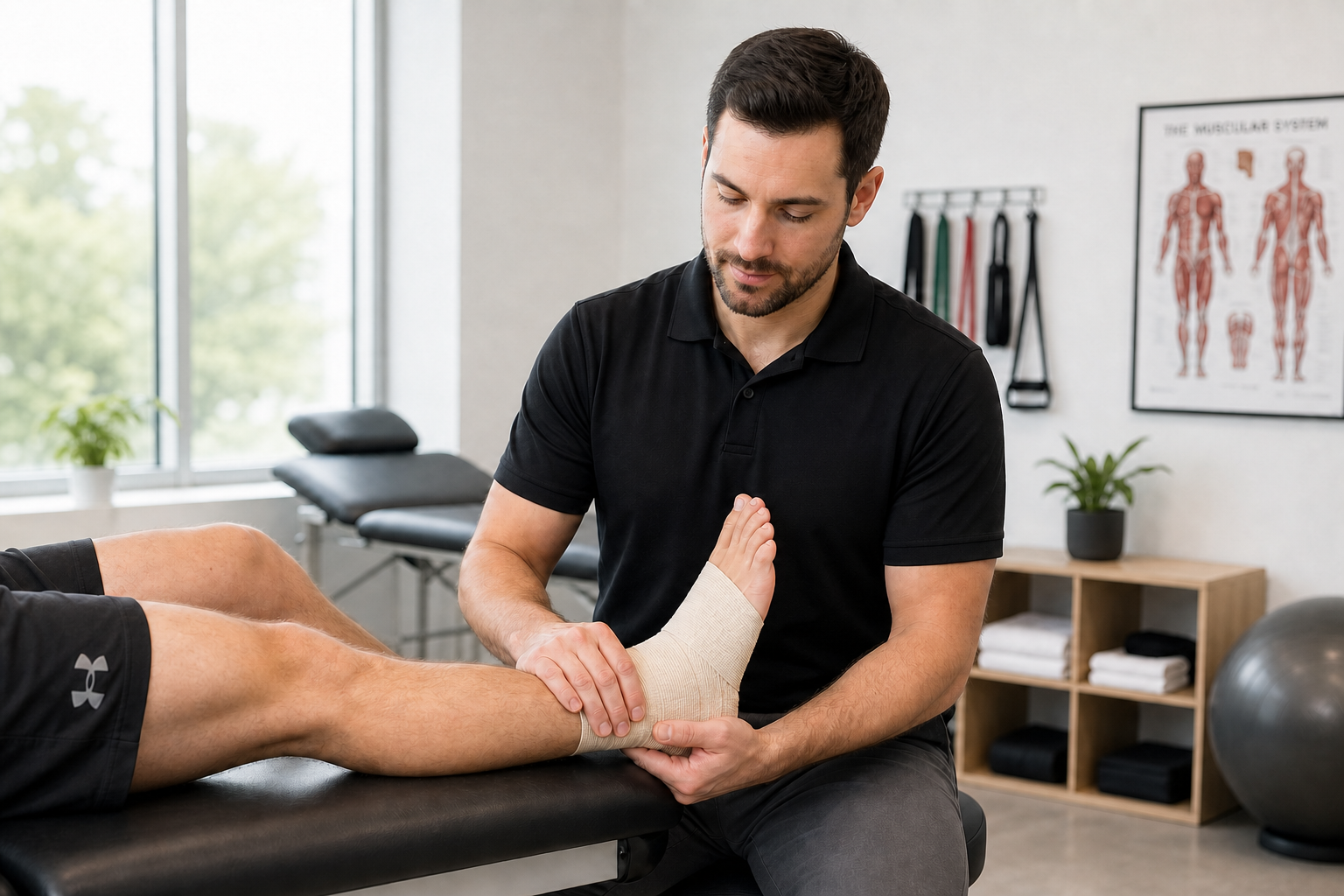
Ankle sprains are among the most common injuries seen in both athletic and general populations. For Grade I, Grade II, and a substantial portion of Grade III ankle sprains, surgical intervention is not the first-line recommendation. Left unmanaged, even moderate sprains can progress into severe injuries that compromise long-term ankle stability and increase the risk of further injury down the line. The American Physical Therapy Association (APTA) and clinical guidelines published in the British Journal of Sports Medicine consistently support conservative management through physical therapy as the primary ankle sprain treatment before any surgical option is considered.
A structured program with a licensed physical therapist covers a full physical exam, functional goal-setting tied to the patient’s specific activity demands, progressive loading protocols, manual therapy for soft tissue mobility, and rehabilitation exercises sequenced to the healing timeline. At Scottsdale Physical Therapy and Performance, every session is one-on-one with a Doctor of Physical Therapy, assessments are data-driven, and the treatment plan addresses the root cause of dysfunction rather than immediate pain relief alone.
Treatment follows three distinct phases, each targeting a different stage of tissue recovery.
Phase 1: Reduce Swelling and Restore Ankle Movement
The acute phase, typically spanning the first seven days after injury, focuses on protecting the injured area, managing pain, and beginning controlled movement. Current clinical guidance has moved past the outdated RICE protocol. Bleakley et al. (2012), writing in the British Journal of Sports Medicine, introduced the PEACE and LOVE framework, which prioritizes Protection, Elevation, Avoidance of anti-inflammatories in the early stages, Compression, and Education, followed by Load, Optimism, Vascularization, and active movement.
An ice pack applied for 15 to 20 minutes at a time can reduce pain and prevent swelling in the acute period. Compression through an elastic bandage reduces fluid accumulation around the injured area. Wearing a brace or splint can protect the ankle joint while it heals. Early, controlled ankle movement within a pain-free range of motion has been shown to restore ankle function faster than rigid immobilization. Range-of-motion exercises can begin within 48 hours post-injury.
Phase 2: Weight-Bearing and Strengthening Exercises
Once acute inflammation subsides, the goal shifts to restoring weight-bearing capacity and rebuilding strength. Progressive weight bearing begins with partial loading and advances to full weight bearing as tolerated, guided by the physical therapist based on pain response and tissue healing.
Peroneal muscle strengthening is central to this phase. The peroneal muscles run along the outer lower leg and function as the primary dynamic stabilizers of the ankle joint. When these muscles are weak or poorly coordinated, the risk of re-injury increases considerably. Resistance band exercises targeting peroneal activation, single-leg balance progressions, and closed-chain loading all contribute to restoring ankle function. Muscle spasms in the early phase of rehab are normal and can be managed through manual therapy and targeted soft tissue work.
Phase 3: Sports-Specific Rehab and Return to Training
The final phase of rehabilitation mirrors the physical demands of the patient’s sport or activity. Agility drills, plyometric progressions, cutting movements, and reactive balance training prepare the ankle joint for the unpredictable loads of real-world activity. Returning to sport without completing this phase significantly raises the probability of future sprains.
Sport-specific loading matters here. A golfer places rotational torque through the ankle during the swing, an entirely different demand from a trail runner navigating uneven surfaces or an MMA athlete absorbing lateral contact. Scottsdale Physical Therapy and Performance structures Phase 3 around each patient’s actual sport mechanics, not generic protocols. When an athlete is cleared to return, they leave with real confidence in the ankle joint.
When Ankle Pain Persists: Signs You Need a Physical Therapist Now
Some patients wait. They expect the ankle to heal on its own, avoid seeking professional evaluation, and return to activity too soon. For a portion of those patients, persistent pain becomes the new normal. Research published in the Journal of Athletic Training indicates that up to 40% of people who sustain an initial ankle sprain go on to develop chronic ankle instability, a condition marked by repeated sprains, joint instability, and long-term ankle function deficits (Hertel & Corbett, 2019).
Fibrous tissue can deposit improperly when rehabilitation is skipped, altering joint mechanics and causing pain during movements that were previously pain-free. Early PT intervention consistently produces better outcomes than delayed care.
Warning Signs That the Injured Ankle Needs Professional Evaluation
Certain symptoms signal that waiting is no longer an option. Seek a physical examination when any of the following are present.
- Swelling that has not reduced after 72 hours.
- An inability to bear weight on the injured foot after the third day post-injury.
- Severe pain with any active ankle movement.
- Visible deformity or abnormal positioning of the ankle. Pain and swelling that spread rather than localize.
- Recurring ankle sprains over the past 12 months.
- Discomfort on uneven surfaces that limits normal walking.
These symptoms may indicate Grade III sprains, syndesmotic injury, or associated fractures, all of which require imaging and proper clinical evaluation. A thorough physical exam by a licensed physical therapist can clarify the diagnosis and initiate a recovery path without months of waiting for a surgical consult.
Why Scottsdale Physical Therapy and Performance Treats Ankle Sprains Differently
Most physical therapy clinics in Scottsdale run multiple patients per hour. Scottsdale Physical Therapy and Performance operates on a different model entirely. Every session is a full hour of one-on-one time with a Doctor of Physical Therapy, with no aides, no split attention, and no rushed assessments. The clinic uses VALD technology for data-driven musculoskeletal testing, producing baseline measurements that track actual progress rather than subjective reports.
That matters for the active adult or athlete who has already been through the standard system and left without lasting results. If previous providers delivered generic ankle sprain treatment without addressing root-cause biomechanics, the ankle will keep failing. Scottsdale Physical Therapy and Performance builds the treatment plan around your goals, whether that means returning to your sport, your gym, or your golf course, rather than simply reducing a pain score on a chart.
If ankle pain is keeping you off the field, the court, or the course, book your evaluation at Scottsdale Physical Therapy and Performance today.
What to Expect at Your First Visit for an Ankle Injury
The first visit covers more ground than most patients expect. It begins with a thorough intake covering injury history, activity demands, and prior treatment. A physical examination and full movement screen follow, assessing range of motion, strength, joint mobility, and load tolerance. From that assessment, the physical therapist delivers a clear diagnosis and a structured plan before you leave the clinic.
Baseline performance data is captured through objective testing so progress is tracked against real numbers. The priority at every stage is reducing pain and restoring ankle function, and the plan is built around keeping you as active as possible throughout recovery.
How to Prevent Ankle Sprains From Coming Back
Recovering from a sprained ankle is one goal. Staying recovered is another. Re-injury rates remain high without a structured prevention program in place. A Cochrane Review by Verhagen et al. (2000) found that proprioceptive training programs significantly reduce the incidence of recurrent ankle sprains in athletes with prior injury history.
Prevention strategies with strong evidence include neuromuscular training, proprioception and balance drills, proper footwear selection for uneven surfaces, and ankle bracing or taping during high-risk activities. These are active, practiced strategies that require consistent effort to maintain the neuromuscular adaptations gained during rehabilitation.
Exercises That Strengthen the Ankle Joint Against Future Sprains
The following clinically supported exercises reduce the risk of future sprains by strengthening the ankle joint and improving neuromuscular control. These are scaled versions of the same movements used in Phases 2 and 3 of active rehabilitation:
- Single-leg stands on a flat surface, progressing gradually to unstable surfaces.
- Banded eversion movements target the peroneal muscles directly.
- Heel raises are performed on one leg to build calf and ankle stability. Alphabet ankle tracing to restore full range of motion across multiple planes.
- Lateral band walks to reinforce hip and ankle coordination. Balance board progressions that challenge proprioception under controlled conditions.
Performing these two to three times per week during and after recovery substantially reduces the risk of re-injury.
Frequently Asked Questions
How Long Does Ankle Sprain Treatment Take With Physical Therapy?
Recovery timelines depend on sprain severity and the speed of intervention. Grade I sprains typically resolve within one to three weeks of proper rehabilitation. Grade II sprains generally require three to six weeks. Grade III ankle sprains involving complete ligament rupture may need eight to twelve weeks of structured physical therapy before full return to sport. According to the APTA, early intervention produces faster recovery and lower re-injury rates across all grades (American Physical Therapy Association, 2016).
Can I Walk on a Sprained Ankle During Physical Therapy?
Early weight bearing, when tolerated and supervised, is actively encouraged in current physical therapy protocols. Clinical evidence supports controlled weight bearing as a driver of faster tissue healing and ankle function restoration. The distinction that matters is between supervised progressive loading within a rehab program and unguided overuse that aggravates the injured ankle. A physical therapist determines when and how much loading is appropriate based on your specific grade of injury and tissue response.
Do I Need Surgery for a Severe Ankle Sprain?
The majority of Grade III ankle sprains, including complete tears of the anterior talofibular ligament, respond well to conservative physical therapy without surgery. Surgical referral to an orthopedic surgeon is typically considered only when six months of consistent conservative care has failed to restore ankle stability, or when structural damage confirmed through magnetic resonance imaging cannot be managed through rehab alone. Consistent evidence from orthopedic literature supports non-surgical management as the standard first-line treatment for severe sprains (Tiemstra, 2012).
What Is the Difference Between a High Ankle Sprain and a Regular Sprained Ankle?
A standard sprained ankle results from an inversion injury that damages the lateral ankle ligaments, primarily the ATFL and CFL. A high ankle sprain damages the tibiofibular ligaments above the ankle joint, disrupting the syndesmosis that holds the tibia and fibula together. High ankle sprains take significantly longer to heal, require different rehabilitation protocols, and are more prevalent in contact sports. Misidentifying a high ankle sprain as a routine lateral sprain often leads to prolonged recovery and chronic instability.
How Do I Know If My Ankle Pain Is a Sprain or a Fracture?
The Ottawa Ankle Rules provide the clinical standard for distinguishing ankle sprains from fractures during physical examination. Imaging is warranted when the patient has bone tenderness at the posterior edge of the fibula or tibia, tenderness at the navicular or base of the fifth metatarsal, or cannot bear weight on the injured foot for four steps. Similar symptoms between sprains and fractures make self-diagnosis unreliable. A physical examination by a licensed clinician remains the appropriate path to an accurate diagnosis (Stiell et al., 1992).
References
American Physical Therapy Association. (2016). Clinical practice guidelines linked to the international classification of functioning, disability and health from the Orthopaedic Section of the APTA. Journal of Orthopaedic and Sports Physical Therapy. https://www.jospt.org
Bleakley, C. M., Glasgow, P., & MacAuley, D. C. (2012). PRICE needs updating, should we call the POLICE? British Journal of Sports Medicine, 46(4), 220–221. https://doi.org/10.1136/bjsports-2011-090297
Doherty, C., Delahunt, E., Caulfield, B., Hertel, J., Ryan, J., & Bleakley, C. (2014). The incidence and prevalence of ankle sprain injury: A systematic review and meta-analysis of prospective epidemiological studies. Sports Medicine, 44(1), 123–140. https://doi.org/10.1007/s40279-013-0102-5
Hertel, J., & Corbett, R. O. (2019). An updated model of chronic ankle instability. Journal of Athletic Training, 54(6), 572–588. https://doi.org/10.4085/1062-6050-344-18
Stiell, I. G., Greenberg, G. H., McKnight, R. D., Nair, R. C., McDowell, I., & Worthington, J. R. (1992). A study to develop clinical decision rules for the use of radiography in acute ankle injuries. Annals of Emergency Medicine, 21(4), 384–390. https://doi.org/10.1016/S0196-0644(05)82656-3
Tiemstra, J. D. (2012). Update on acute ankle sprains. American Family Physician, 85(12), 1170–1176. https://www.aafp.org/afp/2012/0615/p1170.html
Verhagen, E. A., van Mechelen, W., & de Vente, W. (2000). The effect of preventive measures on the incidence of ankle sprains. Clinical Journal of Sport Medicine, 10(4), 291–296. https://doi.org/10.1097/00042752-200010000-00006