You may notice a tightness in your left chest accompanied by heaviness or numbness in your left arm. These symptoms can be alarming and may raise concerns about a heart attack or other serious conditions. This article will help you recognize the warning signs that require emergency care, understand the muscular and nerve-related causes that often mimic cardiac symptoms, learn safe at-home strategies, and discover how physical therapy can help once serious conditions are ruled out.
When Left Chest Pain And A Numb Arm Are An Emergency
If your left chest pain and arm numbness are sudden, intense, or feel different than anything you’ve experienced before, call 911 immediately.
Do not drive yourself to the hospital.
Call 911 right away if chest pain comes with any of the following:
- Shortness of breath or difficulty catching your breath
- Cold sweats that come on suddenly
- Nausea or vomiting
- Sudden dizziness or lightheadedness
- Trouble speaking or slurred words
- Face drooping on one side
- Sudden severe headache with no known cause
Here’s the reassuring part: not all left chest and arm symptoms point to a heart event.
Many people who show up worried about heart attack symptoms are actually dealing with muscular tension, nerve irritation, or joint problems that respond well to physical therapy.
The key is knowing when to seek medical attention immediately and when it may be appropriate to explore treatment options with a physical therapist after your doctor has given the all-clear.
What Might Be Happening In Your Body
The heart, neck, and shoulder share overlapping nerve pathways, which is why pain or numbness in these areas can be so confusing.
Heart-related pain occurs when there is reduced blood flow to the heart muscle. This typically creates a pressure, heaviness, or squeezing sensation in the center or left side of the chest that can radiate down the left arm, into the jaw, or between the shoulder blades. The pain often doesn’t change with movement or pressing on the chest. This phenomenon is partly due to ‘referred pain,’ where the brain interprets heart distress as pain or numbness in the left arm because of shared nerve pathways.
Nerve-related symptoms happen when nerves in the neck, upper back, or shoulder become irritated or compressed. This can send numbness and tingling down the arm sometimes into specific fingers without affecting your breathing or causing the systemic symptoms seen with cardiac events.
Muscular and joint causes include tight or irritated chest muscles (like the pectoralis major or minor), rib joints, or shoulder structures. These often create discomfort that changes with certain movements, specific arm positions, or when you press on a tender spot.
Only medical testing such as an ECG (also called EKG), blood work, or imaging can officially rule out heart and lung causes, which is essential for proper disease control.
Physical therapy steps in once those serious issues have been excluded.
Common Causes Of Left Chest Pain With A Numb Or Tingling Arm

Before considering other causes, heart and vascular emergencies must be ruled out by a medical professional.
- Heart attack or unstable angina: Blockages or reduced blood flow in the coronary arteries can cause chest pressure that radiates into the left arm. Blood clots forming on damaged blood vessels cut off oxygen-rich blood to the heart muscle, potentially causing tissue damage if not treated immediately. Heart attack-related left arm pain often worsens with physical exertion and does not improve with movement or position changes.
- Cervical radiculopathy (pinched nerve in the neck): A herniated disc or bone spur compressing a nerve root commonly at C5, C6, or C7 can send pain, numbness or tingling from the neck down through the shoulder and arm into specific fingers. Degenerative disc disease and other spinal problems are common underlying factors. Symptoms may worsen with specific neck movements and can be alleviated by adjusting posture or resting.
- Costochondritis or chest wall strain: Irritation of the cartilage where ribs meet the sternum, or strain of chest muscles after coughing, lifting, or intense workouts, can create sharp pain that worsens when pressing on the area.
- Thoracic outlet type irritation: Compression of nerves or blood vessels near the collarbone causes heaviness, numbness, tingling, or even color changes in the arm. Symptoms often worsen with overhead activities or carrying heavy loads and may affect blood flow to the arm, contributing to poor circulation.
- Shoulder referral patterns: Shoulder tendon or joint irritation can refer aching into the upper arm and sometimes cause altered arm sensation or weakness.
- Anxiety and hyperventilation effects: Intense stress can trigger chest tightness, rapid heart rate, and tingling in the arms or face symptoms that can feel remarkably similar to a cardiac event.
Less common neurologic or toxic causes exist, and your clinician will consider these based on your history and any other injuries.
What Your Symptoms May Be Telling You
This section is not for self-diagnosis. It’s meant to help you describe your symptoms more clearly when speaking with a medical provider.
| Symptom Pattern | What It May Suggest |
|---|---|
| Chest pressure or squeezing that builds with walking and eases with rest, plus left arm ache | May suggest angina or heart stress |
| Sudden “crushing” chest pain with sweating, nausea, or shortness of breath | May suggest a heart attack call 911 immediately |
| Sharp chest pain that worsens when pressing on one spot or taking a deep breath and improves with position changes | May suggest chest wall or rib irritation |
| Neck pain or stiffness with numbness running from the neck down the arm into specific fingers | May suggest cervical radiculopathy (pinched nerve) |
| Tingling or numbness after sleeping on one side or leaning on the elbow, improving after a few minutes of movement | May suggest temporary nerve compression |
| Numbness on just one side of the body (face and arm), trouble speaking, or drooping of one side of the face | May suggest stroke call 911 immediately |
Write down when your symptoms occur, what makes them better or worse, and exactly where you feel pain or numbness.
Bring this information to your doctor or physical therapist.
Red Flags: When To Call 911 Or Seek Same-Day Medical Care
If you are debating whether to call 911, call.
When minutes count, it’s always better to be evaluated and find out everything is fine than to wait and risk permanent damage.
Call 911 Immediately If You Experience:
- Sudden chest pressure, squeezing, or fullness lasting more than 5 minutes or coming back repeatedly
- Left chest pain with new numbness or heaviness in one or both arms
- Pain radiating to the jaw, back, or between the shoulder blades
- Shortness of breath at rest, difficulty speaking in full sentences, or feeling like you “can’t get air in”
- Cold sweats, nausea, vomiting, or a sense of impending doom along with chest discomfort
- Sudden confusion, trouble speaking, face drooping, or weakness or numbness on one side of the body (stroke symptoms)
- Fainting, near-fainting, or sudden extreme dizziness with chest or arm pain
- Symptoms of a heart attack combined with risk factors like high blood pressure, high cholesterol, diabetes, or smoking history
These signs and symptoms suggest a life-threatening situation. Cardiac arrest, stroke, or severe blood pressure emergencies can cause permanent harm if not treated within minutes.
Seek Same-Day Medical Attention If:
- New chest discomfort and arm numbness started in the last 24–48 hours without a clear injury
- Chest pain is milder but steadily getting worse over several days
- You have existing heart disease and are experiencing new or different arm symptoms
Paramedics in the Scottsdale area are equipped to rapidly evaluate heart and stroke symptoms in the field. They can perform an ECG (also called EKG), check blood pressure, and begin treatment on the way to the emergency room.
It is always better to be checked and reassured than to wait.
Simple At-Home Steps (Only After Serious Causes Are Cleared)
Important: If symptoms are new, worsening, or unexplained, do not try self-treatment first. These steps are only for people who have already been evaluated by a medical professional and told their symptoms are not from a heart, lung, or vascular emergency.
- Activity adjustment: Reduce or pause heavy lifting, overhead work, and high-intensity workouts for 3–7 days while monitoring how your body responds.
- Position changes: Avoid prolonged neck bending (looking at screens, phones, or during long drives). A small towel roll behind your lower neck while sitting can help support neutral posture.
- Gentle movement: Slow, pain-free shoulder rolls, chin nods, and scapular squeezes keep joints mobile without adding strain. Stop if any movement reproduces chest pressure or spreading numbness.
- Heat or ice: A warm pack on tight neck and shoulder muscles can ease muscle spasms. Ice over tender chest wall areas for 10–15 minutes several times daily may reduce inflammation. Always use a barrier between ice/heat and your skin.
- Sleep setup: Side-lying with pillow height that keeps your neck aligned with your spine often helps. A pillow under your top arm keeps the shoulder relaxed and reduces compression on nearby nerves.
- Medication note: Follow your doctor’s instructions for any prescribed or over-the-counter medications. Do not start new medications without guidance.
- When to stop: If any home exercise or stretch reproduces chest pressure, shortness of breath, or spreading numbness, stop immediately and seek re-evaluation.
How Physical Therapy Can Help When It’s Muscular Or Nerve-Related
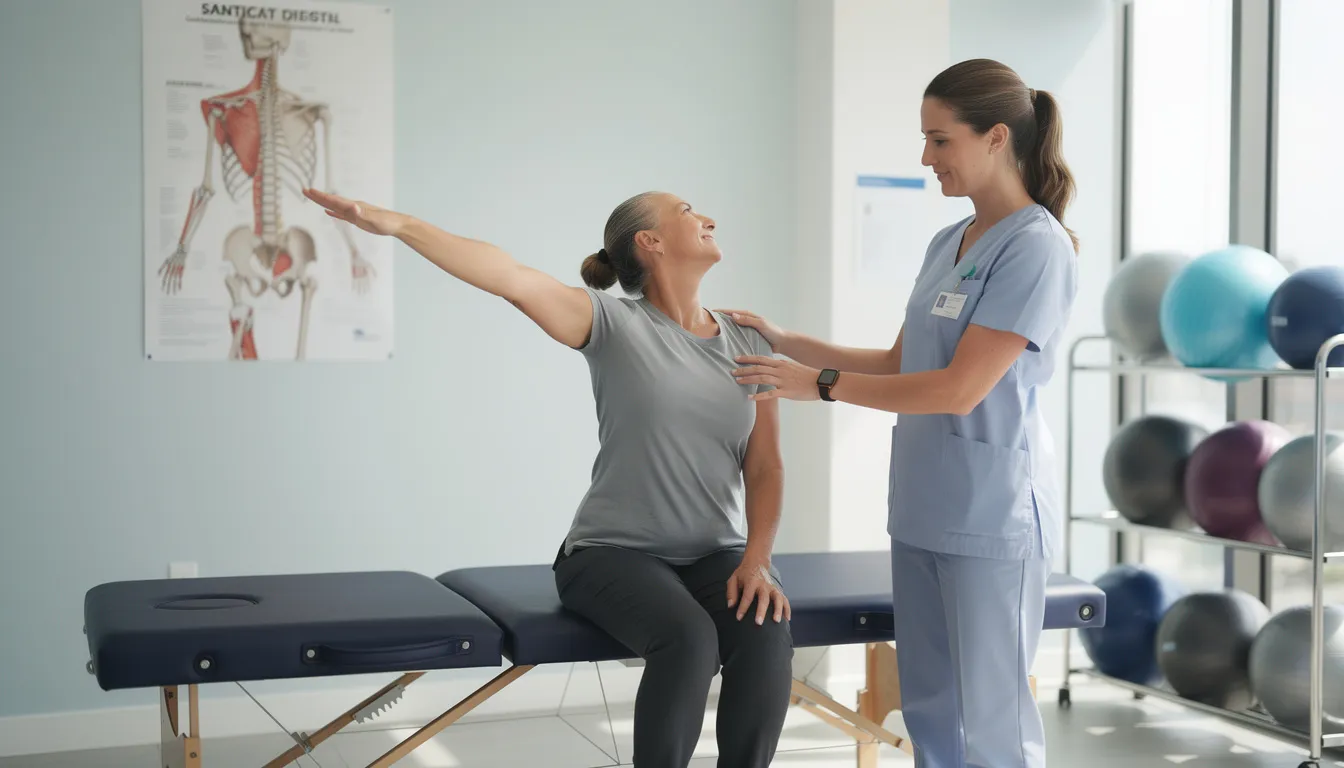
At Scottsdale PT & Performance, patients are often seen after their physician or cardiologist has ruled out heart emergencies, but they’re still dealing with persistent pain or arm numbness that’s limiting their daily life.
What A First Visit Typically Includes:
- Detailed history: When chest and arm symptoms started, what tests have been completed (ECG, stress test, X-rays, MRI), and what your doctor has already ruled out.
- Posture and movement assessment: Observing how your neck, shoulder blade, and rib cage move when you reach, turn, or take a deep breath.
- Neurological screening of the arm: Testing light touch sensation, reflexes, and muscle strength to identify possible nerve damage or compression in the brain and spinal cord pathways.
What PTs Look For:
- Tenderness along chest wall muscles, the collarbone, or rib joints that reproduces your familiar pain when pressed
- Neck positions that either worsen or relieve arm numbness or tingling
- Muscle weakness or poor control around the shoulder blade that may be overloading the front of the chest and shoulder
Common PT Treatment Strategies:
- Manual therapy: Gentle joint mobilizations of the neck, upper back, and ribs combined with soft tissue work for tight chest and shoulder muscles
- Nerve mobility drills: Controlled “nerve glides” for the median, ulnar, or radial nerves when appropriate and safe, helping improve blood flow to irritated neural tissue
- Strengthening: Gradual progression of deep neck flexor, scapular stabilizer, and rotator cuff exercises using bands or light weights to address arm weakness and support long-term recovery
- Posture and ergonomic coaching: Setting up home offices, driving positions, and daily habits to reduce neck and chest strain
- Activity modification: A customized return-to-gym or sport plan with clear symptom boundaries and safe loading progressions
To learn more about different types of physical therapy and how they can benefit your recovery, explore our comprehensive guide.
Care plans are individualized. Progress is measured by reduced symptoms, improved range of motion, and easier daily activities like lifting, sleeping, and reaching overhead.
Research suggests that 85% of non-surgical cervical radiculopathy cases resolve within 6–12 PT sessions when patients follow their home program consistently.
Staying Active & Preventing Future Flare-Ups
Most muscular or nerve-related chest and arm issues improve with consistent care and smart habits.
Prevention is about building resilience so other symptoms don’t return.
Practical Prevention Strategies:
- Gradual training: Increase workout intensity or weights by no more than about 10% per week, especially with bench press, push-ups, and overhead pressing. Sudden jumps in physical exertion are a common trigger for flare-ups.
- Neck and shoulder breaks: For desk or driving jobs, take a 1–2 minute movement break every 30–45 minutes. Roll your shoulders, open your chest, and gently rotate your neck.
- Balanced strength: Include pulling exercises (rows, band pulls) to balance pressing movements. This keeps the shoulder girdle supported and reduces strain on the front of the chest.
- Breathing mechanics: Practice slower nasal breathing with relaxed belly expansion. Constant upper-chest breathing contributes to tension in the neck and chest muscles.
- Sleep and stress management: Chronic stress increases muscle tension and can amplify chest sensations. Short walks, brief stretching routines, and breathing drills all help.
- Tune-up visits: A periodic check-in with your PT can help adjust exercise programs, assess posture, and catch small issues before they become significant pain or numbness.
FAQ: Left Chest Pain And Numb Arm
Can A Pinched Nerve Cause Left Chest Pain And A Numb Arm?
Yes. When a nerve is irritated in the neck (cervical radiculopathy) or compressed in the thoracic outlet area, it can refer pain into the chest and send numbness or tingling down the arm. The pattern often follows a specific path for example, from the neck through the shoulder and into certain fingers. Medical screening should always come first to rule out cardiac causes.
How Do I Know It’s Not My Heart?
Only a medical provider with appropriate testing (ECG, blood work, possibly a stress test or imaging) can confirm whether your heart is involved. New, unexplained, or intense chest pain should always be evaluated urgently. If you’ve been cleared by your doctor and symptoms persist, that’s when PT can help identify muscular or nerve-related causes.
Is It Normal For Symptoms To Come And Go?
Nerve and muscle-related pain often fluctuates with position, activity, and time of day. Heart-related symptoms may be more consistent, especially when triggered by exertion. That said, any concerning change or new pattern should be checked by a medical provider.
Can Anxiety Really Cause Chest Pain And Arm Tingling?
Yes. The body’s stress response can cause muscle tension, shallow breathing, rapid heart rate, and tingling sensations all of which can feel alarming. However, the first time these symptoms occur, it’s important to seek medical care to rule out cardiac or other serious causes.
How Long Does Muscular Or Nerve-Related Chest Pain Usually Take To Improve With PT?
Timelines vary based on severity, how long symptoms have been present, age, and activity level. Many patients notice meaningful improvement within 4–8 weeks with consistent PT and a home exercise program. More complex cases may take several months. Your PT will track progress and adjust the plan as needed.
Medical Disclaimer
This article is for general information only and does not replace individualized medical advice, diagnosis, or treatment.
Left chest pain and arm numbness can signal serious medical emergencies, including heart attack and stroke.
Call 911 or seek immediate medical care if you suspect a cardiac event.
Any exercise or self-care suggestions in this article should only be followed after a healthcare professional has confirmed it is safe to do so.
Reading this page does not create a patient–provider relationship with Scottsdale PT & Performance. For more information on when you may need a physical therapy check-up, please see our list of the 5 Critical Signs You Need a Physical Therapy Check-Up.
Next Step: Book A Physical Therapy Evaluation In Scottsdale
If your doctor has ruled out heart and lung emergencies but pain or arm numbness is still limiting your daily life, it may be time for a detailed physical therapy assessment.
What you can expect at Scottsdale PT & Performance: See availability and cost
- A one-on-one evaluation focused on your specific chest and arm symptoms, work demands, and fitness goals
- Clear explanation of findings in simple terms, with time to ask questions
- A step-by-step, written plan that includes home exercises, in-clinic treatments, and targeted progressions back to your preferred activities
To get started:
- Call the clinic or use the online scheduling form to request an initial visit
- Bring any relevant imaging or test results (ECG reports, MRI, X-rays) to your first session
- Share any concerns about returning to the gym, sport, or work so your plan can be tailored
You don’t have to “wait and see” or live in fear of your symptoms. Getting expert guidance is often the fastest route back to confident, pain-free movement.