Red light therapy for weight loss shows up everywhere from wellness spas to physical therapy clinics across Scottsdale, and searches for it have climbed year over year. The clinical evidence tells a more careful story than most marketing copy. Randomized trials have measured meaningful reductions in waist circumference and subcutaneous fat, but only when photobiomodulation is paired with structured training and a calorie plan (Elnaggar, 2020). Systematic reviews find no meaningful change in lipid values when light therapy is used alone (Sena et al., 2022). Photobiomodulation acts on fat cells through mitochondrial pathways, and understanding that mechanism separates the effective protocols from the wellness marketing.
Below, we break down how the light works at the cellular level, what a supervised PT protocol actually looks like, and what the dosing data and its limits really show.
What Is Red Light Therapy and How Does It Work for Weight Loss
Photobiomodulation (PBM) is the clinical term for red light therapy, a noninvasive intervention that uses low-intensity red and infrared light, including near-infrared wavelengths, from LED devices or low-power lasers. Cellular photoacceptors absorb the light energy delivered to the skin and underlying tissue and may influence mitochondrial activity and cell-signaling processes. In clinical or aesthetic settings, devices may be arranged as panels, pads, or beds that provide controlled light exposure at specified wavelengths and doses (Hamblin, 2017).
For weight-related applications, however, the terminology should remain careful. Photobiomodulation is being studied for localized fat reduction and temporary changes in body circumference, which are body-contouring outcomes. It should not be described as a proven stand-alone treatment for obesity or clinically meaningful weight loss (U.S. Food and Drug Administration [FDA], 2025).
Light Wavelengths That Reach the Skin’s Surface
Red and near-infrared light interact with tissue differently. Visible red light, commonly delivered in the approximate 600 to 700 nanometer range, is generally associated with more superficial tissue exposure. Near-infrared light, often used in the approximate 800 to 900 nanometer range, can generally reach relatively deeper tissue before being absorbed or scattered. Actual penetration varies according to wavelength, tissue composition, skin characteristics, device intensity, and delivered dose; therefore, no single penetration depth applies to every device or treatment area (Hamblin, 2017).
Once absorbed, red and near-infrared light may interact with mitochondrial and non-mitochondrial photoacceptors, which can initiate downstream biological signaling. This is why wavelength selection is relevant when researchers or clinicians evaluate a device for a particular tissue target (Passarella & Karu, 2014).
Cytochrome C Oxidase and Cellular Energy Production
At the cellular level, cytochrome c oxidase is one of the leading proposed photoacceptors for red and near-infrared photobiomodulation. It is an enzyme within the mitochondrial electron transport chain. Exposure to appropriate light parameters may influence mitochondrial activity and downstream signaling molecules, including adenosine triphosphate (ATP), reactive oxygen species, nitric oxide, and calcium-related signaling pathways (Hamblin, 2017; Karu, 2008).
These proposed mechanisms have also prompted research into whether photobiomodulation may contribute to stimulating adipose tissue mitochondria. Because adipose tissue mitochondria are involved in cellular energy metabolism and lipid-related processes, researchers have examined photobiomodulation as a possible adjunct in body-contouring research. However, this proposed pathway does not by itself establish clinically meaningful weight loss in people. (Hamblin, 2017; U.S. Food and Drug Administration [FDA], 2025).
Photobiomodulation Versus Low-Level Laser Therapy
The terminology surrounding red light therapy can be confusing. Low-level laser therapy is an older term historically associated with low-power laser devices, while low-level light therapy may refer more broadly to devices that use LEDs or other low-intensity light sources. Photobiomodulation is the broader term that may include both laser- and LED-based approaches (Hamblin, 2017).
For interpreting a treatment protocol or research study, the device label is less important than its technical parameters. Relevant factors include wavelength, irradiance, fluence or energy density measured in joules per square centimeter, treatment duration, treatment frequency, and the size and location of the treatment area. These variables can affect the biological response and help explain why results may differ across devices and studies (Hamblin, 2017).
Types of Red Light Therapy Treatments for Weight Loss
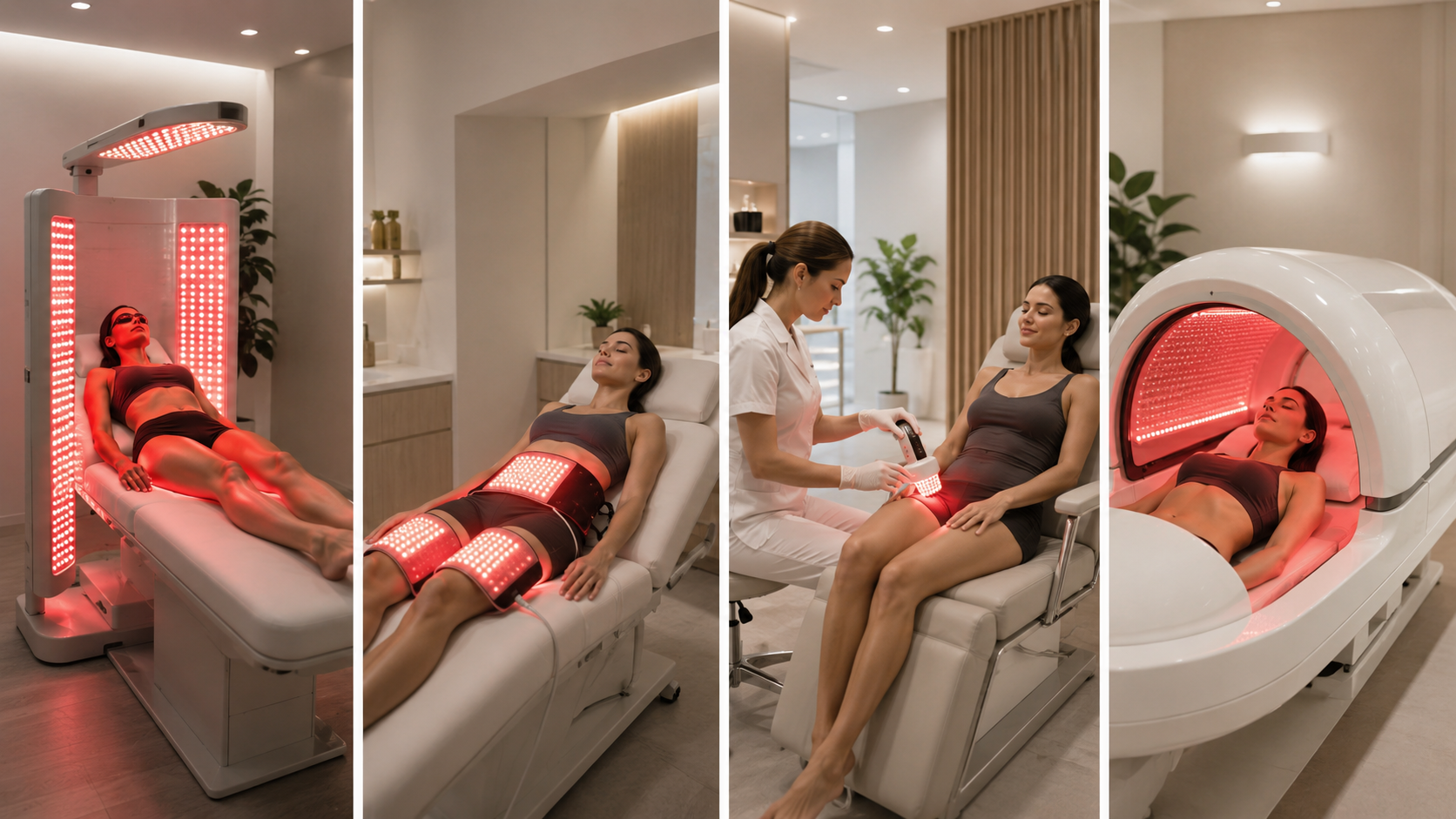
Red light therapy comes in several delivery formats, and the right one depends on the treatment goal. Some clinics use full-body LED red light therapy beds, others rely on targeted panels, and others combine laser diodes with training programs. Fat reduction and body contouring protocols usually pair the light with movement, because photobiomodulation on its own has limits without an active metabolic demand on the tissue (Sena et al., 2022).
LED Panels and Red Light Therapy Beds
An LED red light therapy bed surrounds the patient with panels emitting red and near infrared wavelengths, typically for red light therapy sessions of ten to twenty minutes. Body sculpting protocols place patients under panels positioned over the abdomen, hips, or thighs, and the light bathes a wide treatment area at once. Larger surface coverage matters when clinicians are targeting distributed subcutaneous fat rather than a single trouble spot.
Low Level Laser Devices for Targeted Body Sculpting
Low level laser therapy focuses coherent light on smaller regions of adipose tissue. The proposed mechanism involves transient pore formation in adipocyte membranes, allowing intracellular fatty acids to shift into the interstitial space where the body can process them through normal metabolism. Elnaggar (2020) applied photobiomodulation directly to the abdomen of adolescents with obesity, using a protocol of twelve sessions across four weeks, and measured meaningful changes in waist-to-hip ratio and subcutaneous abdominal fat thickness compared with controls.
Combination Protocols with Physical Activity
The most credible clinical protocol handles red light therapy as a complement to physical activity, not a replacement for it. In the Elnaggar trial, every participant followed a 1000 to 1200 kcal daily nutrition plan and completed sixty minutes of aerobic training each day, and the light therapy group achieved superior fat outcomes on top of that base. A sound treatment protocol for sustainable weight management pairs the light sessions with structured training, sleep, and nutritional support so the metabolic gains translate into lasting change (Elnaggar, 2020). Scottsdale athletes who run, lift, or play golf can slot light sessions after training days, which capitalizes on the elevated blood flow and metabolic activity already present in worked tissue.
What Clinical Studies Say About Red Light Therapy for Fat Loss
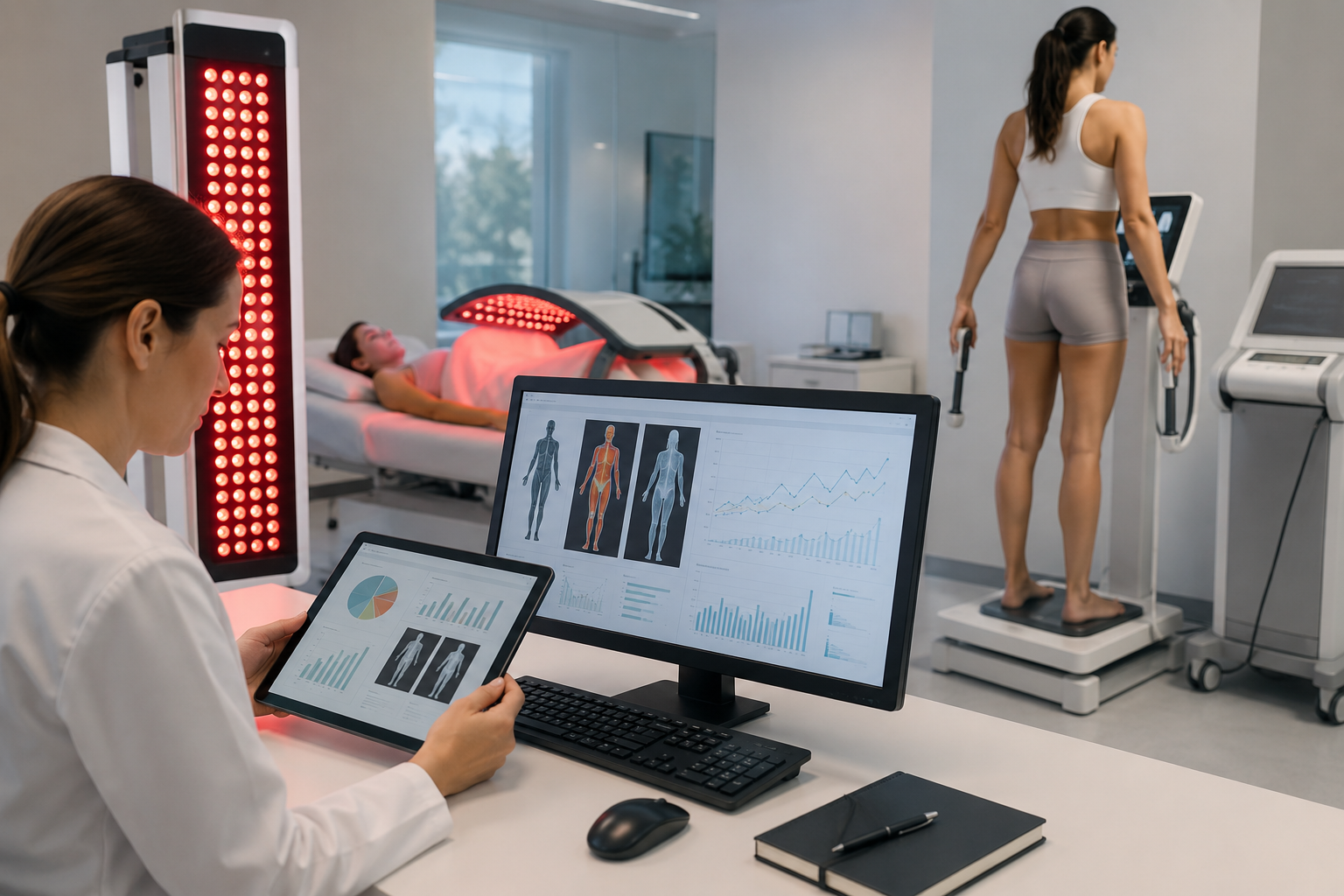
Clinical studies on red light therapy for weight loss carry more depth than most wellness claims suggest, spanning randomized controlled trials, mitochondrial mechanism papers, and at least one systematic review tied directly to fat loss and body composition outcomes. Researchers measuring waist circumference, subcutaneous fat thickness, and lipid profile shifts have found real, reproducible effects in controlled settings, though the magnitude stays modest compared to surgical or pharmaceutical interventions (Elnaggar, 2020; Sena et al., 2022). That gap between measurable and dramatic matters for anyone weighing red light therapy against traditional weight loss methods.
Three questions drive the research agenda in this space: does light exposure reduce fat cells directly, does it improve metabolic markers tied to weight management, and does either effect hold up outside a controlled clinical setting. Elnaggar (2020) answered the first two questions with cautious support, documenting significant drops in waist-to-hip ratio and subcutaneous abdominal fat thickness among adolescents who paired photobiomodulation sessions with diet and physical activity. Sena et al. (2022) approached the third question through a critical integrative review, concluding that lipid profile changes appear across some trials but stay inconsistent enough that clinicians should present the therapy as a supplement to established weight loss methods rather than a replacement.
Clinicians reading this body of evidence tend to focus on three data points before recommending treatment protocols: sample size, whether the trial isolated light exposure from diet and exercise, and how long researchers tracked participants after treatment ended. Short follow-up windows and small sample sizes across most existing trials mean the field still needs larger, longer studies before red light therapy earns a stronger evidence rating for weight loss specifically (Sena et al., 2022). Readers researching red light therapy for weight loss deserve that level of scrutiny rather than a summary that treats every study as equally conclusive.
Randomized Controlled Trials on Adipose Tissue and Waist Circumference
The Elnaggar (2020) trial randomized 54 adolescents with obesity into a control group, a photobiomodulation group, and a non-contact radiofrequency group. The photobiomodulation participants received twelve twenty-minute sessions delivered three times weekly at 4.08 joules per square centimeter over the abdomen. After four weeks, waist-to-hip ratio and subcutaneous abdominal fat thickness dropped significantly in the photobiomodulation group compared with controls (P = 0.001), while intra-abdominal fat thickness did not differ meaningfully between arms. The trial supports the argument that red light therapy can reduce body fat regionally when paired with diet and training, though it does not show large changes in overall body weight from light alone.
Systematic Review Findings on Localized Fat Reduction
A systematic review by Sena et al. (2022) examined fifteen articles on localized fat reduction using red and near infrared photobiomodulation with wavelengths ranging from 532 to 956 nanometers. The reviewers found that photobiomodulation on its own did not shift lipid serum values in a meaningful way, but when clinicians combined the light with beta-oxidation techniques such as aerobic training, biochemical improvements appeared. The authors called for standardized parameters across future trials so patients and providers can compare results reliably rather than guessing whether one device or dose could boost metabolism more than another. Their conclusion mirrors what most sports medicine clinicians already suspect, which is that light amplifies what training and nutrition are already doing rather than acting as a metabolic shortcut on its own.
Gaps and Limitations in Current Research
Red light therapy may look impressive on marketing pages, but current evidence still places it beside traditional weight loss methods, not above them. Most randomized controlled trials use short time frames, modest sample sizes, and different light wavelengths and dose parameters, which makes direct comparison tricky across studies (Sena et al., 2022). Researchers reviewing photobiomodulation therapy for localized fat reduction point out that lipid profile changes and circumference reductions appear in some trials yet remain inconsistent overall, so athletes who want to lose weight and hold a healthy weight still need training, nutrition, and sleep at the core of their plan, with light therapy as a supportive tool rather than the main driver (Sena et al., 2022).
Additional Health Benefits of Red Light Therapy Sessions
Athletes and physical therapy patients in Scottsdale rarely chase numbers on the scale alone. Photobiomodulation therapy brings secondary benefits that show up repeatedly in clinical and mechanistic papers, including pain relief, reduced inflammation, steadier energy levels across the training week, and visible changes in skin tightening and overall skin tone (Hamblin, 2017; Ferraresi et al., 2016). Using red light therapy around workouts or recovery days allows providers to target both performance and comfort in a single treatment block.
Pain Relief and Reduced Inflammation
Hamblin (2017) mapped the anti-inflammatory effects of photobiomodulation therapy across joints, traumatic injuries, lung tissue, spinal cord, and brain, connecting the response to cytochrome c oxidase activation, calcium ion channel modulation, a controlled reactive oxygen species burst, nitric oxide release, and improved mitochondrial function (Hamblin, 2017). Those changes support ATP production and cell signaling inside muscle, tendon, and skin, and the therapy is generally safe when applied inside a biphasic dose window that respects tissue tolerance (Hamblin, 2017). Ferraresi et al. (2016) reviewed 46 studies with 1045 participants and found that light-emitting diode protocols timed before or after training can reduce inflammation and oxidative stress in muscle biopsies while increasing muscle mass gained after training, which translates into more energy and better performance across a full training cycle (Ferraresi et al., 2016).
Recovery is where many athletes notice the difference first. LED-based photobiomodulation regimens have been associated with lower muscle soreness scores, faster force recovery, and greater hypertrophy when sessions bracket heavy training bouts (Ferraresi et al., 2016). Those outcomes matter for runners, lifters, and field athletes who want sustainable progress without carrying constant pain between sessions.
Collagen Production and Skin Tone
Skin outcomes rank among the best-documented uses of red light at therapeutic wavelengths. Wunsch and Matuschka (2014) ran a controlled trial with 136 volunteers treated twice weekly for thirty sessions using polychromatic light between 611–650 nm or 570–850 nm, normalized to about nine joules per square centimeter in the red range (Wunsch & Matuschka, 2014). The treated group showed statistically significant gains in intradermal collagen density on ultrasound, smoother skin roughness on profilometry, and improved complexion and overall skin tone compared to controls (Wunsch & Matuschka, 2014). Those findings support what many clinics see daily: red light therapy may reduce the appearance of cellulite by stimulating collagen, enhancing skin tightening, and improving dermal texture alongside any regional fat loss from contouring protocols.
Professional-grade devices used by dermatologists and physical therapy clinics deliver more precise wavelengths and dose control than most at-home units, which helps keep treatments inside the biphasic window while reliably reaching target tissue depth (Hamblin, 2017; Wunsch & Matuschka, 2014). Because sessions stay non-invasive compared to liposuction, patients who care about aesthetics and recovery can pursue fat contouring, collagen support, and skin tone changes without surgical risk.
Weight, Circumference, and Metabolic Markers
Several clinical and practice-based reports described tangible changes in circumference and body composition when using red light therapy in structured protocols. Consumer coverage from Prevention has reported waist circumference reductions of around two centimeters and body mass reductions of a few kilograms across multi-week regimens in some trials, though these are secondary reports rather than peer-reviewed data, and outcomes vary by device, dose, and whether diet and exercise were included. The NSCA’s evidence-based guide on fat loss reminds coaches that photobiomodulation therapy can support fat reduction and waist metrics when layered onto training plans, yet should sit beside established methods rather than attempt to replace them.
Mechanistic and early clinical work suggests that using red light therapy at optimal wavelengths may improve insulin sensitivity and reduce systemic inflammation, which are important levers for sustainable weight management and performance (Hamblin, 2017). Those effects, paired with better recovery and more stable energy levels, give athletes a broader reason to consider red light protocols as part of an integrated physical therapy and performance plan rather than a quick fix for fat alone.
Support for Recovery After Physical Activity
Recovery is where athletes tend to feel the therapy most quickly. Ferraresi et al. (2016) documented reductions in muscle soreness, faster force recovery, and greater training-induced hypertrophy when light was timed around workouts. Some clinics also study photobiomodulation for hair loss, though the muscle and recovery evidence is far stronger. Lasting results across a training block come from consistent sessions layered onto solid programming rather than from a single treatment.
How to Start Red Light Therapy in Scottsdale Safely
Anyone considering a weight-loss treatment plan in Scottsdale should think about red light therapy the same way a coach thinks about programming. Frequency, dose, safety screening, and honest, professional guidance determine whether the treatment protocol yields results or wastes time and money.
Recommended Session Frequency and Treatment Protocol
Clinical protocols cluster around two to three red light therapy sessions per week, running from ten to twenty minutes each over a treatment area sized to the goal. The Elnaggar (2020) protocol used thrice-weekly twenty-minute sessions for four weeks and produced measurable regional fat outcomes, and other trials use similar cadences. Skipping weeks or stacking too many sessions in a single day is unlikely to help, since photobiomodulation follows a biphasic dose-response where more light past the optimum yields less benefit (Hamblin, 2017).
Safety Guidance and Signs of Overdoing Red Light Therapy
Red light therapy is generally safe for most people when applied at studied wavelengths and doses. Certain medical conditions warrant screening first. People taking photosensitizing medications, patients with active skin cancers or lupus, and anyone with a history of light sensitivity should discuss the therapy with a qualified provider before booking sessions. Nobody should overdo red light therapy hoping to speed results, because the biphasic dose curve punishes overexposure with diminishing or negative returns.
References
Elnaggar, R. K. (2020). A randomized, controlled trial on the effectiveness of photobiomodulation therapy and non-contact selective-field radiofrequency on abdominal adiposity in adolescents with obesity. Lasers in Surgery and Medicine, 52(9), 873–881.https://onlinelibrary.wiley.com/doi/10.1002/lsm.23231
Ferraresi, C., Bertucci, D., Schiavinato, J. L. dos S., Reiff, R., Araújo, A. G., Panepucci, R., Matheucci, E., Cunha, A. F., Arakelian, V. M., Hamblin, M. R., Parizotto, N., & Bagnato, V. (2016). Effects of light-emitting diode therapy on muscle hypertrophy, gene expression, performance, damage, and delayed-onset muscle soreness: Case-control study with a pair of identical twins. American Journal of Physical Medicine & Rehabilitation, 95(10), 746–757. https://doi.org/10.1097/PHM.0000000000000490
Hamblin, M. R. (2017). Mechanisms and applications of the anti-inflammatory effects of photobiomodulation. AIMS Biophysics, 4(3), 337–361. https://www.aimspress.com/article/10.3934/biophy.2017.3.337
Karu, T. I. (2008). Mitochondrial signaling in mammalian cells activated by red and near-IR radiation. Photochemistry and Photobiology, 84(5), 1091–1099. https://doi.org/10.1111/j.1751-1097.2008.00394.x
Passarella, S., & Karu, T. (2014). Absorption of monochromatic and narrow-band radiation in the visible and near IR by both mitochondrial and non-mitochondrial photoacceptors results in photobiomodulation. Journal of Photochemistry and Photobiology B: Biology, 140, 344–358. https://pubmed.ncbi.nlm.nih.gov/25226343
Prevention. (n.d.). Red light therapy for weight loss: Does it work? Prevention. https://www.prevention.com/weight-loss/a70927865/red-light-therapy-for-weight-loss
Sena, M. M., Marreira, M., de Almeida, G. P., Teixeira, M., D’Amico, M. M., & Pavani, C. (2022). Can the use of photobiomodulation for localized fat reduction induce changes in lipid profile? A critical integrative review. Lasers in Medical Science, 38(1), Article 23. https://link.springer.com/article/10.1007/s10103-022-03662-5
U.S. Food and Drug Administration. (2025). Guidance on non-invasive body contouring and photobiomodulation devices (FDA Guidance Document). U.S. Department of Health and Human Services.
Wunsch, A., & Matuschka, K. (2014). A controlled trial to determine the efficacy of red and near-infrared light treatment in patient satisfaction, reduction of fine lines, wrinkles, skin roughness, and intradermal collagen density increase. Photomedicine and Laser Surgery, 32(2), 93–100. https://pubmed.ncbi.nlm.nih.gov/24577285/
National Strength and Conditioning Association (NSCA). (n.d.). Using red light therapy for fat loss: An evidence-based guide. Personal Training Quarterly, 11(4).
FAQs
How fast can someone expect to see changes from red light therapy for weight loss?
Most controlled trials run for four to twelve weeks with two or three sessions per week before reporting measurable changes in waist circumference or subcutaneous fat. There are regional differences after twelve sessions across four weeks, though results depend heavily on nutrition and training during the block.
Does red light therapy replace training or diet?
No. Photobiomodulation alone did not shift lipid profiles, and improvements appeared when light was paired with aerobic training that drives beta-oxidation. Handling light therapy as an add-on to smart programming is the honest position.
Is red light therapy safe for most people?
Red light therapy is generally safe when used at studied wavelengths and doses. People on photosensitizing medications or with certain medical conditions should consult a provider first.
Can red light therapy help with pain and sports recovery?
Yes. Multiple trials show reductions in muscle inflammation, oxidative stress, and soreness, and a review of the anti-inflammatory pathway backs up these findings.
Which wavelengths work best?
Studies use red light around 600 to 700 nanometers and near infrared light around 800 to 900 nanometers. Providers should choose based on target tissue depth.