
If you’re a runner, you already know the feeling: a dull ache along the inside of your shin that starts a mile or two into your run and doesn’t quite let up, even after you stop. Figuring out how to get rid of shin splints matters because this isn’t just discomfort you can run through. Left untreated, it can sideline your training for weeks and progress into something more serious. Shin splints respond well to the right combination of rest, targeted treatment, and a smart return to running.
What Are Shin Splints?
Shin splints, known clinically as medial tibial stress syndrome, happen when the muscles, tendons, and connective tissue around your shin bone become irritated from repeated stress. The pain shows up where those muscles attach to the tibia, along the inner edge of your lower leg. It’s one of the most common running injuries we see, and it tends to build gradually rather than appearing after a single bad run.
Your shin bone and the tissue surrounding it are built to handle load, but they need time to adapt when that load increases. When you ramp up mileage, intensity, or frequency faster than your body can keep up with, the bone and surrounding muscles take on more repeated stress than they can recover from between runs. That’s when the ache sets in.
What Causes Shin Splints in Runners
Most cases come down to a mismatch between how much stress you’re putting on your legs and how much your legs are conditioned to handle. A sudden increase in mileage, a jump back into training after time off, or switching from a soft trail to hard surfaces like pavement can all put more strain on your shins than they’re ready for.
Certain physical traits also raise your risk. Flat feet or overly rigid arches change how force travels through your foot and up your leg, often putting extra load directly on the shin. Worn-out or unsupportive shoes remove a layer of shock absorption you’re relying on with every stride, and tight calves limit how well your ankle absorbs impact in the first place, which shifts more of that work onto your shin.
Training habits matter just as much as physical structure. Skipping warm-ups, running the same route on hard surfaces every day, and increasing your weekly mileage too quickly are all patterns physical therapists see constantly in runners coming in for a running injury evaluation. None of these are things to feel bad about. They’re fixable.
Recognizing the Symptoms (and When It’s Something Else)
Shin pain from shin splints usually starts as a dull ache along the inner shin that shows up during or after a run and fades with rest. As it progresses, that ache can turn sharper, show up earlier in your run, and stick around even when you’re not exercising. You might also notice mild swelling or tenderness when you press along the bone.
The tricky part is that shin pain doesn’t always mean shin splints. A few other conditions overlap enough that it’s worth knowing the difference before you decide how to treat it.
Shin Splints vs. Stress Fracture
Shin splints tend to cause a broader ache along a wider stretch of the shin, while a stress fracture usually causes a more focused, pinpoint pain in one specific spot. Shin splints often ease up once you’ve warmed up into a run; a stress fracture tends to get worse the longer you’re on your feet and can linger even at rest. This distinction is well documented in clinical literature on tibial stress injuries, and it’s an important one, since a stress fracture needs a different treatment approach. If pushing on one small area reproduces sharp, localized pain, that’s a signal to get it checked rather than treat it like a typical shin splint.
How to Get Rid of Shin Splints: At-Home Treatment That Works
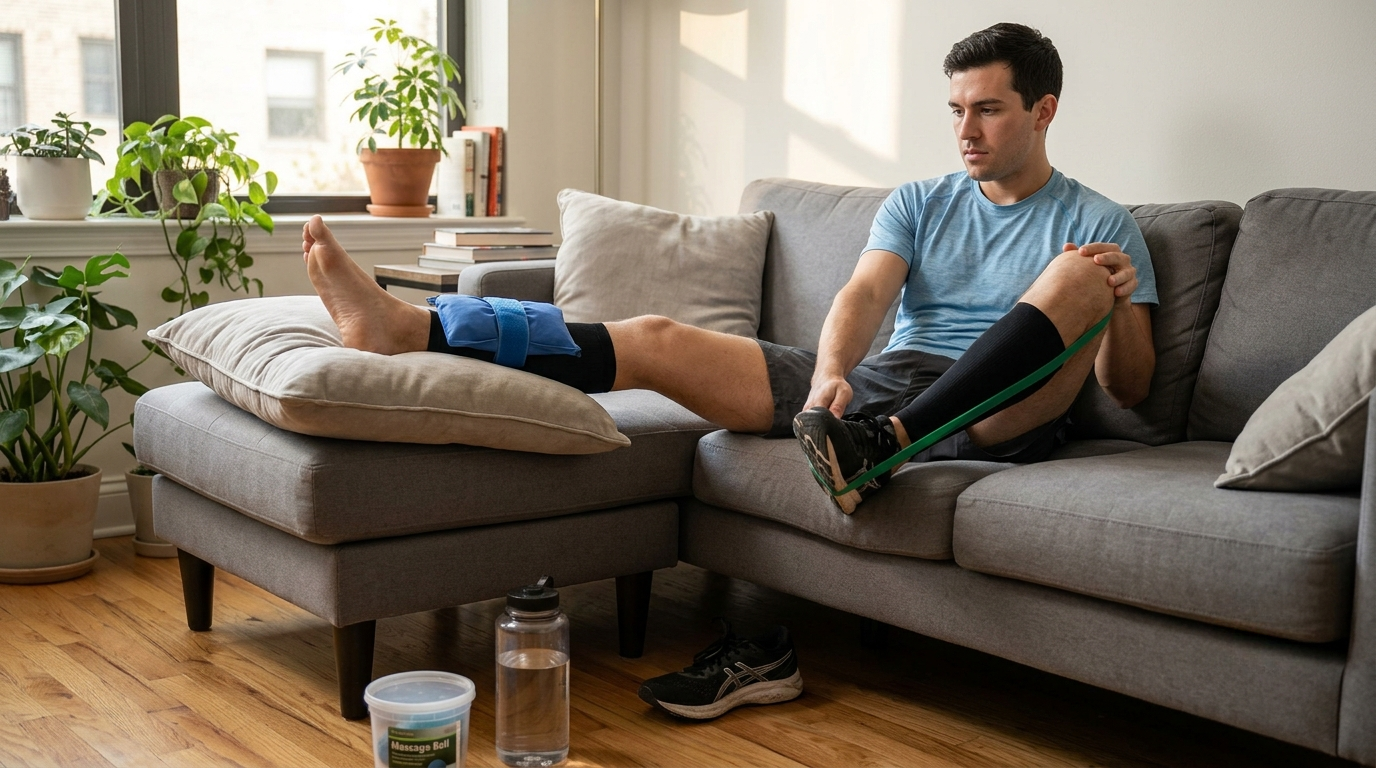
Most shin splints respond well to conservative care, and research on conservative treatment approaches points to the RICE method, rest, ice, and the right supportive habits, as the foundation. The key is giving your body the time it actually needs instead of pushing through and making the underlying irritation worse.
Rest and Activity Modification
Backing off high-impact activity is what allows the irritated tissue and bone to actually heal, rather than staying inflamed run after run. That doesn’t mean sitting on the couch, since low-impact options like swimming or cycling let you maintain fitness while taking the repeated pounding off your shins. For many runners, a week of real rest is enough to noticeably calm things down, though how quickly you bounce back depends on how long you’d been running through the pain beforehand.
Ice and Anti-Inflammatory Care
Icing your shins for 15 to 20 minutes a few times a day helps bring down inflammation and takes the edge off the pain, especially in the first several days. This is a simple habit, but consistency matters more than intensity. A few short sessions spread through the day tend to work better than one long one.
Stretching and Calf and Ankle Strengthening
Tight calves and a stiff ankle are common contributors to shin splints, so stretching and foam rolling those muscles helps keep the whole lower leg moving the way it should. Pairing that with calf-strengthening exercises builds the capacity to absorb impact without dumping all that stress onto your shin bone. Clinical reviews of shin splint treatment point to this combination as one of the most consistently useful tools for both treating shin splints and keeping them from coming back.
Footwear and Training Surface Adjustments
If your running shoes are worn out, replacing them is one of the simplest changes you can make, because old shoes lose the cushioning and support your legs are counting on. Supportive shoes or shoe inserts can make a real difference for runners with flat feet or rigid arches, since they help distribute force more evenly instead of concentrating it on the shin. Where you can, mixing in softer surfaces instead of running on hard pavement every day also takes some of that repeated stress off your legs.
A Realistic Recovery Timeline
Once the acute pain calms down, resist the urge to jump straight back into your old training routine. Established training-load guidelines recommend a gradual return, increasing your weekly mileage by no more than about 10% at a time, so your shin bone and surrounding tissue get a chance to keep adapting instead of getting overwhelmed again. Rushing this step is one of the most common reasons shin splints come right back after they seem to have healed.
If your pain hasn’t started improving after about two weeks of consistent rest and at-home care, that’s a sign to get a professional opinion rather than keep waiting it out. Persistent pain, especially if it’s becoming more localized or sharp, deserves a proper evaluation to rule out a stress fracture or another underlying issue.
How Physical Therapy Speeds Up Recovery
A physical therapist doesn’t just tell you to rest and stretch. They figure out why your shins are taking on more stress than they should in the first place. That might mean assessing your ankle mobility, calf strength, hip control, or the way your foot strikes the ground, since weaknesses in any of these areas can shift extra load onto your shin bone with every step.
From there, treatment is built around your specific movement patterns rather than a generic list of exercises. A detailed gait analysis can reveal exactly how your form is loading your legs, and targeted strengthening work addresses the muscles that aren’t pulling their weight. This is what separates actually fixing the problem from just waiting for the pain to fade until your next training block brings it right back.
How Scottsdale Physical Therapy & Performance Treats Shin Splints

At Scottsdale Physical Therapy & Performance, runners dealing with shin splints get a thorough movement assessment before any treatment plan is built, because two runners with the same shin pain often have completely different underlying causes. Dr. John Dodson approaches these cases the way he approaches every runner’s injury: figuring out what’s actually driving the stress on the shin, then building a plan to fix it and get you back to training stronger than before.
That often includes hands-on manual therapy to address calf and ankle tightness, a structured strengthening program, and a return-to-running plan mapped out week by week so you’re not guessing at how much mileage is safe. For runners who’ve dealt with shin splints more than once, the team also looks at the bigger picture of your training and biomechanics so the same pattern doesn’t keep repeating itself season after season.
Shin splints don’t have to mean weeks of guessing whether you’re allowed to run yet. If your shins have been aching more than they should, reach out to our team and let’s figure out what’s actually going on and get you a plan that gets you back on the road with confidence.
Frequently Asked Questions
How Long Do Shin Splints Take To Heal?
Many runners notice real improvement within about a week of consistent rest, ice, and activity modification, though full recovery and a safe return to your normal mileage typically takes longer. How quickly you heal depends on how long the shin splints had been building before you addressed them.
Can I Keep Running With Shin Splints?
Running through sharp or worsening shin pain usually makes things worse and can delay your recovery significantly. Switching to low-impact cross-training like swimming or cycling lets you stay active while giving your shins the break they need.
Do I Need a Referral To See a Physical Therapist For Shin Splints?
In most cases, no. You can schedule a physical therapy evaluation for shin pain without seeing a doctor first. Reach out to our team directly to get an assessment scheduled.
How Can I Prevent Shin Splints From Coming Back?
Gradually increasing your mileage, replacing worn-out running shoes, and staying consistent with calf and ankle strengthening are the habits that keep shin splints from becoming a recurring problem. Addressing any underlying mobility or strength limitations with a physical therapist also helps stop the same pattern from repeating.
When Should I See a Healthcare Provider For Shin Pain?
If your pain hasn’t improved after about two weeks of rest and at-home care, or if it becomes sharp and localized to one spot, it’s time to get evaluated rather than keep pushing through it. Persistent or worsening shin pain can be a sign of a stress fracture, which needs a different treatment approach than typical shin splints.