Why Work With a Golf Fitness Trainer (and Not Just Hit More Balls)?
Picture this: you step up to the first tee on a Saturday morning, and before you even take the club back, your lower back feels stiff and locked up. By the back nine, you’re losing distance off the tee, your swing feels rushed, and you’re already dreading how you’ll feel tomorrow. Many golfers experience exactly this pattern and the frustrating part is that hitting more balls at the range rarely fixes it.
The truth is, most swing issues and post-round aches are connected to how your body moves, not just your technique. Golf fitness trainers specialize in assessing mobility, strength, and balance to help your body perform better on the course. When those physical limitations are addressed, your swing can feel easier and more consistent.
At Scottsdale PT & Performance, we take this a step further. As golf-focused physical therapy and performance specialists, we blend injury rehab, golf fitness, and performance training into one approach.
What you’ll learn in this article:
- What golf fitness trainers actually do and how golf-focused PT differs
- How a golf fitness assessment works and what to expect
- Common physical limitations that hurt your game (and what they feel like)
- Red flags that need medical attention versus issues PT can address
- Simple at-home steps to get started today
- How to build a plan that fits your life and keeps you playing for years
What Is a Golf Fitness Trainer (and How Is Golf PT Different)?
A golf fitness trainer is a coach who focuses specifically on the physical demands of golf mobility, strength, stability, and rotational power. Unlike a general fitness trainer who might put you on a leg press and call it a day, a golf-specific trainer designs exercises that translate directly to your swing.
Typical credentials for golf fitness trainers include TPI (Titleist Performance Institute) certification, strength and conditioning backgrounds, and education in golf biomechanics. These certifications teach trainers to identify how physical limitations show up as swing faults what TPI calls the “Body-Swing Connection.”
How a golf-focused physical therapist goes further:
- Can evaluate pain, past injuries, and surgical history alongside performance goals
- Trained to identify medical red flags and refer out when necessary
- Licensed to provide hands-on treatment such as manual therapy and targeted mobility work to address tissue restrictions
- Able to coordinate with surgeons or physicians for post-surgical return to golf
The key difference:
| Golf Fitness Trainer | Golf Physical Therapist |
|---|---|
| Performance and prevention for generally healthy golfers | Rehab of shoulder, back, hip, elbow pain while improving golf performance |
| Focuses on exercise prescription and movement coaching | Can assess movement impairments and address pain drivers while building performance |
| Great for golfers without current pain or injury history | Ideal when pain, injury history, or surgery is part of the picture |
Common goals golfers bring to us:
- Add 10-20 yards of distance off the tee
- Play 18 holes without stiffness or soreness the next day
- Improve consistency and shot dispersion
- Walk 36 holes in a weekend without fatigue
- Return to pain-free golf after back, hip, or shoulder issues

How a Golf Fitness Assessment Works at Scottsdale PT & Performance
If you’ve never had a golf fitness assessment, here’s what to expect during your first visit no surprises, no intimidation.
Step 1: Conversation about your golf life
- Your golf history: how long you’ve played, current handicap, weekly practice and play volume
- Specific goals (e.g., “I want to add 15-20 yards before our trip to Pebble Beach next spring”)
- What’s frustrating you right now distance loss, inconsistency, pain after rounds
Step 2: Review of your health history
- Previous injuries, surgeries, and any current pain
- Imaging (X-rays, MRIs) if you have them
- Medications and any medical considerations that affect exercise
Step 3: Movement screen
- Hip rotation and thoracic spine mobility
- Shoulder rotation (internal and external)
- Single-leg balance and stability
- Core control and coordination
- Squat and hinge patterning
Step 4: Golf-specific tests
- Seated trunk rotation to measure how well you can separate upper and lower body
- Bridge and hip strength testing
- Overhead deep squat to assess combined mobility
- Simple power tests like vertical jump or rotational medicine ball throw
Step 5: Connecting movement to swing
Your PT or golf fitness expert may watch a few swings live or on video to connect physical limitations to swing tendencies. For example, limited hip rotation often shows up as early extension, while thoracic stiffness can cause loss of posture or reverse spine angle.
The assessment is done in gym clothes, adjusted to your age and current fitness level. Whether you’re 35 or 75, the screen meets you where you are.
The outcome:
- Clear identification of your key limitations
- Priorities for the first 4-6 weeks of training
- Recommended session frequency based on your schedule and goals
Common Physical Limitations That Hurt Your Golf Game
Here’s what many golfers don’t realize: a lot of “swing faults” are simply the body’s workaround for physical limitations. Your brain is smart it will find a way to get the club on the ball, even if that means compensating in ways that cost you power or create pain.
Physical limitations golf fitness trainers and PTs commonly identify:
- Limited hip rotation: May cause swaying, sliding, or early extension. Often stresses the lower back as it tries to make up for what the hips can’t do.
- Stiff thoracic (mid-back) spine: Can limit your backswing turn, reduce clubhead speed, and increase tension in your shoulders and neck.
- Poor core and glute strength: Often linked to loss of posture at impact, inconsistent contact, and fatigue during the last few holes when your body stops holding positions.
- Restricted shoulder mobility: May show up as a shortened backswing, “chicken wing” follow-through, or discomfort at the top of your swing.
- Ankle mobility and balance issues: Can lead to poor weight transfer, instability on uneven lies, and reduced ability to push into the ground for power.
- Grip and forearm strength deficits: May affect clubface control, endurance during long practice sessions, and ability to hold positions under speed.
- Old injuries (back, hip, knee, shoulder): These may quietly limit motion or confidence, altering swing mechanics even if they no longer hurt.
The good news: these limitations are identifiable and addressable. That’s exactly what a custom program built around your body can do.
What You Might Feel on the Course (and What It Can Suggest)
Many golfers don’t connect their on-course frustrations to specific physical issues. But your symptoms often point toward what’s actually going on.
Common complaints and what they may suggest:
- “I lose distance late in the round” → Possible strength and endurance deficits in your legs and trunk. Your body fatigues and can’t generate the same speed.
- “My back tightens up after I play” → Possible limited hip rotation, core endurance issues, or poor load-sharing between joints. Your lower back may be doing work the hips should handle.
- “I can’t turn like I used to” → Possible thoracic spine stiffness or hip mobility restrictions limiting rotation.
- “I feel off-balance on downhill or sidehill lies” → Possible ankle mobility, foot and leg strength, or balance deficits affecting stability.
- “My shoulder or elbow gets sore after practice” → Possible load-management issues, technique factors, or localized mobility and strength deficits.
- “I’m fine at the range, but hurt more when I walk 18” → Possible endurance and capacity issues in hips, feet, and back that show up under sustained activity.
- “My grip gives out before my swing does” → Possible forearm strength or endurance limitations affecting club control.
These patterns are common and understandable. More importantly, they’re addressable with the right approach.
Red Flags: When Golf Pain Needs Urgent or Medical Attention
Most golf-related aches respond well to smart training and physical therapy. But some symptoms require immediate medical evaluation not a stretch routine.
Seek urgent care or call 911 for:
- Sudden, severe back pain after a swing with difficulty standing or walking
- Pain with numbness, tingling, or weakness radiating down an arm or leg that is getting worse
- Loss of bowel or bladder control or profound numbness in the saddle area (medical emergency go to the ER immediately)
- Chest pain, pressure, or shortness of breath on the course (call 911, possible cardiac issue)
- Unexplained weight loss, fever, or night sweats accompanied by persistent back or bone pain
- Recent significant trauma (fall, cart accident) followed by severe pain or visible deformity
In these cases, don’t try to “play through it” or stretch it out. See a physician or go to urgent care.
For non-emergency pain the nagging back tightness, the shoulder that aches after practice, the hip that limits your turn a golf-focused physical therapist can often be your first stop. We can evaluate, treat, and refer out if imaging or specialist care is needed.
At-Home Golf Fitness: Simple Steps You Can Start Today
You don’t need a full gym or hours of free time to start improving. Small, consistent habits often help more than occasional big workouts.
Low-equipment ideas to get started (stop any exercise that causes sharp or worsening pain):
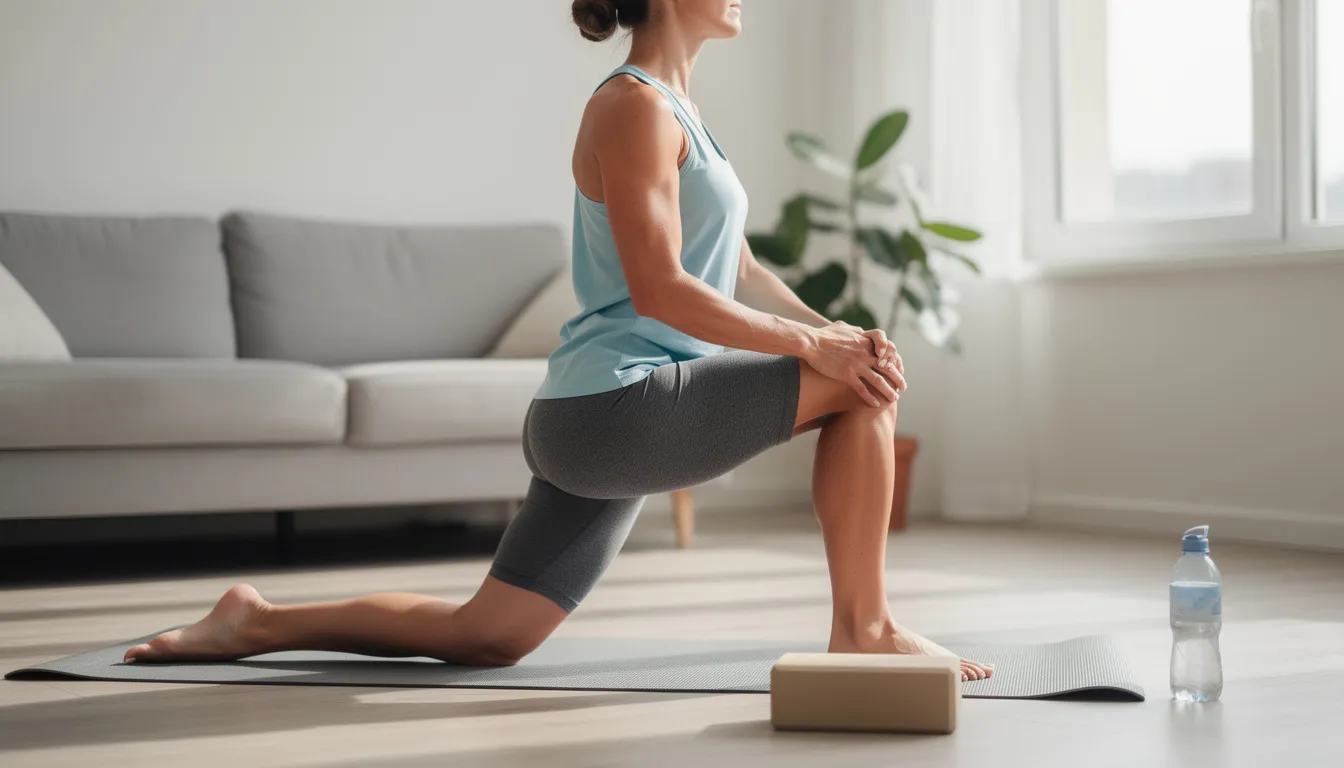
- Daily hip and thoracic rotation routine (5-10 minutes): Half-kneeling hip rotations, open-book stretches, and seated trunk twists. Doing these daily creates more change than doing a long session once a week.
- Pre-round dynamic warm-up (5-7 minutes): Leg swings, trunk rotations holding a club across your shoulders, bodyweight squats, and arm circles. This prepares your body to perform, not just show up stiff.
- Walking and step goals: Aim for regular walking throughout the week to build endurance for walking 18 without fatigue. Even 30 minutes a few times per week makes a difference.
- Light strength work 2-3x per week: Simple exercises like bodyweight squats, glute bridges, band rows, and planks build the foundation for a more powerful, resilient golf swing.
- Post-round mobility (5-10 minutes): Gentle hip flexor stretches, hamstring stretches, and chest openers. Skip the habit of jumping straight in the car give your body a few minutes to cool down.
- Structured range practice: Alternate technical swings focused on positions with “athletic” swings that emphasize speed and balance. This keeps practice from becoming mindless repetition.
- Hydration and foam rolling: Especially relevant in Scottsdale’s dry heat. A foam roller on your thoracic spine and hips can relieve stiffness when done consistently.
If symptoms persist despite these efforts, that’s a good signal to seek a professional evaluation. These steps are a starting point, not a substitute for a custom program.
How Golf-Focused Physical Therapy and Training Improve Your Game
The most effective golf fitness plans blend rehab, strength, mobility, and power in a phased approach. At Scottsdale PT & Performance, we build programs that progress logically based on where you’re starting.
Typical progression for golfers:
- Phase 1: Calm symptoms and restore basic motion If you’re dealing with pain, we start here. Manual therapy, targeted mobility work, and gentle activation exercises address tissue restrictions and reduce irritation. The goal is getting you comfortable enough to train effectively.
- Phase 2: Build strength and control Once pain is managed, we develop strength in key areas hips, core, shoulders, and grip. This phase uses loaded movement patterns like hinges, squats, pushes, pulls, and carries that translate directly to golf.
- Phase 3: Add golf-specific speed and power With a solid foundation, we introduce medicine ball throws, jumps, and rotational power training appropriate to your age and condition. This can help improve clubhead speed and power.
- Phase 4: Integrate with practice and play We coordinate with your swing coach when applicable, aligning gym work with any swing changes you’re making. The goal is making your body capable of performing what your instructor is teaching.
Measurable progress markers we track:
- Improved hip and trunk rotation range on re-assessment
- Increases in vertical jump height or medicine ball throw distance
- Increased clubhead speed on launch monitor (often a few percent with consistent training)
- Reduced pain levels and faster recovery between rounds
- Ability to walk 18 or 36 holes without significant fatigue
Programs are adjusted based on your age, current fitness, injury history, and available time. A 60-year-old with a previous back surgery trains differently than a 35-year-old looking to compete but both can improve.
Building a Golf Fitness Plan That Fits Your Life
The “perfect” training program means nothing if it doesn’t fit your schedule. We’ve seen hundreds of golfers over the years, and the ones who get results are the ones who can actually follow through.
Key elements we consider when designing your plan:
- Available training days: Can you realistically train 2-3 days per week, or do you have time for 4-5? We build around what’s sustainable.
- In-season vs. off-season focus: Off-season is the time to build capacity. In-season, we maintain gains while managing fatigue from rounds and practice.
- Equipment access: Full gym, bands and dumbbells at home, or just bodyweight? Effective programs can work with minimal equipment.
- Other sports and activities: Tennis, hiking, running, or other sports affect your total workload and recovery needs.
- Travel, work, and family: Session length and frequency have to work with real life, not against it.
A realistic starting point for most golfers: two 30-40 minute sessions per week plus a consistent pre-round warm-up. From there, we can build up as capacity and schedule allow.
Program delivery options at Scottsdale PT & Performance:
- In-clinic guided sessions with direct coaching
- App- or PDF-based home programs with video demonstrations
- Hybrid models for golfers who live locally but travel frequently
The point is creating something you’ll actually do not an ideal plan that sits unused.
Preventing Future Golf Injuries and Staying on the Course Longer
Prevention is really about capacity: building a body that can comfortably handle the loads and volume of practice and play you want to do.
Prevention-focused tips for golfers:
For a comprehensive overview on how to prevent and manage hand injuries on the golf course, see Hand Injuries in Golf: Essential Tips & Techniques.
- Maintain strength year-round: Don’t abandon your fitness program after the season ends. A minimum weekly routine keeps you from starting over each spring.
- Gradually increase volume: Avoid sudden spikes in range balls or rounds per week. Your body adapts best to progressive increases, not dramatic jumps.
- Use a consistent dynamic warm-up: Even 5 minutes before practice or play prepares tissues for the work ahead. Cold muscles and stiff joints don’t produce good swings.
- Rotate practice focus: Alternating between full swings, wedges, and putting varies physical stress and prevents overuse patterns.
- Monitor early warning signs: Lingering soreness beyond 48 hours, new sharp pains, or declining performance with fatigue are signals to address, not ignore.
- Schedule periodic check-ins: A “tune-up” PT or golf fitness evaluation 1-2 times per year especially before busy golf seasons can catch issues before they become problems.
- Pay attention to recovery basics: Sleep, hydration, and general activity level all influence how well your body bounces back from training and play.
The goal isn’t just playing better this season. It’s maintaining a body that can enjoy golf for decades playing with your kids, grandkids, and community well into your 70s, 80s, and beyond.

FAQ: Golf Fitness Trainers, PT, and Your Game
These are questions golfers commonly ask before getting started.
Do I Need To Be In Pain To See You?
Not at all. Golfers come to us for pain, performance, or both. Our physical therapy background allows us to work safely across the whole spectrum from post-surgical rehab to helping a healthy golfer add distance.
How Long Does It Take To See Results?
Many golfers notice changes in mobility and how they feel within 2-4 weeks of consistent work. Speed and strength gains typically build over 6-12 weeks with regular training. Patience and consistency matter more than intensity.
Can I Keep Working With My Swing Coach?
Absolutely. We view collaboration as essential. Your swing instructor works on technique; we work on making your body capable of executing that technique. When we coordinate, the results multiply.
Is Golf Fitness Safe If I’m Over 50 Or 60?
Yes, and often especially valuable. Programs are tailored to age, medical history, and current fitness. Many older golfers see significant benefits from thoughtful strength and balance work. This isn’t about training like a 25-year-old; it’s about training appropriately for longevity in the game.
How Many Days Per Week Should I Train For Golf?
A general range is 2-4 days, depending on your goals, current workload, and available time. We help you find the right frequency for your situation rather than applying a one-size-fits-all approach.
What If I’ve Had Surgery (Back, Hip, Knee, Shoulder)?
A golf-focused PT is specifically trained to work safely after surgery. We coordinate with surgeons when needed, respect tissue healing timelines, and progressively return golfers to play. Previous surgery doesn’t mean you can’t train it means you need a smarter plan.
Medical Disclaimer
This article is for general educational purposes and is not a substitute for personalized medical advice, diagnosis, or treatment.
Do not ignore or delay seeking professional medical evaluation based on information in this article. If you have significant, worsening, or concerning symptoms, consult a physician or qualified healthcare provider.
Individual cases vary. Only an in-person assessment can determine the most appropriate plan of care for your specific situation.
Ready to Work With a Golf Fitness Expert in Scottsdale?
How Scottsdale PT & Performance can help:
- Evaluate and treat pain that’s limiting your swing or enjoyment of golf
- Build strength, mobility, and power that translates directly to performance gains
- Create a sustainable plan for long-term injury prevention and playing well for years
Getting started is simple:
- Book a golf evaluation through our website or by phone
- Bring any imaging or reports if you have them (not required)
- Come ready to talk about your goals, your current game, and any upcoming golf trips or events
You don’t need to “get in shape first.” The program starts from wherever you are right now whether that’s recovering from back surgery or just wanting to add 15 yards before your next golf trip.
More distance, more consistency, less pain, and the confidence to play the golf you want to play. That’s what smart golf fitness and physical therapy can deliver.
Schedule your golf evaluation today and let’s get you back on the course playing better and feeling better.