You did the surgery. You’re doing the exercises. And your quad still won’t turn on the way it used to. You sit down to do a straight leg raise and your thigh just sits there, or your knee buckles a little on the stairs even though nothing hurts.
That disconnect has a name: arthrogenic muscle inhibition, or AMI. It’s one of the most common and most frustrating roadblocks after a knee injury or surgery.
If you’ve had an ACL reconstruction, a meniscus repair, or a knee replacement and your quadriceps muscles feel weak or disconnected no matter how hard you push, you’re not imagining it. This is a real neurological response, not a sign you’re not trying hard enough.
What Is Arthrogenic Muscle Inhibition?
AMI is a reflexive shutdown of the muscles around a joint after that joint is injured or operated on, and it’s a protective response your body generates on its own. It’s not a strength problem in the traditional sense. The muscle itself isn’t damaged and hasn’t lost its physical capacity to contract.
Sensors in and around the knee pick up on swelling, pain, and structural changes after an injury or surgery, and they send altered signals up to the central nervous system. The brain interprets that input as a threat and dials down the signal it sends back to the quadriceps, especially the vastus medialis oblique just above the inner kneecap, one of the muscles most affected by this kind of inhibition. The muscle is capable of contracting but isn’t getting the green light to do so at full strength. That’s why strength training alone often doesn’t fix it.
What Causes AMI and How It Shows Up
Common Causes
AMI can follow almost any joint trauma, but it shows up most often after anterior cruciate ligament (ACL) tears and reconstruction, meniscus surgery, and total knee replacement. Swelling is a major driver, since fluid buildup itself alters the sensory feedback the joint sends to the nervous system. Tight or overactive hamstrings can add to the problem too, since extra hamstring tension reinforces the same reflex that’s holding the quad back, and left unaddressed this combination is a common reason for slow recovery after a significant knee injury.
Pain plays a role too, but AMI can persist even after pain has largely resolved. That’s part of why it catches so many patients off guard weeks into recovery. More than half of people with an ACL injury go on to develop AMI within six weeks, and leaving it untreated carries an increased risk of early osteoarthritis down the line.
Symptoms You Might Notice
The clearest sign is a knee extension deficit: you can’t fully straighten the knee even when nothing is physically blocking the joint. Your thigh may also look visibly smaller on the surgical side within a few weeks, since a muscle that isn’t firing properly loses size quickly and voluntary activation of the quadriceps drops off fast.
Many people describe a sensation that the knee feels unstable, even during simple, low-demand movements like standing up from a chair. Quadriceps strength can drop by 60 to 83% in the days right after knee surgery, which is a big part of why the leg feels like it doesn’t respond the way it should. A true full shutdown of the quad is uncommon, so most people are dealing with partial inhibition rather than a total loss of function.
How It Limits Movement
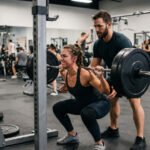
Day to day, AMI shows up as difficulty climbing stairs, trouble standing from a low chair without pushing off with your arms, and a walking pattern that looks slightly off. For athletes, this means an inability to fully load the leg during a squat or single-leg stance, since the quad muscles simply aren’t responding the way they need to, silently stalling progress in the gym long after the incision has healed.
Recovery and Treatment Options
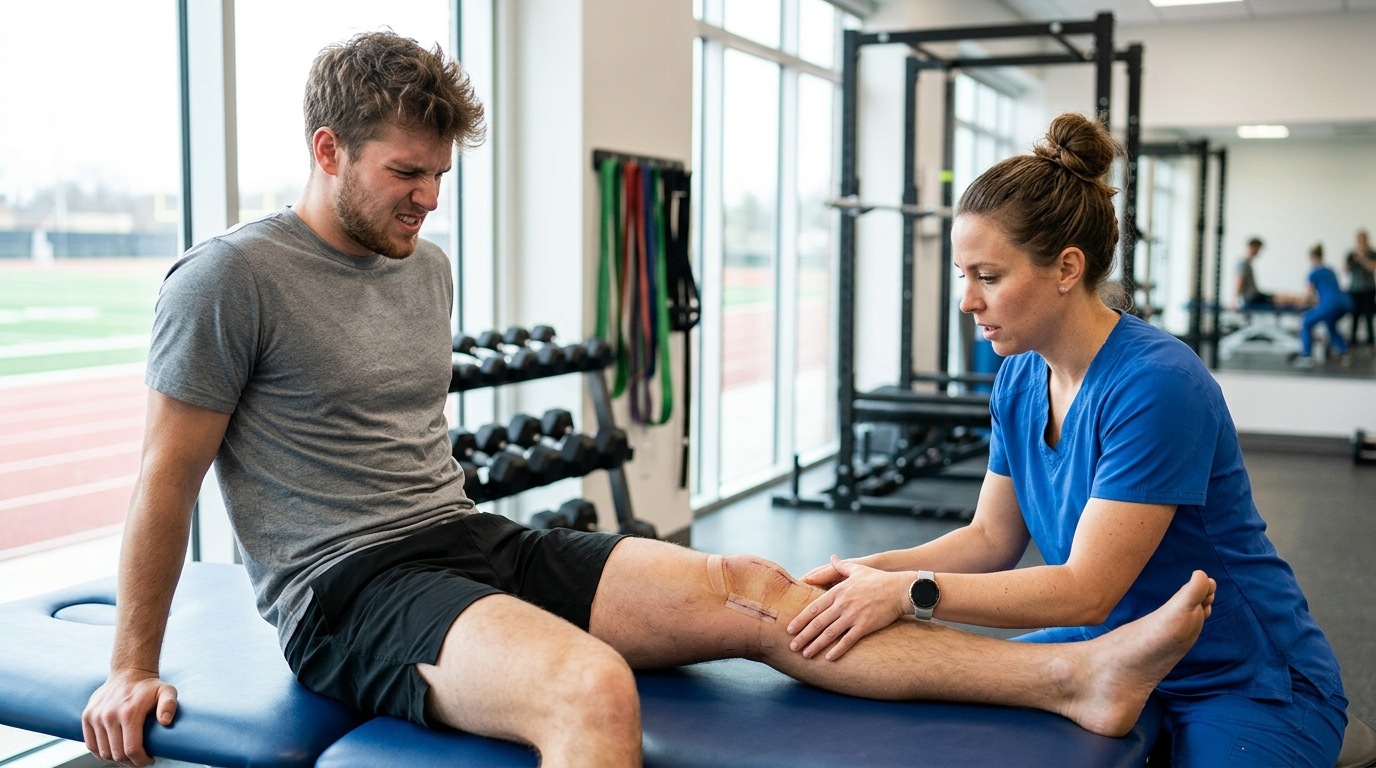
AMI is very treatable once it’s correctly identified, and the earlier it’s addressed, the better. Conservative management starts with getting swelling and pain under control, since calming the joint reduces the abnormal sensory input driving the inhibition.
From there, treatment shifts toward restoring normal muscle activation and reconnecting the nervous system to the muscle, rather than just building strength on top of a signal that isn’t getting through. Basic exercises like straight leg raises and quad sets are a starting point, but on their own they’re often not enough to break through true neural inhibition, and current research supports pairing them with more targeted treatment strategies.
Getting the muscle to fire consistently again usually requires a more targeted strategy, and starting that process early tends to produce noticeably better outcomes than waiting for strength to catch up on its own.
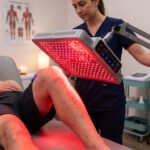
Blood flow restriction training is another option healthcare professionals use in the early stages of recovery, since it helps limit muscle loss while full-intensity strengthening still isn’t appropriate. It’s a useful bridge for keeping the leg from losing more ground while the nervous system piece gets addressed effectively.
How Physical Therapy Helps
A physical therapist’s first job with AMI is figuring out whether the weakness is inhibition, deconditioning, or both, since the two need different treatment. From there, a good rehab plan layers in techniques aimed at overriding that neural shutdown.
Neuromuscular electrical stimulation is one of the most effective tools here, using electrical stimulation to bypass the inhibited signal from the brain and directly stimulate the quadriceps to contract. A physical therapist places electrodes over the muscle and adjusts intensity so the quad contracts more fully than it can manage on its own, which is often the piece that gets a stalled recovery moving again. Icing the knee before or during exercise can also improve how well the muscle activates in the moment.
Many therapists pair this with EMG biofeedback, which gives real-time feedback on how much the muscle is actually firing, so you can consciously work on rebuilding that connection instead of guessing. Getting the muscle to respond consistently to that feedback is a crucial step before loading it up with heavier strength work, since building strength on top of unreliable activation just reinforces the same compensation patterns you’re trying to get rid of.
How Scottsdale Physical Therapy & Performance Approaches This

At Scottsdale Physical Therapy & Performance, addressing arthrogenic muscle inhibition starts with an honest evaluation of what’s actually limiting your quad function, not a generic post-surgical protocol pulled off a shelf. Dr. John Dodson, one of the clinic’s physical therapists, works with post-surgical and athletic patients to identify where inhibition is holding back progress, building a plan around it rather than defaulting to a standard timeline.
Because AMI is fundamentally a nervous system problem, the clinic leans on truFlex neuromuscular activation training as a core tool for cases like this. truFlex is built to re-establish the connection between the brain and the muscle after injury or surgery, which makes it a natural fit for post-ACL and post-knee-surgery patients who feel like their quad just won’t turn on.
Paired with a return-to-sport progression, this approach is aimed at getting golfers, runners, weightlifters, and weekend athletes back to full activity without lingering weakness holding them back months down the road.
If you’re a few weeks out from surgery and your quad still doesn’t feel like yours, that’s worth addressing directly rather than waiting it out. Reaching out to schedule an evaluation is the fastest way to find out what’s actually behind what you’re feeling, and to get a plan built around your specific timeline and goals.
Frequently Asked Questions
How Long Does Arthrogenic Muscle Inhibition Last?
Left untreated, AMI can persist for months or even years after the original injury or surgery. With early, targeted treatment, most people see meaningful improvement within several weeks.
Can I Still Work Out With AMI?
Yes, but your program needs to be adjusted. Pushing heavy strength work before the underlying inhibition is addressed often reinforces poor movement patterns instead of building genuine strength.
Do I Need A Referral To Be Evaluated For This?
No, you can schedule directly with a physical therapist to get evaluated for quadriceps activation issues after knee injury or surgery.
Is AMI The Same Thing As General Weakness After Surgery?
No. Deconditioning is a loss of strength and endurance from reduced activity, while AMI is a neurological signal problem where the muscle is being actively held back. The two often overlap, but they need different treatment.