You’ve been told you have a hip labral tear, and somewhere in that conversation, the word “surgery” came up. Maybe it was framed as inevitable. Maybe it was framed as “something to think about down the road.” Either way, if you’re an active adult in Scottsdale who still wants to golf, run, lift, or roll around on the mat with your kids, that word can feel like a wall between you and the life you’re used to living.
Hip labral tear recovery without surgery is possible for a lot of people, and understanding when that path makes sense, and when it doesn’t, is the first step to getting your hip back under you. This isn’t about ignoring what your doctor told you or pretending surgery is never necessary.
It’s about understanding what’s actually happening inside your hip joint, what conservative treatment can realistically accomplish, and what a real recovery timeline looks like when you commit to it. You deserve a straight answer, not a sales pitch for one option over another.
What Is a Hip Labral Tear
Your hip is a ball-and-socket joint, and the labrum is a ring of cartilage that lines the rim of that socket. It deepens the joint, helps seal in the fluid that lubricates your hip, and gives you a layer of stability every time you plant your foot, pivot, or drive through your hips in a swing or a squat.
When that cartilage frays, thins, or tears away from the bone, the joint loses some of that seal and some of that stability. A hip labral tear is damage to the ring of cartilage that stabilizes the hip socket, and it can happen gradually through repetitive movement or suddenly through a specific traumatic event.
Anterior Tears vs Posterior Tears
Anterior tears, at the front of the joint, are far more common among active people because that’s the part of the labrum under the most stress during hip flexion, rotation, and the kind of explosive movement you see in a golf swing or a box jump. Posterior tears, at the back of the joint, tend to come from more direct trauma, like a fall or a hard collision.
It helps to know that hip labral tears do not heal on their own, at least not in the sense of the tissue fully knitting back together the way a broken bone does. That doesn’t mean you’re stuck, though.
Conservative care isn’t trying to make the tear disappear. It’s working to reduce the load and irritation on that tissue, build the surrounding muscles into better shock absorbers, and get your hip moving efficiently enough that the tear stops being the loudest voice in the room.
Common Causes of Hip Labral Tears
Most labral tears in active adults come down to one of two patterns: repetitive stress or a single traumatic moment.
Repetitive Stress Injuries
Repetitive stress tears build up slowly, often in people whose sport or training style asks the hip to move through the same rotational or flexed position thousands of times a month. Golfers rotating through the same swing plane, runners with a subtle gait fault, and CrossFitters loading deep hip flexion under a barbell all fall into this category. Over time, the same small stress applied over and over wears at the labrum the same way a poorly aligned door wears at its hinge.
Structural factors play a role too. Some people are simply built with a hip socket or femoral head shape that creates extra friction or impingement at certain ranges of motion, which is sometimes called hip impingement and is a common contributor even in people who haven’t had any single injury they can point to.
Traumatic Injuries
Traumatic tears are more straightforward to trace back. A hard fall, a collision during a sport, or a sudden awkward pivot can tear the labrum in one moment, and you’ll usually remember exactly when it happened because the pain shows up immediately and sharply.
Either way, once the tear is there, the muscles around your hip and the way you move through daily life start to matter a lot for how much it bothers you going forward.
Symptoms and How It Shows Up in Your Movement
The classic sign of a hip labral tear is deep hip pain in the groin or front of the joint that can spread into the thigh, and it often gets worse with specific movements rather than staying constant throughout the day. Squatting, pivoting, getting out of a low car seat, or rotating through a golf backswing are common triggers.
That’s because all of these movements ask the hip to move through the range where a torn labrum tends to catch or grind. Many people also notice clicking, popping, or a locking sensation in the joint, sometimes paired with a feeling that the hip is going to give way under load.
That instability feeling is one of the more disruptive symptoms for active people because it makes you hesitate mid-movement, and that pause throws off your mechanics further, sometimes leading to compensations in the low back or knee.
Nearly 75% of patients report night pain affecting sleep, which is often one of the more frustrating parts of this injury because it’s not tied to any activity you can simply avoid. Lying on the affected side, or keeping the hip in a flexed position for hours, can aggravate the joint enough to wake you up.
How Symptoms Show Up By Sport
For a runner, this often shows up as a stride that starts feeling off a mile or two in, or a sharp pinch at the front of the hip during toe-off. For a golfer, it’s frequently a catch or ache at the top of the backswing or through impact, right when hip rotation demands are highest.
CrossFitters often notice it hardest in the bottom of a squat or during Olympic lifts where deep hip flexion under load is unavoidable. Whatever your sport, the common thread is that the hip stops feeling like a joint you can trust.
Recovery and Treatment Options

Building a Non-Surgical Treatment Plan
The first and most important thing to understand is that non-surgical treatment is not a lesser option chosen only when surgery isn’t available. For many people with mild to moderate labral tears, it’s actually the more appropriate path, and it starts with the basics.
Recovery strategies include activity modification, pain management, and targeted physical therapy working together rather than any single piece carrying the whole load. Activity modification does not mean stopping everything you love doing.
It means temporarily dialing back the specific movements that load the torn portion of the labrum the most, while keeping the rest of your training intact. A runner might shift to shorter, flatter routes and reduce hill work for a few weeks, while a golfer might work on half-swings and tempo drills instead of full-speed rounds.
It’s also worth avoiding deep hip flexion and aggressive stretching early on, since both tend to stir up irritation rather than let it settle. This isn’t permanent, it’s a strategic pause while the more important work happens underneath it.
That more important work is targeted strengthening of the muscles that surround and support the hip joint, particularly the deep hip rotators, the glutes, and the core. When these muscles are doing their job well, they take pressure off the labrum by controlling how much the femoral head shifts and rotates inside the socket.
Weakness in these areas is one of the biggest reasons a minor labral tear turns into a persistent, nagging problem instead of a temporary setback. Manual therapy rounds out the picture by directly addressing joint mobility and soft tissue restrictions that develop around a hip that’s been guarding itself.
Hands-on techniques can help restore normal joint mechanics and reduce muscle guarding, which makes the strengthening work you’re doing actually translate into better movement instead of fighting against stiffness the whole way.
What a Realistic Recovery Timeline Looks Like
Recovery from a hip labral tear without surgery typically moves through a few overlapping phases rather than a single straight line, and it usually spans a few months rather than a few weeks. Several phases of rehabilitation progress from pain management to strength and movement training, each building on the one before it.
The initial phase focuses on reducing pain and restoring comfortable range of motion, which often takes the first couple of weeks of focused care. From there, the priority shifts to restoring full, pain-free range of motion in the hip and the joints around it, since a stiff or restricted hip forces other structures to compensate.
This phase blends into building real strength in the hip stabilizers, and for most people, meaningful improvement in day-to-day comfort and confidence shows up somewhere in the six to twelve week range. That timeline varies quite a bit depending on how the tear happened and how consistent you are with your program.
The final phase is where the work gets specific to your sport or activity, whether that’s a graded return to full-speed running, a progression back to unrestricted golf swings, or a return to loaded squats and Olympic lifts. Rushing this last stretch is one of the most common reasons people plateau or feel like their hip never quite got back to normal.
Most individuals return to normal activities after rehabilitation when this phased approach is followed rather than skipped. Patients report improved mobility after physical therapy for labral tears far more often when the sport-specific phase is respected instead of rushed.
It’s worth being honest that recovery isn’t always linear. Many people can reduce pain and improve function through nonsurgical treatment, but that doesn’t mean every day gets progressively easier in a straight line.
Flare-ups after a hard training session are common and don’t necessarily mean something has gone wrong. They usually mean the tissue needs a temporary step back before continuing to progress toward your goals.
When Surgery Genuinely Becomes Necessary
Conservative care is the right starting point for most mild to moderate labral tears, but it isn’t the right answer for everyone, and it’s important to be honest about where the line sits. Severe pain that prevents walking or an inability to bear weight on the affected leg are signs that warrant prompt medical evaluation rather than continuing to push through a home program.
A labral tear that’s fully separated from the bone, rather than frayed or partially torn, often responds poorly to conservative measures alone. There’s simply less intact tissue for strengthening and movement retraining to work with in that scenario.
Similarly, if you’ve committed fully to several months of focused physical therapy and strengthening work and your symptoms haven’t meaningfully improved, that’s a legitimate signal to revisit imaging and discuss surgical options with an orthopedic surgeon. Recovery from hip labral surgery takes several weeks to months, so this isn’t a decision to make lightly, but it also isn’t one to avoid out of fear if conservative care truly hasn’t worked.
If surgery does become the right path, weight bearing is typically limited for four to six weeks afterward while the repair settles in. Physical therapy plays a role on that side of things too, helping restore strength and motion once you’re cleared to start loading the joint again.
Physical therapy in these cases isn’t trying to talk you out of surgery if you genuinely need it. Instead, it’s making sure that if surgery does happen, you’re going in as strong and mobile as possible, which tends to make the recovery on the other side smoother and faster.
How Physical Therapy Helps
A physical therapy evaluation for a hip labral tear goes well beyond generic hip exercises. It starts with understanding exactly which movements provoke your symptoms and how your hip, pelvis, and low back are working together.
From there, your physical therapist identifies where the weak links are that are letting excess stress land on the torn portion of the labrum. Physical therapy aids in restoring hip joint function post-injury by addressing those weak links directly rather than just treating pain in isolation.
Building Hip Stability Through Targeted Strengthening
Once those weak links are identified, a treatment plan builds strength in a specific order, starting with the deep stabilizers that control the femoral head’s position in the socket. Only after those smaller muscles are doing their job does the plan progress to the larger, more powerful muscles like the glutes that generate force during athletic movement.
This sequencing matters because loading big, powerful muscles before the smaller stabilizers are ready can actually reinforce poor movement patterns instead of correcting them. As strength improves, the exercises evolve from controlled, single-plane movements into the multi-directional, higher-speed patterns your sport actually demands.
A golfer’s program eventually includes rotational power work that mimics the demands of a full swing, while a runner’s program builds toward single-leg control and impact absorption at running speeds. This progression is what separates a program that gets you pain-free at rest from one that gets you back to full performance.
Manual Therapy and Movement Retraining
Alongside strengthening, hands-on manual therapy techniques address joint restrictions and soft tissue tightness that build up around a hip that’s been compensating. This can improve how smoothly the femoral head moves within the socket, which reduces the grinding or catching sensation many people feel with a labral tear.
Movement retraining ties everything together by correcting the specific mechanical faults that may have contributed to the tear in the first place. That might be a running gait that overloads one hip, a golf swing sequence that puts excess rotational stress through the joint, or a squat pattern that lets the hip cave inward under load.
Without addressing these underlying patterns, even a well-managed labrum is at risk of the same stress building back up over time. This is why movement retraining is important for correcting mechanics that contribute to joint irritation in the first place, not just an afterthought tacked onto strengthening work.
How Scottsdale Physical Therapy & Performance Approaches This
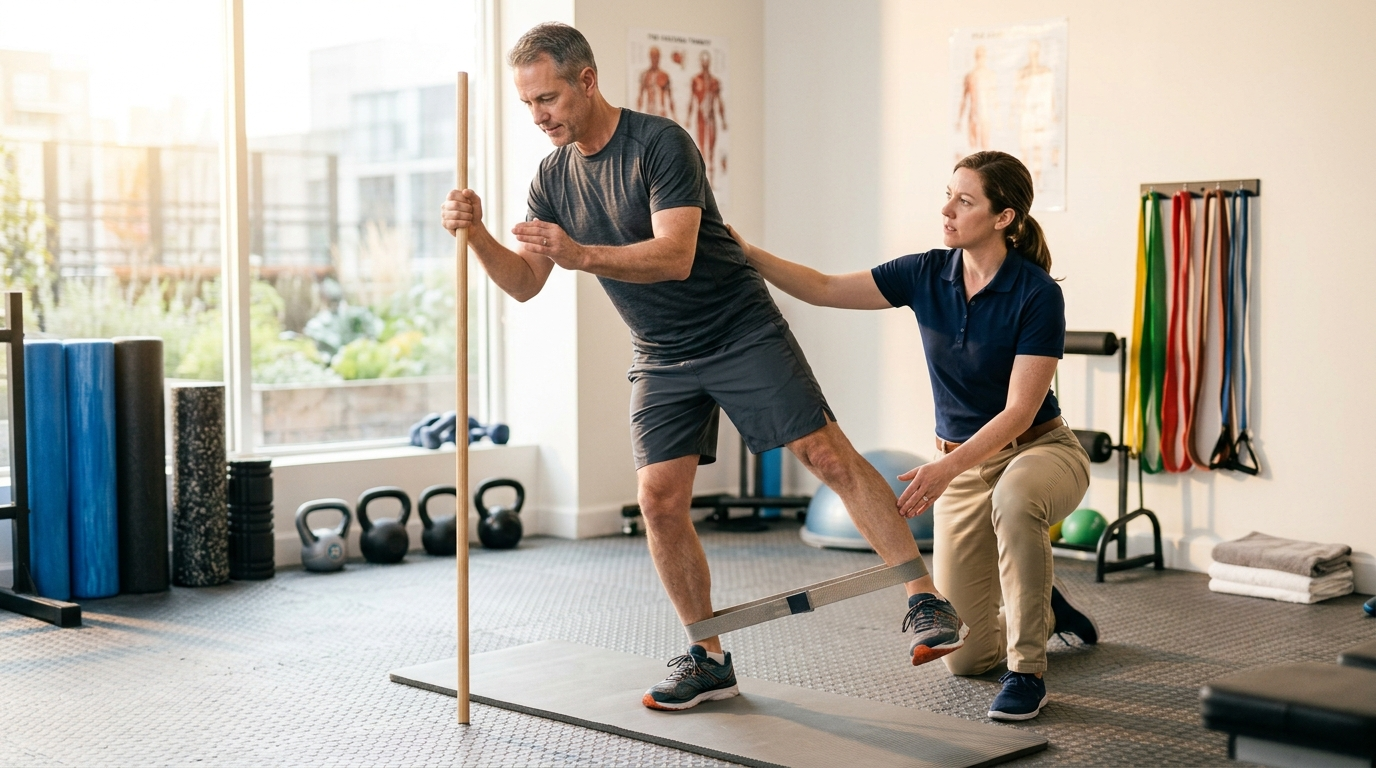
At Scottsdale Physical Therapy & Performance, hip labral tear care starts with a thorough movement assessment that looks at your hip in the context of your actual sport or activity, not just in isolation on a treatment table. Whether you’re dealing with a golf-related labral tear, a running-related one, or something that came from a CrossFit session, the plan is built around getting you back to that specific activity.
Dr. Edward A. Alvarez and Dr. John Dodson bring a performance-first philosophy to hip labral tear rehab, meaning the plan doesn’t stop once basic pain relief is achieved. It progresses through strength, control, and sport-specific retraining, with regular reassessment along the way.
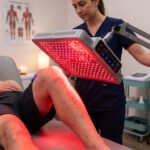
For some patients, truFlex neuromuscular activation training is a valuable addition to a standard strengthening program, particularly when the deep hip stabilizers have become inhibited from pain or from months of altered movement patterns. This technology can help reestablish the connection between your nervous system and those stabilizing muscles more quickly than strengthening alone.
That faster reconnection can shorten the early phase of recovery for the right candidate.
Return-to-Sport Programs
Once you’re moving well and building strength consistently, the return-to-sport programs at Scottsdale PT bridge the gap between being cleared for activity and actually performing at the level you’re used to.
This is often the phase people skip when they try to manage things on their own, and it’s frequently where the real, lasting improvement happens. Whether your path back involves the golf course, the trail, or the box, the plan is built around your specific demands, not a generic hip protocol.
Ready to Get Back to What You Love
A hip labral tear doesn’t have to mean the end of your golf game, your running routine, or your time in the gym. For many active adults, a focused, well-sequenced physical therapy plan at Scottsdale Physical Therapy & Performance is enough to genuinely reduce pain, rebuild hip stability, and get back to full activity without ever needing surgery.
And if surgery does turn out to be the right call for you, going into it stronger and more mobile only helps your outcome. Either way, the sooner you get a clear picture of what’s actually going on in your hip, the sooner you can start moving toward the answer instead of just living with the question.
If you’re dealing with hip pain that’s been chalked up to a labral tear and you want a clear, honest read on whether non-surgical treatment makes sense for your situation, reach out to our team. We’ll walk you through exactly what we’re seeing in your movement, what a realistic timeline looks like, and what it will take to get you back to doing what you love.
Frequently Asked Questions
Can A Hip Labral Tear Heal Without Surgery
The cartilage itself typically won’t fully repair on its own, but many people significantly reduce pain and restore full function through physical therapy alone. Whether this works for you depends on the size and location of the tear, plus how consistent you are with strengthening and movement retraining.
A thorough evaluation is the best way to know where you stand before assuming either outcome.
How Long Does Hip Labral Tear Recovery Take Without Surgery
Most people see meaningful improvement in the six to twelve week range, with full return to sport-specific activity often taking a few months total. This varies significantly based on tear severity, your baseline strength, and how closely you follow the phased approach rather than rushing back to full intensity too soon.
Can I Keep Working Out With A Hip Labral Tear
In most cases, yes, with some temporary modifications to the specific movements that provoke your symptoms. A physical therapist can help you identify which parts of your training to scale back and which ones are safe to keep doing, so you’re not sitting on the sidelines any longer than necessary.
Do I Need A Referral To Start Physical Therapy
In Arizona, you can typically start physical therapy through direct access without a physician referral first. If imaging or a specialist consult ends up being necessary based on your evaluation, your physical therapist can help coordinate that next step.
How Do I Know If I Need Surgery Instead Of Physical Therapy
Severe pain that prevents walking, an inability to bear weight, or a lack of meaningful progress after several committed months of physical therapy are the main signals that it’s time to revisit surgical options with an orthopedic surgeon. Short of those signs, most mild to moderate tears respond well to a structured conservative program first.